If you’ve ever reached for a needle and thread at the worst possible moment — a button gone rogue before a meeting, a hem unraveling right before you leave the house — you already know why a decent sewing kit matters. Not because you sew constantly, but because the one time you need it, having the right tools nearby makes a real difference.
The Artika Sewing Kit keeps coming up in conversations about everyday sewing essentials, and honestly, it earns the mention. Compact, well-stocked, and housed in a PU leather case that actually holds up, it’s the kind of kit that doesn’t just sit in a drawer looking organized — it gets used. With over 120 items packed inside, you’re covered for quick repairs and more involved projects alike.
Here’s what tends to get overlooked though: sewing kits aren’t just for people who sew regularly. They’re for anyone who owns clothes. A kit with the right contents means you stop putting off small fixes that turn into bigger ones.
Contents
What to Actually Look for When Buying a Sewing Kit
Most people pick a sewing kit based on price or how it looks. In practice, what matters is whether it has what you’ll actually reach for. Here’s a breakdown of the tools worth paying attention to.
Measuring Tape and Fabric Marking Pens
A flexible measuring tape sounds basic, but the cheap ones stretch after a few uses and throw off your measurements without you realizing it. Look for one with clear markings on both metric and imperial scales — you’ll want both, depending on the pattern or project. Retractable is usually more practical for a portable kit.
Fabric marking pens are a bit more situational. The water-soluble ones work well for most projects — the marks wash out cleanly. Air-soluble types disappear on their own in a day or two, which is useful when you don’t want to go back and remove markings manually. Heat-erasable pens vanish with an iron, which feels almost like cheating in the best way.
One thing worth doing before you commit to any marking pen: test it on a scrap of the actual fabric you’re working with. Some materials hold onto dye differently, and finding out after the fact isn’t fun.
Needles
A good kit gives you options — sharps for general hand sewing, betweens for quilting and thicker materials, embroidery needles for decorative work. The eye size matters more than people expect. A needle too thick for lightweight fabric will leave visible holes; one too fine for denim or canvas will bend or break.
If you’re storing loose needles, some kind of needle case makes a real difference. Needles are small enough to disappear into a bag lining and sharp enough to cause problems when they do.
Needle Threader
Threading a needle sounds trivial until you’re doing it with poor lighting or after a long day. A needle threader — usually a thin wire loop on a flat handle — takes what can be a frustrating two-minute process down to a few seconds. They’re not all built the same; the cheap ones bend and snap quickly. It’s worth getting one that feels solid in your hand.
Scissors
Here’s the thing about scissors in sewing kits: the included pair is often just okay. Fine for basic trimming, less ideal for anything requiring a clean, precise cut. Dressmaking scissors, pinking shears, and small embroidery scissors all serve different purposes. If you sew even semi-regularly, a dedicated pair outside the kit is worth having.
That said, for travel or emergency repairs, the scissors that come with most kits do the job. Just don’t use them on paper — it dulls the blades faster than anything.
Thread Variety
More spools isn’t always better if the thread quality is poor. What you want is a range of colors that actually covers your wardrobe — neutrals like white, black, gray, and beige handle most repairs — plus enough variety for craft projects. Invisible thread sounds niche, but it’s surprisingly useful when you need a repair to genuinely disappear.
Thread weight matters too. Heavier thread for upholstery or denim; finer thread for delicate fabrics. Most kits default to standard weight, which covers a lot of ground but not everything.
Magnetic Pin Holder
A magnetic pin cushion is one of those tools that doesn’t seem necessary until you’ve used one. Pins don’t roll off, they’re easy to grab quickly, and cleanup is just sweeping them back to the surface. The traditional fabric pincushions work fine, but the magnetic version is noticeably faster to work with.
Buttons and Extra Zippers
Having a small stash of spare buttons — different sizes, different colors — saves more time than you’d expect. The same goes for extra zippers and hooks. Matching a replacement button perfectly is its own small satisfaction, and keeping a variety on hand means you’re not running to a fabric store for a single fastener.
5 Best Sewing Kits With Reviews
1. Coquimbo Sewing Kit


The Coquimbo is a small kit that punches above its size. Inside a slim black case, you get 16 needles in a holder, 12 thread spools across different colors, a stainless steel scissors, measuring tape, seam ripper, thimble, safety pin, two needle threaders, two straight pins, and three white buttons.
What makes it stand out is that nothing rattles around loose. Every item sits in a dedicated elastic band, and the needles are sealed in a clear round case so they don’t end up scattered at the bottom. It opens quickly, stays tidy, and doesn’t feel like you’re wrestling with the case to get what you need.
It’s a solid travel kit — light enough to toss in a bag without thinking about it. The thread and needles aren’t premium quality, which is worth knowing upfront. For minor repairs on the go, that doesn’t matter much. For anything more involved, you might want to supplement.
Pros
- Compact and easy to use
- Works for beginners and experienced sewers
- Organized with elastic holders and a needle case
- Portable and affordable
- Everything stays in place
- Complete for basic sewing needs
Cons
- Thread quality can feel lacking
- Needles can be brittle
2. Artika Sewing Kit
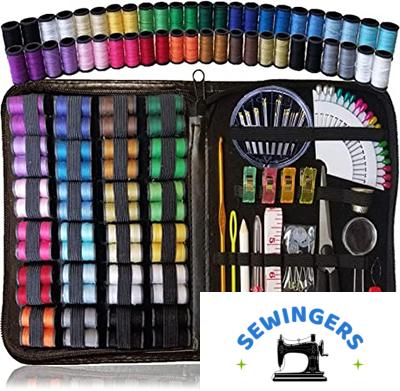
The Artika is the kit I’d recommend if you want something that doesn’t feel like a compromise. The PU leather case is lightweight but holds its shape, and the zip closure keeps everything secure without being fussy. Inside, elastic bands hold each item in its own spot — so opening it doesn’t turn into a scramble.
The contents are genuinely impressive: 130+ pieces including 38 thread spools (18 multi-color plus specific quantities of white, black, gray, blue, beige, brown, ivory, and red), 40 sewing pins in a round case, a set of golden eye needles in multiple sizes, a marking pencil, magnifying lens, white buttons, safety pins, and a measuring tape.
The thread selection alone sets it apart. Most kits give you a handful of colors and call it comprehensive. Artika gives you enough range that you can match most fabrics without hunting for a specific shade.
It’s well-suited for beginners who want to start right, for kids heading to sewing classes, and as a gift for someone who actually sews. The thread spools are on the smaller side, and the included ruler is basic — worth noting if those specifics matter to you.
Pros
- High-quality components throughout
- Covers basics through intermediate needs
- Lightweight and compact
- Durable case with secure zip closure
- No cheap plastic construction
Cons
- Thread spools are smaller than expected
- Ruler material is low quality
3. SINGER 07281 Vintage Sewing Kit
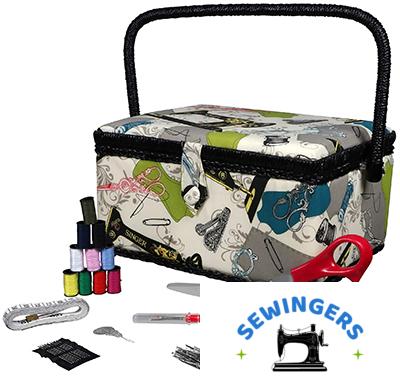
Singer’s vintage basket takes a different approach than the typical zippered pouch. It’s a collapsible basket with a magnetic closure and a removable inner tray — open the lid and there’s a built-in pin cushion along with a side pocket for scissors. The aesthetic is deliberately retro, and it actually works; it looks like something you’d keep on a shelf rather than shove in a drawer.
Inside: 100 dressmaker pins, 10 hand needles, 10 mini thread spools (10 yards each), a needle threader, 8-inch fabric scissors, a seam ripper, a pin cushion, a 60-inch measuring tape, and a thimble.
This kit is better suited for beginners and kids than for experienced sewers who need a larger thread selection or more needle variety. But as a starter kit — or a gift for someone just getting into sewing — it covers the fundamentals and looks good doing it. The collapsible handle makes it easy to store and carry.
Pros
- Compact sewing basket format
- Good starting point for beginners and kids
- Magnetic closure and distinctive style
- Removable tray for organization
- Good value
- Covers all basic accessories
Cons
- Likely not enough for professional use
- Not the largest storage capacity
4. Craftlab Best Mini Sewing Kit
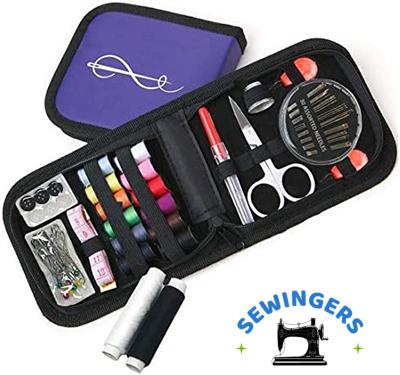
The Craftlab kit is built for practicality. The case is ripstop nylon — which is more durable than the soft pouches that come with some kits and start fraying after a few months. It opens flat, with elastic holders keeping everything visible and accessible without digging.
Contents include 30 needles, 10 pins, 12 assorted thread spools plus bonus black and white spools, stainless steel scissors, 6 shirt buttons, 2 threaders, and a seam ripper. It also comes with a free hand sewing ebook for beginners — a small but genuine addition.
This kit fits in a purse, a desk drawer, a glove compartment, or a suitcase side pocket without taking up much real estate. It’s a thoughtful gift for almost anyone, and the format works well whether you’re teaching a teenager basic repairs or just want something handy for yourself.
The thread quality is where it falls short — some users struggle with the spool design and finding the thread end. Not a dealbreaker for occasional use, but worth knowing.
Pros
- Compact premium kit
- Handles travel and everyday repairs well
- Durable ripstop nylon material
- Bonus ebook is genuinely helpful for beginners
- Has all necessary components
- Portable and built to last
Cons
- Thread quality isn’t great
- Thread spools can be tricky to start
5. Embroidex Sewing Kit
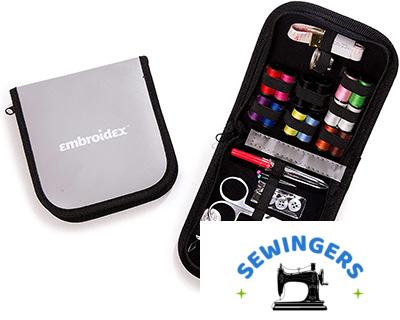
The Embroidex kit has a clean, organized layout that’s easy to appreciate the first time you open it. PU leather case, zip closure, elastic gripper inside — nothing loose, nothing buried under something else. You can find what you need quickly, which matters more than it sounds when you’re in the middle of a repair.
The scissors are worth a specific mention: they’re versatile enough to handle both lightweight and heavier fabrics, which isn’t always the case with kit scissors. The rest of the contents are solid — a range of needles, seam ripper, 14 thread spools in multiple colors, shirt buttons, a foldable measuring tape, and a thimble.
It’s a capable kit for DIY projects, travel repairs, and everyday mending. The thimble runs small — if you have larger fingers, that’s worth checking before you rely on it — and the thread is average quality rather than exceptional.
Pros
- Compact, portable, and easy to use
- Covers all standard sewing components
- Well organized and user-friendly
- Nice zipper case with useful contents
- Practical and affordable
Cons
- Thimble is on the smaller side
- Thread quality is mediocre
Before You Depart…
The Artika Sewing Kit holds up well as a go-to recommendation — not because it’s perfect, but because it covers real needs without cutting obvious corners. The thread variety is practical, the case is durable, and the contents range from basic to actually useful. It works for kids, beginners, and people who sew regularly but don’t want to carry a full toolkit everywhere.
That said, every kit on this list has its strengths depending on what you’re actually looking for. The Singer basket is better for display and as a beginner gift. The Craftlab is more rugged for travel. The Coquimbo punches above its price point for simple portability.
The broader point: every home probably should have at least one good kit somewhere accessible. Not because emergencies are frequent, but because when a seam splits or a button disappears, having what you need on hand is a lot better than the alternative.