

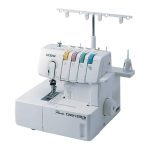
Brother 2340CV Cover Stitch Machine
over $75
free returns
checkout
support
Your regular sewing machine will hold a knit hem together — right up until it doesn’t. The first time a T-shirt stretches across someone’s shoulders or a pair of leggings gets yanked up at the knee, those stitches start popping.
That’s usually the moment you find yourself down a rabbit hole of coverstitch machine reviews at midnight. The Brother 2340CV sits in that narrow window where professional-looking hems become genuinely achievable without converting your spare room into a production facility.
In the US home sewing market, this machine has earned one specific reputation: solid knit finishing at a price that doesn’t make you wince. A lot of hobby sewists land here after twin needles finally push them over the edge. Small Etsy sellers often reach the same breaking point after spending an entire Saturday hemming yoga tops and realizing that shortcuts aren’t actually saving time.
The Brother 2340CV isn’t without its quirks. Thread tension can get stubborn. Some fabrics cooperate immediately; others require a full afternoon of testing before they behave. Still, for anyone working regularly with jersey, spandex, and athletic fabrics, this machine tends to change the entire finish quality of what comes off the table.
What Is the Brother 2340CV Cover Stitch Machine?
The Brother 2340CV is a dedicated coverstitch machine built for hemming, topstitching, and stretch seams. It doesn’t trim fabric edges the way a serger does — no cutting blade involved. What it does instead is create those stretchy parallel rows of stitching you see on the inside of basically every piece of ready-to-wear athletic clothing you’ve ever owned.
That distinction matters more than you’d probably expect going in.
A serger handles seam construction and edge finishing. A coverstitch machine handles hems and visible stretch stitching. Most knit garments actually need both at different stages. The reason store-bought leggings and running tops survive so much movement without busting at the seams is that cover hems stretch with the fabric instead of fighting against it.
The Brother 2340CV supports:
- 2-needle cover stitches
- 3-needle cover stitches
- Chain stitching
- Differential feed adjustments
- Stretch-friendly seam finishing
There’s no bobbin involved. The machine uses loopers underneath the fabric — that lower looper system is what creates the elasticity while keeping the top surface clean and even. On leggings, joggers, baseball tees, dancewear — anything that needs to move — the difference shows up fast.
A basic sewing machine hem reads as homemade. A coverstitch hem reads as retail. That gap surprises a lot of people the first time they pull fabric off this machine and actually look at it.
Key Functional Details
| Feature | What It Does | Why It Matters |
|---|---|---|
| Differential feed | Controls how fast different fabric layers move | Prevents waviness on stretchy knits |
| 2-needle stitch | Produces narrower hems | Works well for lightweight garments |
| 3-needle stitch | Creates wider, more visible hems | Standard finish on athletic wear |
| Chain stitch | Makes stretchy seams | Good for decorative topstitching |
| Presser foot pressure | Adjusts how the foot grips fabric | Helpful with thinner or more delicate knits |
The differential feed range — 0.7 to 2.0 — is worth paying real attention to. Stretchy fabrics don’t always behave predictably. Thin rayon jersey has a tendency to ripple. Spandex can feed unevenly if you’re not watching it. Getting comfortable with the differential feed is honestly one of the first things that separates frustrating sessions from productive ones.
Key Features of the Brother 2340CV Cover Stitch Machine
A few specific things explain why this machine keeps showing up in US sewing rooms years after it launched.
2, 3, or 4 Thread Capability
You get real flexibility across thread configurations here, which ends up mattering more than it sounds on paper. A narrow 2-thread setup works nicely on lightweight jersey when you want a cleaner, less bulky finish. The 3-needle wide stitch gives you that broader hem you see on athleisure garments — the kind of finish that makes handmade leggings stop looking handmade.
For anyone building Lululemon-style pieces or fitted running tops, that wider finish changes the whole look of the final product.
Switching between thread configurations takes some getting used to. Most people don’t nail the threading process immediately, and honestly, the first few attempts can feel a lot like untangling a string of holiday lights you didn’t bother to store properly. It gets easier fast, but don’t expect it to feel intuitive on day one.
Color-Coded Threading System
Threading a coverstitch machine is one of those things that sounds fine until you’re actually doing it at 11pm before an Etsy order ships the next morning. Brother’s color-coded thread paths genuinely help — it’s one of those features you don’t think about until you’re really grateful it’s there.
Threading errors still happen. In most cases, it comes down to missing a single guide or going out of sequence rather than anything the machine itself did wrong. But at least the color coding gives you somewhere to start troubleshooting.
Free Arm Design
The free arm makes a real difference when you’re working on sleeves, children’s clothing, leggings, cuffs, or any narrow tubular opening on athletic wear. Without it, maneuvering smaller garment sections gets awkward in a hurry. It’s one of those things you won’t think much about until you try hemming a child’s sleeve without one.
Snap-On Presser Feet
Snap-on feet reduce how much time you lose swapping accessories during longer sewing sessions. Home sewing rooms aren’t running on industrial efficiency, so small conveniences like this have a way of adding up more than you’d expect over a full day of production work.
Who Should Buy the Brother 2340CV?
This machine makes the most sense for people who sew knit garments on a regular basis. That might sound obvious, but a surprising number of buyers go in expecting a coverstitch machine to replace their serger or regular sewing machine entirely. It won’t. The Brother 2340CV does one specific thing: professional stretch finishing. Everything else still needs its own tool.
For a lot of US hobbyists, that specific role becomes essential once garment volume picks up past a certain point.
Ideal Buyers Include
- Home sewists moving past entry-level sewing machines
- Etsy apparel sellers
- Handmade activewear businesses
- Parents sewing dancewear or cheer uniforms
- Cosplayers working with stretch fabrics
- Garment makers building knit-heavy wardrobes
Small sewing operations tend to see the most obvious benefit because hemming speed has a direct effect on how many orders you can actually turn around. Running twenty knit T-shirts through a standard machine with twin needles is exhausting — and the results usually show it. Coverstitch machines cut down on skipped stitches and uneven stretching, though setup time doesn’t disappear entirely. This isn’t one-button automation.
What tends to happen after a few months is more of a gradual shift. Projects move faster. Garments start looking like something you’d see hanging on a rack rather than something you made at home. Customers notice cleaner hems before they ever notice fabric quality — and that tends to catch a lot of Etsy sellers off guard the first time a buyer comments on it.
Stitch Types and Fabric Compatibility
Narrow Cover Stitch
The narrow cover stitch works well on lighter garments and situations where you want a tighter, less visible hem. Fitted T-shirts and thinner athletic tops often look better with this option because it keeps bulk under control. Lighter jersey fabrics tend to cooperate more easily here than with the wider configurations.
Wide Cover Stitch
The wide stitch gives you those familiar parallel rows you see on retail sportswear. American athleisure brands use this finish heavily — it holds up well and recovers its shape after washing. Yoga leggings, baseball tees, and joggers usually land in this territory.
Triple Cover Stitch
Triple stitching adds strength and a bit more visual weight. Thicker knit fabrics are where this makes the most sense. That said, it also means more thread consumption and a more sensitive tension setup. If you’re new to coverstitching, the three-needle configuration is worth saving until you’ve got the machine dialed in a bit — tension gets trickier to manage and the margin for error narrows.
Chain Stitch
Chain stitching stretches naturally and creates a clean, professional-looking seam. It’s useful for decorative topstitching and seam reinforcement on garments that need a little extra structure without losing stretch.
Best Fabric Types
- Jersey knit
- Cotton blends
- Spandex
- French terry
- Athletic wear fabrics
- Interlock knits
Very delicate fabrics can tunnel if tension drifts tight. Heavy fleece occasionally feels like too much for the presser foot to handle comfortably. Most midweight knits fall right in the machine’s comfortable range. One thing that catches people off guard: needle quality matters here more than on a standard machine. Cheap needles produce skipped stitches pretty quickly, and the problem tends to show up at the worst possible moment.
Brother 2340CV vs. Other Coverstitch Machines in the US
The US market has solid competition from Baby Lock, Janome, and industrial manufacturers. The Brother 2340CV keeps pulling budget-conscious buyers in anyway — mostly because it delivers enough professional capability without crossing into industrial pricing territory.
Comparison Table
| Machine | Typical Price (USD) | Best Strength | Main Trade-Off |
|---|---|---|---|
| Brother 2340CV | $400–$500 | Affordability and reliability | Manual tension adjustments |
| Baby Lock coverstitch models | $1,000+ | Easier threading systems | High cost |
| Janome CoverPro series | $600–$800 | Smooth stitch quality | Larger footprint |
| Industrial coverstitch machines | $1,200+ | Production speed | Space and maintenance demands |
You’ll find the Brother model at Joann, Amazon, and independent sewing dealers without much trouble. That accessibility matters — replacement parts, warranty support, and tutorial content are easy to track down when something goes sideways. Industrial machines outperform home models in raw speed and stitch consistency, no question. But most home sewing studios don’t have room for industrial tables, servo motors, and dedicated maintenance schedules.
Pros and Cons of the Brother 2340CV
No sewing machine earns universal praise, and coverstitch machines tend to divide opinions more than most because the learning curve catches people off guard more than they expect.
✓ Pros
- More affordable than premium competitors
- Produces clean, professional-looking hems
- Compact enough for a home sewing room
- Strong brand support and parts availability in the US
- Color-coded threading reduces confusion during setup
- Holds resale value on secondhand marketplaces
✗ Cons
- No automatic tension adjustment
- Thread tension can be finicky depending on fabric
- Decorative stitch options are limited
- Beginners will likely struggle for the first few sessions
- Fabric tunneling can happen if tension runs too tight
Skipped stitches usually trace back to one of three things: a needle that’s not installed correctly, thread quality that’s not up to the job, or threading done out of sequence. That last one is particularly frustrating because the machine can look completely threaded and still produce problems if you missed one guide.
Setup, Maintenance, and Troubleshooting
Coverstitch machines reward consistent maintenance more than a lot of standard machines do. Lint accumulates fast, especially when you’re running cotton knits or fleece-backed athletic fabrics through the machine for hours at a time.
Basic Maintenance Habits
- Clean out lint after each major project
- Replace needles more often than you think you need to
- Oil according to what the owner’s manual actually says
- Check thread paths before adjusting tension settings
- Use quality polyester thread consistently
Seasonal sewing tends to push machines harder than people plan for. Halloween costume runs and Christmas pajama sessions create marathon knit-handling stretches that expose any maintenance you’ve been putting off.
Common Problems and Causes
| Problem | Common Cause | Typical Fix |
|---|---|---|
| Skipped stitches | Bent or dull needle | Replace the needle |
| Fabric tunneling | Tension running too tight | Reduce tension gradually |
| Thread looping underneath | Incorrect threading sequence | Rethread completely from scratch |
| Uneven feeding | Differential feed needs adjustment | Adjust feed ratio for fabric type |
| Broken threads | Low-quality thread | Switch to a better thread |
The machine runs on standard household power and fits comfortably in most sewing setups. Noise levels are moderate — not silent, but noticeably less aggressive than commercial units running at full production speed.
Is the Brother 2340CV Worth It in 2026?
For US sewists working regularly with knit fabrics, the Brother 2340CV still makes sense in 2026. Professional hemming alterations in the US run roughly $15 to $30 per garment depending on type and location. After somewhere around 10 to 15 knit garments a year, a lot of people find they’ve already started recovering the purchase cost through saved alteration fees alone.
That math shifts even more noticeably for Etsy shops and handmade apparel businesses where hem quality directly affects how customers perceive the product. People may not know what a coverstitch is, but they recognize when clothing looks polished versus when it doesn’t.
The machine also saves real time once threading and tension become familiar. Early projects move slowly — that’s just how it goes. After a few months, the workflow tends to settle, and hemming speed increases substantially compared to working with twin needles on a standard machine.
Not every sewist needs this. Quilters probably won’t touch it. Woven garment specialists might rarely reach for it. But for anyone whose sewing room fills up with athletic wear, T-shirts, lounge sets, and stretch fabrics, it fills a gap that a regular sewing machine handles awkwardly at best.
Bottom line
Once you’ve hemmed a few pairs of leggings where the stitches actually stretch cleanly without popping — you’ll understand pretty quickly why people keep recommending it
| Stitch applications | 57 built-in |
| Stitch settings | Preset length & width |
| Weight | Under 13 lbs |
| Needle threader | Automatic |
| Free arm | Yes |
| Power supply | 110V (US standard) |
| Best fabrics | Cotton, polyester blends, light canvas, light denim |
| Skill level | Beginner – Intermediate |
Reviews
There are no reviews yet.