

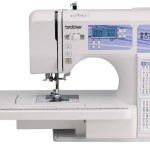
Brother HC1850 Sewing Machine
over $75
free returns
checkout
support
There’s a moment most beginner sewers know well — you’re standing in the Spotlight aisle on a Saturday morning, or you’ve somehow ended up on Amazon Australia at midnight, scrolling through machine after machine and wondering which one won’t become a $400 mistake in six weeks’ time. The Brother HC1850 keeps appearing in those searches. And honestly? It keeps appearing for good reason.
This isn’t the flashiest option on the shelf. It won’t cheerfully chew through eight layers of upholstery denim without protest. But for the overwhelming majority of Australians threading a needle for the first time — or picking sewing back up after a long break — it hits a balance that’s genuinely hard to argue with: enough features to grow into, priced where it doesn’t sting if the hobby doesn’t stick.
Here’s what’s actually worth knowing before you hand over your card.
What Is the Brother HC1850 Sewing Machine?
The Brother HC1850 is a computerised sewing and quilting machine built for home use. Brother positioned it deliberately between pure beginner-level entry machines and the more serious mid-range models — capable enough for real projects, approachable enough that you won’t feel overwhelmed on your first afternoon.
Everyday sewing tasks like dressmaking, alterations, and home décor all sit comfortably in its wheelhouse, but it’s also been designed with quilters in mind. It ships with a wide quilting table extension, which is one of those immediately practical additions for anyone working with quilt blocks and needing more surface area to the left of the needle.
The people who tend to reach for this machine fall into a few clear camps: complete beginners buying their first machine, hobby sewists who’ve genuinely outgrown a basic mechanical model, and casual quilters who don’t want to spend four figures on a dedicated quilting setup.
Key Features of the Brother HC1850
Built-In Stitches and Sewing Functions
130 built-in stitches. That number sounds like marketing padding until you actually dig into what’s in there.
You get utility stitches for construction and seam finishing, a solid range of decorative stitches for embellishment work, heirloom stitches for delicate pintuck and entredeux applications, and eight styles of one-step automatic buttonholes. Most people will reach for maybe 10 of those stitches with any regularity — but having options genuinely matters as your projects evolve and get more ambitious.
Stitch selection runs through the LCD screen rather than the old dial-and-hope method. The machine displays the recommended presser foot and stitch settings for whichever stitch you’ve chosen, which removes a lot of the guesswork that trips up new sewers in those early sessions.
LCD Screen and Computerised Controls
The LCD screen is clear and actually useful — not just decorative. It shows stitch number, width, length, and recommended foot alongside a basic diagram. Speed control sits on a slider on the front of the machine, separate from the foot pedal, which a lot of beginners appreciate while they’re still building muscle memory and coordination.
Needle positioning — whether it stops up or down — is adjustable. That’s a small detail, but it makes continuous stitching and pivoting at corners noticeably less frustrating once you know it’s there.
The computerised controls won’t feel like a lot to take on. Most people get comfortable within an afternoon, though transitioning from a purely mechanical machine does take a session or two of adjustment.
Brother HC1850 Performance for Everyday Sewing
For cotton, linen, quilting cotton, and standard polyester, the HC1850 performs well. Seams come out consistent, tension is generally reliable straight out of the box, and the automatic needle threader works as advertised — which isn’t something you can say confidently about every machine at this price point.
Dressmaking in light to medium fabrics sits squarely in its comfort zone. Home décor projects — cushion covers, curtains, simple tote bags — handle without fuss. Alterations on everyday clothing are no trouble at all.
Where the limits start showing is with heavier materials. A single layer of denim or canvas? Usually fine. Multiple thick layers stacked together, and the motor begins to labour in a way that tells you it’s working harder than it wants to. It’s not the machine for outdoor gear or reinforced workwear. For most everyday sewing, though, it does what it promises.
Quilting Capabilities and Accessories
Quilting Features
The HC1850 includes a drop feed option, which is what you need for free-motion quilting. Drop the feed dogs, attach a free-motion or darning foot, and you’re guiding the fabric yourself to create stippling or custom designs. It’s not the most powerful setup for dense all-over quilting, but for smaller quilt projects and sampler quilts, it holds up reasonably well.
The included wide quilting table gives you meaningful extra workspace — genuinely helpful when you’re manoeuvring large quilt sandwiches and need somewhere for the fabric to rest. A quilting guide bar is also included, which lets you stitch evenly spaced parallel lines without having to mark up the fabric beforehand.
What it doesn’t come with as standard is a walking foot — the presser foot most quilters reach for when doing straight-line quilting through multiple layers. That’s worth budgeting for separately before your first quilt project.
Included Accessories
The HC1850 ships with a solid accessory kit. Multiple presser feet — zipper foot, buttonhole foot, blind stitch foot, overcasting foot — along with the quilting table, quilting guide bar, a seam ripper, multiple bobbins, and a hard protective case.
The hard case is worth singling out. A lot of machines in this price range come with a soft dustcover or nothing at all. Having a structured case makes transporting the machine to a sewing class or a friend’s place genuinely practical rather than an awkward balancing act.
Pros and Cons of the Brother HC1850
Advantages
The stitch variety is the standout feature at this price. 130 stitches is genuinely generous for this bracket, and the automatic settings for each one reduce trial-and-error considerably during early projects. The machine is lightweight — roughly 5.4kg — which makes shifting it around the house or loading it into the car for a class easy enough to not be a deterrent.
Ease of use is real here, not just a marketing claim. The automatic needle threader, drop-in top-load bobbin, and LCD guidance keep setup friction low for beginners. For Australian buyers, the price-to-feature ratio sits in a comfortable place — competitive against comparable machines from other brands without requiring a significant financial leap.
Limitations
The plastic body construction draws the most consistent complaints. It doesn’t feel premium in hand, and long-term durability is a fair concern for anyone planning heavy daily use over years. The motor is modest — appropriate for light to medium fabrics but not ideal for anyone who regularly works with thick or multilayered materials.
There’s also a genuine adjustment period for sewers who’ve only ever used mechanical machines. The computerised controls aren’t complicated, but the transition isn’t instantaneous either.
Brother HC1850 vs Other Popular Sewing Machines in Australia
| Feature | Brother HC1850 | Brother CS6000i | Singer Heavy Duty 4423 |
|---|---|---|---|
| Stitch count | 130 | 60 | 23 |
| Quilting table | Included | Included | Not included |
| Motor type | Computerised | Computerised | Mechanical |
| Buttonhole styles | 8 | 7 | 1 |
| Weight | ~5.4kg | ~5.5kg | ~6.4kg |
| Best for | Sewing and quilting | General sewing | Heavy fabrics |
Brother HC1850 vs Brother CS6000i
Both machines come from the same manufacturer and target a similar audience, which makes this comparison particularly useful. The HC1850 wins clearly on stitch count — 130 versus 60 — and offers slightly more buttonhole styles. Both include a quilting table and run similar computerised controls.
In practice, the CS6000i is a capable machine, but the HC1850 feels like the more complete package for anyone who wants room to grow creatively over time. The interface on both is similar enough that switching between them wouldn’t take long to adjust to.
Brother HC1850 vs Singer Heavy Duty 4423
This comparison is really about different strengths rather than one being objectively better. The Singer 4423 runs a stronger motor and handles thick fabrics — denim, canvas, multiple layers — more comfortably than the HC1850. It’s a mechanical machine with 23 stitches, built for durability and power over creative versatility.
The HC1850 wins on stitch variety, quilting functionality, and ease of use for beginners. The Singer wins on raw fabric-penetrating capacity. If your projects lean toward heavy-duty materials regularly, the Singer deserves serious consideration. For general sewing and quilting, the HC1850 is the more well-rounded option for most people.
Is the Brother HC1850 Suitable for Australian Beginners?
For most Australian beginners, yes — it’s a genuinely solid first machine.
The automatic features reduce the technical frustration that puts people off sewing in those early weeks. The automatic needle threader, easy bobbin winding, and LCD stitch guidance mean less time troubleshooting and more time actually sewing. That matters more than people expect when confidence is still forming.
It handles school textile projects, DIY clothing repairs, handmade gifts, and the home décor projects — cushions, fabric baskets, simple curtains — that tend to be an Australian hobby sewer’s first real-world work. The machine is common enough across sewing communities in Australian cities and regional areas that finding tutorials or help specific to it isn’t difficult.
The adjustment curve with computerised controls is real but manageable. Most beginners feel comfortable within a few dedicated sessions.
Pricing, Availability and Warranty in Australia
The Brother HC1850 typically retails in Australia somewhere in the AUD $350–$450 range, though prices shift depending on sales and retailer. Spotlight stocks it regularly and often runs sewing machine promotions worth timing a purchase around. Sewing Machines Australia, Amazon Australia, and eBay Australia are all worth checking for competitive pricing at any given point.
Brother Australia provides a two-year warranty, which is standard for this category. Australian Consumer Law provides additional protections beyond the manufacturer warranty — worth knowing if something goes wrong within a reasonable expected lifespan.
Buying from an Australian retailer rather than importing generally makes more sense for warranty support and servicing access down the track.
Who Should Buy the Brother HC1850?
The HC1850 makes most sense for:
- Beginners buying their first sewing machine who want genuine room to grow
- Hobby sewists working primarily with light to medium fabrics
- Casual quilters who want quilting functionality without the price tag of a quilting-specific machine
- Crafters who want stitch variety for decorative and creative projects
- Home sewers doing alterations, dressmaking, and home décor work
It’s probably not the right call for anyone who regularly works with heavy fabrics, runs a home sewing business at high daily volume, or needs the durability of a more purpose-built machine. For those use cases, spending more on the right tool makes more sense over time than pushing a machine beyond what it was designed to handle.
Final Verdict: Is the Brother HC1850 Worth Buying in Australia?
The Brother HC1850 earns its reputation as one of the better beginner-to-intermediate sewing and quilting machines available in Australia. It delivers genuine value — 130 stitches, real quilting functionality, computerised ease of use, and a solid accessory kit — at a price point that doesn’t require a significant financial commitment before you know whether the hobby is going to stick.
It won’t last indefinitely under heavy daily use, and it won’t muscle through thick materials the way a purpose-built heavy-duty machine would. But for the everyday Australian home sewer, it does what it promises and does it reliably across the kinds of projects most people actually make.
If you’re sitting on the fence between the HC1850 and spending significantly more on a mid-range machine, the HC1850 is capable enough to genuinely answer that question for you — whether sewing is worth a larger investment — before you have to commit to one. That’s a reasonable way to approach it.
Worth buying. Recommended with the caveat that you go in knowing your fabric needs.
| Stitch applications | 57 built-in |
| Stitch settings | Preset length & width |
| Weight | Under 13 lbs |
| Needle threader | Automatic |
| Free arm | Yes |
| Power supply | 110V (US standard) |
| Best fabrics | Cotton, polyester blends, light canvas, light denim |
| Skill level | Beginner – Intermediate |
Reviews
There are no reviews yet.