

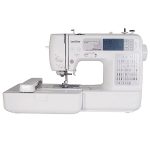
Brother SE400 Combination Computerized Sewing Machine
over $75
free returns
checkout
support
There’s a moment most sewists know well — you’re halfway through a project, wishing your machine could do just a little more. Maybe you want to add a monogram to that tote bag, or stitch a decorative border along a quilt edge, but your machine tops out at basic utility stitches. That’s exactly the gap the Brother SE400 was built to fill.
The Brother SE400 Combination Computerized Sewing Machine is a dual-purpose home machine from Brother Industries that handles both everyday sewing and embroidery without making you choose one or the other. It’s compact enough for an apartment craft nook, approachable enough for a beginner, and capable enough to satisfy a hobbyist who wants to push their projects further.
What Is the Brother SE400?
Think of it as two machines sharing one body. On one side, you’ve got a fully computerized sewing machine with dozens of built-in stitches. On the other, a dedicated embroidery unit with a 4×4 inch hoop and USB import capability. The LCD display ties everything together with a touchscreen interface that doesn’t require reading a manual to navigate.
It’s been around long enough to build a loyal following — and long enough to have some known limitations worth knowing upfront.
Key Features
The SE400 ships with 67 built-in sewing stitches and 70 built-in embroidery designs, plus five lettering fonts for monogramming. That’s a solid starting point without importing a single additional file.
The USB port is genuinely useful. You can load PES embroidery files from a flash drive, which opens the machine to the vast world of downloadable and purchased designs online. Etsy alone has thousands of PES-format files sized for a 4×4 hoop.
The automatic needle threading system is small but meaningful — especially for anyone who’s squinted at a needle at 10pm trying to thread it by lamplight.
Other practical specs:
- Embroidery field: 4 x 4 inches
- LCD color touchscreen for design preview
- Included presser feet: 8 feet for different stitch applications
- Max embroidery speed: roughly 400 stitches per minute
Sewing Performance
For everyday sewing, the SE400 handles most home fabrics without complaint. Quilting cotton, lightweight denim, jersey knits, and standard wovens all run through cleanly. Stitch length and width are both adjustable, and the machine lets you lock in a specific speed rather than riding the foot pedal to control pace — useful when you’re learning or working on precise seams.
Where it starts to struggle is with very heavy materials. Multiple layers of thick denim or canvas can cause the feed to drag. For most home projects, that’s rarely an issue, but it’s worth knowing before you plan an upholstery project around it.
The decorative stitches are genuinely attractive — scallops, cross-stitches, satin stitches — and they hold up well even on lighter fabrics with the right stabilizer underneath.
Embroidery Features
The embroidery side of the SE400 is where most buyers either fall in love or run into their first frustration.
The 4×4 inch hoop is a real constraint. It’s fine for patches, pocket logos, onesie designs, and small monograms. It’s not enough for a full-back jacket panel or a large bath towel design without repositioning — which requires some patience and practice to get right.
That said, what it does fit, it does well. The built-in designs are clean, the thread tension behaves consistently across most standard embroidery threads, and the USB import process is straightforward once you’ve done it once or twice.
For stabilizer, tear-away works for most woven fabrics. Cut-away is better for stretchy materials like t-shirts — a detail that makes a bigger difference than most beginners expect.
Monogramming uses the five built-in fonts and allows you to combine letters into names or initials directly on the LCD screen. It’s not as flexible as dedicated embroidery software, but it handles the most common personalization requests without any extra tools.
Benefits for Beginners and Hobbyists
The SE400 has a learning curve that’s gentler than most machines in its category. The LCD interface shows a preview of each stitch or embroidery design before you commit, which removes a lot of the guesswork. The automatic threading helps. The included manual is actually readable.
What tends to happen after a few weeks of use is that beginners get comfortable fast — sometimes faster than they expect. The machine’s consistency builds confidence, which is probably the most underrated thing a first machine can do.
For hobbyists already past the basics, it’s a capable workhorse for mid-complexity projects. It’s not the machine you grow into forever, but it’s the one that gets a lot of people to the point where they know what they want next.
Popular Projects
The SE400 handles a wide range of practical projects:
- Personalized gifts: monogrammed towels, baby blankets with name embroidery, custom tote bags
- Holiday decor: Christmas stockings, Fourth of July table runners, seasonal throw pillows
- Custom apparel: adding patches or logos to shirts, embroidering jacket backs (within hoop size)
- Quilting details: decorative stitching along borders, applique work, sashing embellishment
- Small business use: Etsy sellers use it for low-volume personalized goods — it’s a reasonable production machine for orders under roughly 20-30 pieces per week
Maintenance and Care
Keeping the SE400 running well isn’t complicated, but it does require some regularity.
Clean the bobbin case area after every few projects — lint builds up faster than expected, especially with cotton thread. A small brush works better than compressed air for this.
Replace needles more often than feels necessary. A dull needle causes skipped stitches and snagged fabric long before it actually breaks. Every 8-10 hours of sewing is a reasonable interval.
The machine doesn’t require oiling in the traditional sense — Brother uses sealed internal mechanisms for most moving parts. Check your specific manual before oiling anything, because applying oil where it’s not needed can cause problems.
For embroidery files, organize your USB drive into folders by hoop size and category. It saves time when you’re mid-project and hunting for a design.
Brother SE400 vs. Other Machines
Here’s a straightforward comparison of where the SE400 sits relative to its closest alternatives:
| Machine | Embroidery Field | Built-in Designs | USB Import | Price Range | Best For |
|---|---|---|---|---|---|
| Brother SE400 | 4 x 4 in | 70 | Yes (PES) | ~$200-250 | Beginner/hobbyist combo use |
| Brother SE600 | 4 x 4 in | 80 | Yes (PES) | ~$250-300 | SE400 upgrade with more stitches |
| Brother PE535 | 4 x 4 in | 80 | Yes (PES) | ~$250-300 | Embroidery-only focus |
| Janome Memory Craft 500E | 7.9 x 11 in | 160 | Yes | ~$700+ | Serious embroidery work |
| Singer SE9000 | 5 x 7 in | 200+ | Yes | ~$400-500 | Mid-tier embroidery flexibility |
The honest takeaway: the SE400 and SE600 are nearly identical machines with minor differences in stitch count. If you’re buying new today, the SE600 sometimes prices close enough that it’s worth the bump. The PE535 is worth considering if embroidery is your main goal and sewing is secondary — it dedicates more resources to that side.
For anyone eyeing the Janome or Singer mid-range options, the jump in embroidery field size is significant. If you regularly want to do designs larger than 4×4, that upgrade pays for itself in frustration avoided.
Is the Brother SE400 Worth It?
For a beginner who wants both sewing and embroidery without buying two machines, the SE400 delivers real value. It’s approachable, it’s reliable for home use, and it produces clean results across a wide range of everyday projects.
For someone who’s already outgrown a basic machine and wants embroidery flexibility beyond 4×4, it’s probably not the endpoint — more of a waystation. The hoop size and limited embroidery software integration will start to feel restrictive once you’re importing complex custom files regularly.
The ideal SE400 buyer is someone who wants to personalize projects, make thoughtful handmade gifts, or explore embroidery without committing to a $500+ machine upfront. At roughly $200-250, it earns its place in a home sewing studio without asking much in return.
Just go in knowing the 4×4 hoop is a real limitation, not a footnote — and you’ll use it happily for years.
| Stitch applications | 57 built-in |
| Stitch settings | Preset length & width |
| Weight | Under 13 lbs |
| Needle threader | Automatic |
| Free arm | Yes |
| Power supply | 110V (US standard) |
| Best fabrics | Cotton, polyester blends, light canvas, light denim |
| Skill level | Beginner – Intermediate |
Reviews
There are no reviews yet.