

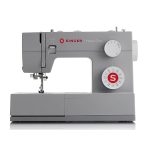
Singer Heavy Duty 4423 Sewing Machine
over $75
free returns
checkout
support
A surprising number of sewing machines look impressive online and then struggle the moment thick denim hits the needle. That’s usually the point where many beginners either quit sewing entirely or start hunting for a machine with more muscle.
The Singer Heavy Duty 4423 sits in a very different category.
This machine built a strong reputation in the United States because it focuses on the things most home sewers actually use: speed, durability, simple controls, and enough power to sew through stubborn fabric layers without sounding like the machine is about to surrender. And honestly, that combination explains why the 4423 keeps appearing in sewing rooms, Etsy craft spaces, college dorms, and suburban laundry rooms across America.
For roughly $200 to $300 USD, the Singer Heavy Duty 4423 delivers industrial-inspired performance in a beginner-friendly package. It doesn’t pretend to be a luxury computerized embroidery machine. Instead, it handles real-life sewing jobs that show up every week in American households.
Think denim repairs. Halloween costumes sewn three nights before October 31. RV cushion covers. Curtain hems. Christmas stockings made in batches while holiday movies play in the background.
That’s the lane this machine dominates.
Overview of the Singer Heavy Duty 4423 Sewing Machine
The Singer Heavy Duty 4423 is a mechanical sewing machine designed for fast, consistent sewing on both lightweight and heavier fabrics. The machine combines a metal interior frame, a stronger motor, and straightforward controls that don’t overwhelm beginners.
Unlike computerized sewing machines filled with menus and touchscreen settings, the 4423 keeps things tactile. Stitch selection happens through a manual dial. Tension adjustments feel direct and easy to understand. In practice, that simplicity becomes a huge advantage for people learning how fabric actually behaves under a presser foot.
Key specifications include:
- 23 built-in stitches
- 1,100 stitches per minute
- Heavy-duty metal frame
- Stainless steel bedplate
- One-step buttonhole
- Free arm sewing capability
- Top drop-in bobbin system
The stronger motor matters more than marketing language suggests. Singer claims the motor delivers roughly 60% more power than standard sewing models, and during heavier projects, that extra torque becomes noticeable. Especially when sewing folded denim seams or layered canvas.
Now, here’s the interesting part. The 4423 doesn’t feel delicate. Some modern beginner machines feel almost toy-like because of lightweight plastic construction. This model feels planted on the table. Slightly louder, yes. But also more stable at high speeds.
That tradeoff works well for many American users.
Key Features That Matter for U.S. Users
Strong Motor for Thick Fabrics
American sewing culture leans heavily toward practical projects. Denim alterations, tote bags, upholstery touch-ups, and seasonal crafts dominate home sewing spaces far more than runway fashion pieces.
The Singer 4423 handles those projects surprisingly well for its price range.
Denim jean repairs become manageable because the motor keeps pushing through thick seam intersections instead of freezing halfway through the stitch line. Canvas tote bags feed smoothly under the presser foot. Quilted layers don’t immediately overwhelm the machine.
Light upholstery work also falls within its comfort zone. Dining chair cushions, patio pillow covers, RV seating repairs — those projects usually work fine with proper needles and slower pacing through dense corners.
Leather accents are possible too, although lightweight leather performs far better than thick multi-layer leather stacks. That distinction matters because online reviews sometimes exaggerate the machine’s capabilities.
In real-world sewing rooms, the 4423 performs best as a powerful home machine, not as an industrial replacement.
High-Speed Sewing at 1,100 Stitches Per Minute
Speed changes the sewing experience more than many beginners expect.
At 1,100 stitches per minute, the Singer 4423 runs noticeably faster than many entry-level machines sold at big-box retailers. That speed becomes incredibly useful during repetitive projects.
Holiday sewing offers the best example.
When Thanksgiving table runners, Christmas stockings, and matching gift bags pile up during November and December, faster stitching saves hours. Etsy sellers notice the same benefit while producing batches of zip pouches, aprons, scrunchies, or fabric baskets.
Of course, fast machines come with a learning curve. Beginners often press the foot pedal too aggressively at first and suddenly launch fabric across the table like a drag racer leaving the starting line. That happens a lot.
Fortunately, the mechanical controls remain predictable once muscle memory develops.
23 Built-In Stitches
The stitch selection covers most everyday sewing needs without becoming excessive.
Included stitches typically involve:
- Basic utility stitches
- Decorative stitches
- Stretch stitches
- One-step buttonhole stitch
For most home sewers, that lineup handles years of projects comfortably.
The machine doesn’t overload users with 150 decorative flower patterns that rarely get touched after the first month. Instead, the stitch library stays practical.
That practical approach fits the machine’s overall identity.
Who Should Buy the Singer Heavy Duty 4423?
Beginners
The Singer 4423 works extremely well for beginners who want to learn sewing fundamentals without navigating digital menus.
Mechanical controls create a more direct relationship between adjustments and results. When tension changes, you can actually feel and see the difference immediately. That feedback teaches sewing skills faster than heavily automated systems in many cases.
And honestly, fewer electronics often means fewer frustrations.
No software glitches. No touchscreen freezing. No endless settings menus.
Just fabric, thread, needle, and motor.
For beginners interested in clothing repairs, crafts, or home décor projects, the learning curve feels manageable.
DIY Homeowners
This machine fits naturally into practical home sewing.
Curtain hemming becomes simple. Pillow covers sew together quickly. Furniture repairs stop feeling intimidating. Seasonal decorating projects move faster because the machine handles long seams efficiently.
A lot of homeowners buy sewing machines with ambitious plans and then only use them three or four times per year. The Singer 4423 actually works well for that kind of intermittent use because setup stays uncomplicated.
Even after sitting unused for months, threading and operation remain straightforward.
Small Craft Businesses
Affordable startup equipment matters for home-based businesses.
The Singer 4423 gives Etsy sellers and small crafters enough speed and power to produce inventory without requiring a four-figure investment. Fabric bins, shipping supplies, and packaging materials already eat into startup budgets quickly. Spending thousands on advanced sewing equipment doesn’t always make sense initially.
This machine bridges that gap effectively.
That said, embroidery businesses or advanced quilting operations usually outgrow the 4423 eventually. The machine prioritizes durability and speed over automation and decorative flexibility.
Singer Heavy Duty 4423 vs Other Popular U.S. Sewing Machines
Several sewing machines compete directly with the Singer Heavy Duty 4423 in the American market. The most common comparisons involve the Brother CS7000X, Janome HD3000, and Singer 4411.
Here’s where things get interesting.
The Brother CS7000X offers more computerized features and quilting options. Decorative stitch lovers often prefer it because digital controls create a smoother learning experience for precision work. However, the Brother machine generally feels less rugged when handling thick denim or canvas repeatedly.
The Janome HD3000 sits at a higher quality tier overall. Many experienced sewists praise its smoother feeding system and quieter operation. But pricing climbs noticeably higher, often approaching double the cost of the Singer 4423 depending on sales and retailer promotions.
Then there’s the Singer 4411.
The 4411 functions almost like the 4423’s stripped-down sibling. It includes fewer stitches but maintains similar heavy-duty power characteristics. For people who only need straight stitches and occasional zigzag work, the 4411 often makes financial sense.
Still, the 4423 lands in a sweet spot.
Enough stitch variety. Enough speed. Enough durability. Without crossing into expensive territory.
That balance explains its popularity.
Performance in Real American Sewing Scenarios
Denim Hem Repairs
Denim repairs reveal weaknesses quickly.
Cheap sewing machines tend to hesitate or jam when crossing thick jean seams. The Singer 4423 handles those transitions more confidently, especially with denim needles installed properly.
Folded hems feed through with relatively consistent stitching. Minor vibration appears at higher speeds, but the machine rarely feels underpowered.
For households repairing work jeans, school uniforms, or casual wear regularly, this capability alone justifies the purchase price.
Upholstery Projects
Light upholstery projects fit comfortably within the machine’s capabilities.
Dining chair cushions sew cleanly. RV seat covers work reasonably well. Decorative pillow covers with thick piping also remain manageable.
Heavy commercial upholstery fabric can push the limits eventually, especially multiple dense layers combined with foam backing. But for occasional home projects, performance stays impressive.
What tends to happen after a few months is this: users gain confidence tackling projects they originally assumed required professional upholstery services.
That confidence matters.
Quilting Projects
Small and medium quilting projects work nicely on the 4423.
Baby quilts, lap quilts, table runners, and wall hangings remain practical. The machine’s speed helps during long straight quilting lines too.
King-size quilts become less enjoyable because throat space feels limited without an extension table. Wrestling massive fabric rolls through smaller openings gets tiring fast.
Still, casual quilters usually find enough capability here for everyday creative work.
Holiday Crafting
Holiday crafting might actually be this machine’s natural habitat.
Batch sewing ornaments, stockings, gift bags, and holiday décor pieces becomes efficient thanks to the machine’s speed and stable stitching. During peak crafting season — usually October through December in the U.S. — that efficiency matters a lot.
Especially when projects pile up faster than expected.
Ease of Use and Maintenance
Threading and Bobbin Setup
The top-loading bobbin system simplifies setup considerably.
Many beginners struggle more with bobbin threading than actual sewing. The transparent bobbin cover helps users monitor thread supply visually, which prevents sudden empty-bobbin surprises halfway through seams.
Threading paths also stay clearly marked.
That sounds minor until dealing with poorly labeled machines at midnight during last-minute project panic.
Maintenance Expectations
Like most mechanical sewing machines, the Singer 4423 benefits from regular maintenance.
In practice, maintenance usually involves:
- Cleaning lint buildup after heavy fabric use
- Oiling moving parts occasionally
- Replacing needles frequently
- Using quality thread consistently
Singer-branded needles often produce smoother performance, although other premium brands work well too.
The metal interior frame improves long-term durability significantly compared to lightweight plastic-body alternatives. After several years of use, many owners report the machine still feels mechanically solid despite cosmetic wear.
That durability reputation contributes heavily to the machine’s continued popularity.
Pros and Cons of the Singer Heavy Duty 4423
Pros
The biggest advantage is value.
For under $300 USD, buyers receive strong motor performance, fast stitching speed, and durable construction rarely found together in this price category.
Other major strengths include:
- Beginner-friendly controls
- Reliable denim handling
- Stable high-speed stitching
- Practical stitch selection
- Widely available replacement accessories
The machine also adapts well to different experience levels. Beginners appreciate the simplicity, while experienced sewists often keep it as a reliable secondary machine for heavy fabrics.
Cons
The machine isn’t perfect.
Noise levels run higher than many computerized sewing machines. At full speed, the motor sounds noticeably aggressive. Some users love that industrial-style sound. Others don’t.
Decorative stitch options remain limited too. Fashion-focused sewists sometimes outgrow the available stitch variety relatively quickly.
The lack of an automatic thread cutter also feels dated compared to newer computerized competitors.
Still, most compromises connect directly to the machine’s affordability and mechanical design philosophy.
Price, Availability, and Warranty in the United States
The Singer Heavy Duty 4423 remains widely available throughout the United States.
Major retailers include:
- Amazon
- Walmart
- Joann Fabrics
- Michaels
- Target online marketplace
- Singer’s official website
Typical pricing ranges between $200 and $300 USD depending on seasonal sales and included accessories.
Black Friday and holiday discounts often push prices closer to the lower end of that range. Spring crafting sales occasionally produce strong deals too.
Warranty coverage usually includes:
- 25-year limited warranty on the machine head
- 2-year warranty on electrical components
- 90-day warranty on adjustments
Checking current warranty details before purchase still makes sense because retailer terms sometimes vary slightly.
Is the Singer Heavy Duty 4423 Worth It?
For most American home sewers, yes.
The Singer Heavy Duty 4423 succeeds because it understands its purpose clearly. This machine prioritizes power, speed, durability, and simplicity over flashy technology.
That formula works extremely well for:
- Denim repairs
- Home décor sewing
- Seasonal crafts
- Beginner sewing education
- Small business production work
People searching for embroidery functions, programmable stitches, or advanced quilting automation probably won’t feel satisfied long term. Computerized models serve those goals better.
But for practical sewing? Everyday projects? Fabric that fights back a little?
The 4423 performs remarkably well.
Final Thoughts
The Singer Heavy Duty 4423 sewing machine remains one of the most popular sewing machines in the United States because it delivers exactly what many home sewers actually need.
Speed. Strength. Simplicity.
No unnecessary complexity. No intimidating digital systems. Just reliable sewing performance that handles denim, canvas, home décor fabric, and seasonal projects without constant frustration.
And honestly, that reliability becomes more valuable over time.
A lot of sewing machines impress buyers during the first week and then reveal limitations later. The Singer 4423 tends to produce the opposite reaction. Initial impressions often focus on noise or basic styling, but long-term use highlights the machine’s consistency and durability.
For households sewing curtains one weekend and repairing jeans the next, this machine fits naturally into everyday life.
If durability and sewing power matter more than decorative extras, the Singer Heavy Duty 4423 remains one of the strongest values in the American sewing market.
| Stitch applications | 57 built-in |
| Stitch settings | Preset length & width |
| Weight | Under 13 lbs |
| Needle threader | Automatic |
| Free arm | Yes |
| Power supply | 110V (US standard) |
| Best fabrics | Cotton, polyester blends, light canvas, light denim |
| Skill level | Beginner – Intermediate |
zoritoler imol –
Admiring the hard work you put into your site and in depth information you provide. It’s great to come across a blog every once in a while that isn’t the same unwanted rehashed material. Excellent read! I’ve saved your site and I’m including your RSS feeds to my Google account.