There’s a moment every home sewist eventually hits — you finish a seam, flip the fabric over, and notice the raw edge already fraying. You’ve done everything right, but the inside of the garment looks… unfinished. Amateur. Like something you’d never find in a store-bought piece.
That’s exactly the gap a serger fills.
A serger machine (also called an overlock machine) trims, wraps, and finishes a seam in a single pass. It doesn’t replace your sewing machine — it works alongside it, handling the tasks your regular machine simply wasn’t built for. For American home sewists, quilters, and small business owners producing handmade goods, a serger is often the difference between hobbyist results and truly professional-looking work.
Contents
- 1 What Is a Serger Machine?
- 2 How Does a Serger Machine Work?
- 3 Serger vs. Sewing Machine: What’s the Difference?
- 4 Top Benefits of Using a Serger Machine
- 5 What Can You Make With a Serger?
- 6 Who Should Buy a Serger Machine?
- 7 Features to Look for When Choosing a Serger Machine
- 8 Common Mistakes New Serger Owners Make
- 9 Is a Serger Machine Worth It?
What Is a Serger Machine?
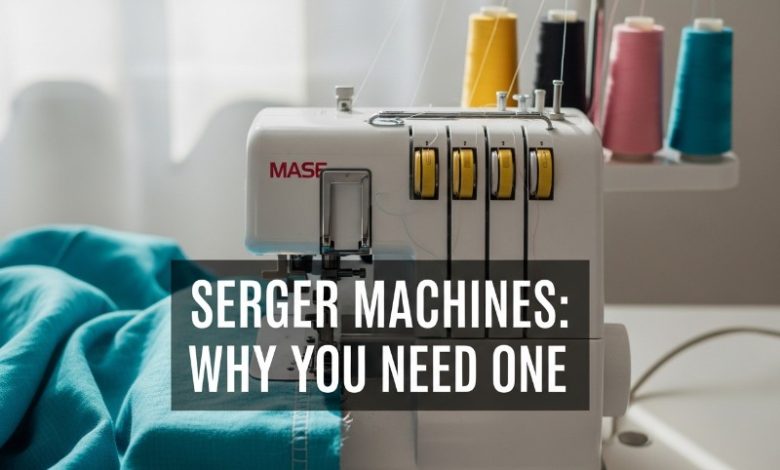
A serger is a specialized sewing machine that uses multiple threads — usually three or four, sometimes five — to encase raw fabric edges with a looped stitch. The result is a tight, flexible finish that resists fraying even after repeated washing.
The term “overlock” comes from how the stitch works: thread loops over the fabric edge, locking it in place from both sides. In most countries outside the U.S., “overlock machine” is the standard name. Here, “serger” tends to dominate — same machine, different vocabulary.
Inside the machine, you’ll find needles (one or two depending on the stitch type) and loopers — internal hooks that guide the thread around the fabric edge. Thread feeds from large cones rather than standard spools, which keeps the machine running longer without constant reloading.
Sergers handle a wide range of fabrics: knits, wovens, lightweight jerseys, heavy denim. The key is that whatever you’re working with, the edge comes out clean.
How Does a Serger Machine Work?
The Role of Needles and Loopers
Unlike a regular sewing machine that forms a lockstitch between a top and bottom thread, a serger uses a combination of needle thread(s) and looper threads that interlock in mid-air at the fabric’s edge. The upper looper carries thread over the top of the fabric; the lower looper runs beneath it. The needle(s) pierce through and anchor everything together.
It’s a surprisingly elegant mechanical system once you see it in slow motion. The stitch forms fast — sergers typically run at 1,500 stitches per minute or more.
Cutting and Finishing in One Step
Built into every serger is a knife system — essentially a small blade positioned just ahead of the presser foot. As the fabric feeds through, the knife trims the raw edge to a consistent width, and the overlock stitch immediately wraps around that freshly cut edge.
Trim. Stitch. Finish. All at once. This is where the real time savings happen.
Common Stitch Types
- 3-thread overlock — the go-to for finishing raw edges on woven fabrics; lightweight, flexible
- 4-thread overlock — adds a second needle thread for stronger, more durable seams; what you’d use for garments under stress
- Rolled hem — a very narrow, tightly wrapped edge finish; beautiful on chiffon, napkins, scarves
- Flatlock stitch — lays the seam completely flat; used in activewear and athletic gear where bulk is the enemy
Each stitch type requires re-threading and tension adjustments. That’s part of the learning curve — but once you’ve done it a few times, it becomes muscle memory.
Serger vs. Sewing Machine: What’s the Difference?
Here’s the honest comparison most beginners need before deciding whether a serger belongs in their workspace.
| Feature | Sewing Machine | Serger |
|---|---|---|
| Straight stitching | Excellent | Not designed for this |
| Seam finishing | Limited (zigzag only) | Core function |
| Buttonholes | Yes | No |
| Decorative stitches | Many options | Very few |
| Knit fabrics | Possible but tricky | Handles them beautifully |
| Cutting built in | No | Yes |
| Speed | Moderate | Very fast |
| Threading complexity | Straightforward | Steep learning curve |
A personal observation worth adding here: the table above makes it look like these machines compete, but in practice they don’t. They’re genuinely complementary tools. The sewing machine builds the structure of a garment; the serger makes the inside look like it came off a factory floor.
Tasks a Sewing Machine Handles Better
Buttonholes, zipper installations, topstitching, decorative embroidery, quilting — these are sewing machine territory. A serger can’t do any of them, and it’s not trying to.
Tasks a Serger Handles Better
Seam finishing, working with stretch fabrics, construction of knit garments (T-shirts, leggings, athletic wear), and any project where speed and edge quality both matter.
When You Need Both Machines
For most garment sewing, the workflow looks like this: sew the seam with your regular machine, then run the same seam through the serger to finish the edges. Or, for knit fabric, serge the seam entirely — the 4-thread overlock is strong enough to skip the sewing machine step altogether on many projects.
Top Benefits of Using a Serger Machine
Professional-Looking Seams
The inside of a serged garment looks like something you’d find in a department store. That matters more than people expect — not just aesthetically, but for durability.
Faster Sewing Projects
On a serger, what used to require two passes (sew + finish separately) collapses into one. For anyone making garments in volume — Etsy sellers, craft fair regulars, people who sew gifts every holiday season — the time savings compound quickly.
Reduced Fabric Fraying
Fraying isn’t just cosmetic. On fabrics like linen or loosely woven cotton, an unfinished edge can deteriorate with washing and eventually compromise the seam itself. A serged edge holds.
Better Stretch Fabric Performance
Knit fabrics require a stitch that can stretch without snapping. A standard lockstitch on knit fabric pops under tension. The overlock stitch, by nature of how it wraps around the edge, has built-in stretch — which is why T-shirts, swimwear, and leggings are almost universally constructed on sergers.
What Can You Make With a Serger?
Clothing and Apparel
T-shirts are the classic starting project — knit fabric, simple seams, and the results are immediately satisfying. From there: dresses, leggings, athletic wear, underwear, lightweight cardigans. Basically any garment where the seams need to flex.
Home Décor Projects
Sergers shine on home dec work too. Pillow covers with clean interior seams, curtain panels with neatly finished hems, table runners with rolled hem edges. For Thanksgiving or Christmas, serging a set of holiday table linens takes a fraction of the time it would with a conventional machine.
Craft and Small Business Products
If you’re selling handmade goods — on Etsy, at markets, to custom order clients — a serger pays for itself in professional presentation alone. Christmas stockings, Fourth of July bunting, seasonal tote bags. Customers notice when the construction quality is there, even if they can’t name exactly what they’re looking at.
Who Should Buy a Serger Machine?
Beginner Sewists
Honestly, it’s a mixed answer. Threading a serger is genuinely harder than threading a sewing machine — there are more paths, more tension discs, more places to go wrong. That said, once it’s threaded and dialed in, using it is intuitive. Beginners who commit to learning the threading process tend to love their sergers within a few weeks.
Intermediate Hobbyists
This is probably the sweet spot for a first serger purchase. At this stage, you’re likely already frustrated by your zigzag stitch as a seam finish — you know there’s a better solution, and a serger is it.
Quilters and Crafters
Quilters don’t always need a serger, but crafters who work with knit fabric, produce items in volume, or care a lot about the professional look of their finished pieces will find it genuinely useful.
Home-Based Business Owners
For anyone producing handmade apparel or home goods at any real volume, a serger is less of a luxury and more of a production tool. The time savings alone usually justify the purchase within a few months.
Features to Look for When Choosing a Serger Machine
Number of Threads
Most home sergers handle 3-4 threads; some go up to 8. For most people, a 4-thread serger covers 95% of what they’ll ever need.
Differential Feed
This feature controls how the front and back feed dogs move fabric through the machine at different rates. It’s essential for preventing stretching on knits and puckering on wovens. Don’t skip this feature — it matters more than most buyers expect.
Adjustable Stitch Length
Standard on most machines, but worth confirming. Stitch length affects both the look and the function of the finished seam.
Easy Threading Systems
Threading is where most new serger owners lose patience. Look for color-coded thread paths or — if budget allows — air-threading systems (Baby Lock is known for these). Air-threading sergers thread themselves with a push of a button, which sounds like a gimmick until you’ve re-threaded a conventional serger at 11pm on a deadline.
Budget and Warranty
- Entry-level ($250–$500): Brother, Singer models — solid for beginners, good for light to moderate use
- Mid-range ($500–$1,000): Juki, Janome — better build quality, more consistent tension, more stitch options
- Premium ($1,000+): Baby Lock, high-end Juki — professional-grade, often with air-threading and extended warranties
A longer warranty matters more for sergers than for sewing machines — they’re mechanically more complex and more expensive to service.
Common Mistakes New Serger Owners Make
Incorrect Threading
This is the number one source of frustration. A serger threaded even slightly wrong produces skipped stitches, broken threads, or seams that fall apart. Always thread in order (upper looper, lower looper, then needles) and follow the color-coded guides exactly.
Ignoring Tension Settings
Serger tension isn’t set-it-and-forget-it. Different fabrics, different thread weights, and different stitch types all require different tension adjustments. Most beginners leave the tension at factory defaults forever and wonder why their seams look inconsistent.
Using the Wrong Needle
Serger needles are not universal. Using the wrong type — or a dull needle — causes skipped stitches, fabric damage, and mysterious thread breaks. Change your needles more often than you think you need to.
Skipping Maintenance
Lint builds up in a serger faster than in a conventional machine because the knife is constantly cutting fabric. A quick brush-out after every few hours of sewing, and a drop of oil at regular intervals, keeps the machine running smoothly. Neglect this and the performance degrades noticeably.
Is a Serger Machine Worth It?
Situations Where a Serger Is Worth the Investment
- You sew garments regularly, especially knit fabrics
- You sell handmade goods and care about professional-looking construction
- You’re tired of fraying edges and inefficient finishing methods
- You sew in enough volume that time savings translate to real output
When a Sewing Machine Alone Is Enough
If your projects are mostly quilts, bags, or home dec items using woven fabrics — and you rarely touch knits — a serger might sit unused more than it gets used. A zigzag stitch or Hong Kong seam finish handles most woven fabric edge finishing adequately.
Cost vs. Long-Term Value
For hobbyists who sew regularly, a mid-range serger typically pays back its cost in time savings within a year or two. For small business owners producing apparel, the return is faster. The math shifts once you factor in that better-finished products command better prices and generate fewer customer complaints about durability.
The honest truth is this: most people who buy a serger wonder why they waited so long. And most people who decide they don’t need one yet — and then try one at a class or a friend’s house — go home and start shopping.
That’s usually how the decision actually gets made