Finding the right sewing machine is one of those decisions that sounds simple until you’re actually standing in front of a dozen options, each promising to be the last machine you’ll ever need. I’ve been there. And if you’ve done any research lately, you’ve probably noticed the Singer M2100 keeps showing up — in forums, in YouTube comments, in “best beginner machine” roundups. There’s a reason for that.
This isn’t a machine that tries to impress you with a hundred features you’ll never touch. What it does, it does consistently. And for a lot of people — especially those just getting started or coming back to sewing after years away — that consistency is actually what matters most.
Here, you’ll get a thorough look at what the M2100 actually offers: its features, how it performs in practice, what kind of sewers it suits best, and where it falls short. No fluff. Just what you need to figure out whether this machine fits your situation.
—
Contents
- 1 Product Features of the Singer M2100 Sewing Machine
- 2 Performance and Stitching Quality
- 3 Ease of Use — What It’s Actually Like to Operate
- 4 Durability and Build Quality
- 5 Versatility — What You Can Actually Make With It
- 6 Accessories Included
- 7 Specifications at a Glance
- 8 Pros and Cons
- 9 Maintenance and Care
- 10 Price and Value
- 11 Final Thoughts
- 12 Frequently Asked Questions
- 12.1 Is the Singer M2100 good for beginners?
- 12.2 How many built-in stitches does the Singer M2100 have?
- 12.3 Can you adjust stitch length and width on the M2100?
- 12.4 Does the Singer M2100 have an automatic buttonhole feature?
- 12.5 Can the M2100 handle heavy fabrics?
- 12.6 How do I clean and maintain the Singer M2100?
- 12.7 Can I use third-party presser feet with the M2100?
- 12.8 Where can I get support for the Singer M2100?
- 12.9 Is the Singer M2100 portable?
- 12.10 What warranty does the Singer M2100 come with?
Product Features of the Singer M2100 Sewing Machine
The M2100 isn’t loaded with bells and whistles — and that’s kind of the point. What it has is well-chosen. Here’s what you’re actually working with:

- Built-in Stitches — Practical Range: You get utility stitches for everyday construction, some decorative options if you want to add detail, and stretch stitches for knit fabrics. It’s not an exhaustive library, but it covers the situations most home sewers actually run into. If you’re mainly making garments or basic home goods, you won’t feel limited here.
- Adjustable Stitch Length and Width: This is one of those features that seems minor until you actually need it. Being able to tweak stitch dimensions means you can adapt to whatever fabric you’re working with — fine silk, thick denim, stretchy jersey — without fighting the machine. In practice, you’ll use this more than you expect.
- Automatic Needle Threader: Honestly, this alone saves a surprising amount of frustration — especially under bad lighting or at the end of a long sewing session when your eyes are tired. It’s not perfect every time, but it works reliably enough that you’ll miss it if you ever use a machine without one.
- Free Arm: Remove the accessory tray and you’ve got a free arm for sewing cuffs, sleeve hems, pant legs — anything cylindrical. It’s a straightforward feature that just works. Useful when you need it, out of the way when you don’t.
- Multiple Needle Positions: For topstitching or edge stitching close to a seam, having needle position flexibility is genuinely helpful. It’s a small thing that makes those finishing details cleaner without extra effort.
- Reverse Sewing: Standard on most machines at this level, but worth mentioning — you can lock your stitches at the start and end of every seam. Nothing unravels. It’s a habit that becomes second nature fast.
- Adjustable Presser Foot Pressure: Thicker fabrics tend to get bunched or dragged unevenly if the presser foot is pressing too hard — or not hard enough on lighter materials. Being able to dial this in keeps your fabric feeding smoothly regardless of what you’re working with.
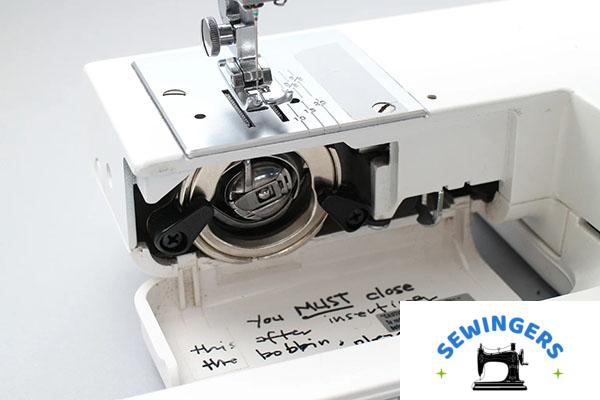
- Transparent Bobbin Cover: Small detail, genuinely useful. You can see at a glance how much thread is left without stopping mid-seam to check. Fewer surprises.
—
Performance and Stitching Quality
Here’s what I’d say about the M2100’s performance: it’s reliable in a way that doesn’t draw attention to itself. And for sewing, that’s a compliment.
- Stitch Consistency: The stitch length and tension stay stable across different fabric weights — at least within the light-to-medium range this machine is built for. You’re not constantly re-adjusting between projects.
- Stitch Formation: Stitches come out balanced and even. Not “wow, look at that” impressive — just clean and reliable. Which is what you actually want when you’re constructing something meant to last.
- Noise and Vibration: It’s not silent, but it’s reasonably quiet for a mechanical machine. There’s some noise at higher speeds — nothing unusual for this class. If you’re sewing late at night in a shared space, you’ll notice it. Otherwise, not really an issue.
- Stitch Variety in Practice: The straight stitch is where this machine lives most comfortably. The decorative options work, but they’re not its strongest suit. Stretch stitches perform well on knits if you pair them with the right needle (ballpoint or stretch needle makes a real difference here).
- Speed: The motor handles a good pace — roughly up to 800 stitches per minute. For most home projects, that’s more than enough. It doesn’t drag on thicker layers, which is a common frustration with budget machines.
- Fabric Feed: Fabric moves smoothly under the presser foot without puckering or pulling. Even slightly slippery fabrics behave reasonably well, though you’ll want to test tension settings before committing to a long seam on anything tricky.

—
Ease of Use — What It’s Actually Like to Operate
The M2100 is genuinely approachable, even if you’ve never used a sewing machine before. That said, “beginner-friendly” doesn’t mean zero learning curve — it just means the learning curve isn’t steep.
- Interface and Controls: The layout is clean. Buttons and dials are labeled clearly, and finding what you need doesn’t require digging through a menu or guessing. First-time sewers generally feel comfortable after a short setup session.
- Threading: The threading path is marked on the machine, and the automatic threader handles the needle. Threading the bobbin takes a few tries to get the feel of, but the manual walks you through it step by step. After the second or third time, it becomes automatic.
- Stitch Selection: You pick your stitch with a dial — simple, physical, immediate. No digital interface to navigate. For most people, this is a feature, not a limitation.
- Bobbin System: Top drop-in loading. The bobbin goes in, you pull the thread through, and you’re done. If your machine has a clear cover, you can see thread levels while you sew — which is a surprisingly useful detail when you’re in the middle of a long project.
- Adjustments Mid-Project: Stitch length, width, tension — all accessible with clearly labeled controls. You don’t have to stop and hunt for anything.
- Instruction Manual: The included manual is decent. It covers setup, basic operations, and some troubleshooting. It won’t answer every question you’ll ever have, but it handles the essentials well enough to get you started confidently.
—
Durability and Build Quality

The M2100 is built solidly for what it costs. It’s not a heavy industrial machine — don’t expect it to feel like one. But it’s not flimsy either.
The frame is stable enough that vibration doesn’t become a problem during regular use, and the internal components hold up well with normal maintenance. What tends to separate machines that last from ones that don’t isn’t just material quality — it’s whether the moving parts stay calibrated over time. The M2100 generally does, provided you keep it clean and lubricated.
Singer’s track record in this segment is long enough that finding replacement parts or service isn’t difficult if you ever need it. That’s worth factoring in when you’re comparing brands.
A few things to keep in mind: heavier fabrics — multiple layers of denim, upholstery material — will push this machine toward its limits. It handles them to a point, but it’s not designed for sustained heavy-duty work. For light to medium projects used regularly, though, it holds up well over time.
—
Versatility — What You Can Actually Make With It
- Stitch Options: Utility, decorative, stretch — a practical selection. More than enough for garments, home decor, quilting basics, and general repairs. You’re unlikely to feel limited unless you’re doing specialized embroidery or elaborate heirloom work.
- Buttonholes: The built-in buttonhole function works well. One-step operation — the machine does the sizing automatically. Results are consistent, which matters when you have a row of them to match.
- Free Arm Sewing: Covered above, but worth reiterating — when you’re hemming sleeves or doing repairs on finished garments, this feature makes a real difference. Without it, those projects get awkward fast.
- Twin Needle Compatibility: Some M2100 models include dual spool pins for twin-needle work. If yours does, this opens up parallel decorative stitching and clean hemming on knit fabrics — both genuinely useful techniques.
- Presser Foot Adjustment: Being able to regulate pressure means you can work with a wider variety of fabrics without fighting the feed. Thin, slippery, stretchy — each behaves differently, and having this control gives you more room to adapt.
- Free-Motion Capability: If your model includes a darning plate, you can drop the feed dogs and do basic free-motion work — stippling, free-motion embroidery, simple quilting patterns. It’s not a dedicated quilting machine, but it handles the basics.
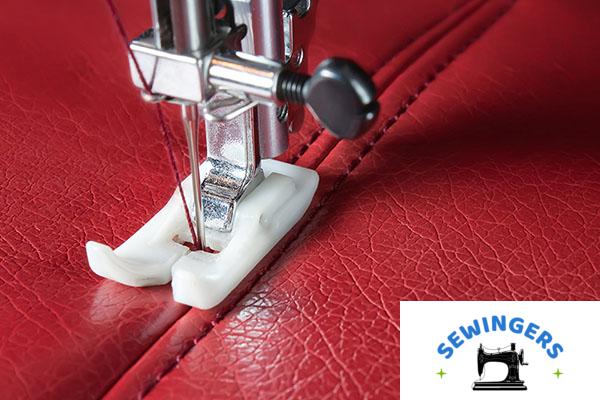
- Zipper Foot: Included in the accessory set. Gets your needle close to the zipper teeth for a cleaner finish than a standard presser foot allows.
—
Accessories Included

The accessory set that comes with the M2100 is practical rather than extravagant. Here’s what you get:
- Presser Foot Set: General purpose, zipper, buttonhole, and button-sewing feet. This covers the main techniques most sewers use regularly.
- Seam Ripper / Lint Brush (combo tool): Gets used more than you’d think. Having it built into the machine means it’s always nearby when you need to undo a seam or clear out the bobbin area.
- Spool Caps: Different sizes to keep your thread spools stable. Simple, but they prevent tangling issues.
- Extra Bobbins: Pre-winding a few with colors you use often saves time when you’re mid-project and need to switch.
- Needle Assortment: A basic selection of needle types and sizes. Worth expanding over time as you work with more fabric types.
- Screwdriver: For minor adjustments. You’ll use it occasionally — especially when changing the needle or adjusting the needle plate.
- Instruction Manual: Covers the fundamentals. Not exhaustive, but enough to get you set up and troubleshoot common issues.
Additional features on many M2100 models worth noting:
- Adjustable Thread Tension: Manual dial gives you direct control. Takes some experimentation to find the right setting for each fabric, but that’s true of any machine.
- LED Lighting: Bright and shadow-free over the needle area. Noticeably better than the older incandescent bulbs on vintage machines.
- One-Step Buttonhole: Mentioned above, but it’s genuinely one of the more polished features on this machine for the price point.
—
Specifications at a Glance

- Machine Type: Mechanical — manual operation, no computerized controls
- Max Stitching Speed: Roughly 800 stitches per minute
- Built-in Stitches: Utility, decorative, and stretch stitches (exact count varies by model)
- Stitch Length: Adjustable up to 4mm
- Stitch Width: Adjustable up to 5mm
- Buttonhole Styles: One or more automatic styles, depending on model
- Presser Foot Pressure: Adjustable
- Feed System: Standard smooth feed, no puckering on typical fabrics
- Bobbin System: Top drop-in
- Needle Threader: Automatic (on most models)
- Lighting: Built-in LED
- Dimensions: Approximately 16–18″ long × 7–8″ wide × 12–13″ tall (varies slightly by model)
- Weight: Around 12–15 lbs — portable enough to carry to a class or move between rooms
—
Pros and Cons
What Works Well
- Approachable for beginners without feeling like a toy — experienced sewers can use it comfortably too
- Consistent stitch quality across a range of common fabrics
- Solid build for the price — not flimsy
- Practical accessory set that covers the basics without padding
- LED lighting, adjustable tension, and one-step buttonhole are legitimately useful features at this price point
- Straightforward controls — no learning curve on the interface itself
What to Know Before You Buy
- It’s mechanical — no programmable patterns, no automatic thread cutting, no memory functions. If you need those things, you’ll need a computerized model
- Stitch library is functional but limited — complex decorative work or specialty techniques will hit a wall eventually
- Some noise at higher speeds — nothing unusual for this category, but worth knowing if noise is a concern
- Threading is mostly manual — the needle threader helps, but bobbin winding and loading still require hands-on attention
- Speed control isn’t highly granular — you can go slower or faster, but you don’t get fine-grained precision at very low speeds
- Heavy fabrics are manageable but not this machine’s strength — sustained heavy-duty sewing will wear it down faster
—
Maintenance and Care
This is the part that most reviews gloss over, but it actually matters a lot for how long the machine stays in good shape.
- Clean It Regularly: After every session — or every few sessions at minimum — brush out the lint from the bobbin area and feed dogs. A soft brush works better than compressed air, which can push debris further into the mechanism rather than clearing it.
- Oil It: Use sewing machine oil (not WD-40, not cooking oil). The instruction manual specifies which points to lubricate — bobbin case, shuttle race, and a few others depending on your model. Don’t skip this. A well-oiled machine runs smoother and lasts longer.
- Change Your Needle More Often Than You Think You Should: A dull or slightly bent needle affects stitch quality before you can see the damage. If you’ve been sewing a few hours, or if your stitches suddenly start looking off, try a fresh needle first — it fixes the problem more often than you’d expect.
- Wind Bobbins Evenly: Unevenly wound bobbins cause tension problems. It’s one of those boring details that makes a real difference.
- Watch Your Thread Tension: Balanced tension means the thread interlocks in the middle of the fabric layers — not pulled to the top or bottom. Adjust it for each new fabric type, especially when switching between wovens and knits.
- Store It Covered: Dust accumulates in places you can’t easily clean. A dust cover (usually included or inexpensive to buy) keeps the machine cleaner between uses.
- Get It Professionally Serviced Occasionally: If you’re using it often, having a technician look at it every year or two catches small issues before they become bigger ones. Unusual noise or vibration that appears suddenly is a signal to get it checked sooner.
—
Price and Value
The M2100 sits in the entry-to-mid range of the market. Exact pricing shifts depending on where you buy and what’s on sale, but you’re generally looking at a range that’s accessible for most home sewers.
For what it costs, the value proposition is fairly straightforward: you get a reliable mechanical machine with a thoughtful feature set, decent build quality, and a track record of consistent performance. It doesn’t try to be everything. It’s not competing with computerized machines that cost three times as much — and it doesn’t need to.
Where the value equation gets more complicated is if you already know you need advanced features. Programmable stitches, automatic thread cutting, embroidery functions — those aren’t here, and they’re not going to appear through firmware updates. If those features are important to your work now (not “maybe someday”), this machine probably isn’t the right fit regardless of the price.
For someone learning to sew, returning to it after a break, or looking for a reliable second machine for simple projects, the M2100 delivers solid value. The features it has are well-implemented. The features it lacks are the ones you’d only miss if you specifically need them.
—
Final Thoughts
The Singer M2100 does what it’s designed to do. It’s a mechanical machine built for home sewers who want something approachable, consistent, and durable without paying for features they won’t use. For beginners, it’s genuinely one of the more sensible options in its price range. For experienced sewers with straightforward project needs, it holds up.
Where it won’t satisfy you is if your work has outgrown a mechanical machine — or if it’s about to. In that case, the right move is probably to look at what specific features you’re missing and find a machine built around those, even if it costs more.
But if the M2100 fits your needs on paper, it’s likely to fit them in practice too.
—
Frequently Asked Questions
Is the Singer M2100 good for beginners?
Yes — it’s one of the more commonly recommended beginner machines for a reason. The controls are intuitive, threading is straightforward, and the overall setup process isn’t overwhelming. That said, like any machine, it takes a session or two to feel comfortable.
How many built-in stitches does the Singer M2100 have?
The count varies depending on which specific M2100 model you’re looking at, but you can generally expect utility stitches, a selection of decorative stitches, and stretch stitches. Enough variety for most everyday sewing projects.
Can you adjust stitch length and width on the M2100?
Yes. Stitch length adjusts up to 4mm and width up to 5mm. You’ll use both features more than you expect, especially once you start working with different fabric types.
Most models do. The one-step buttonhole function handles sizing automatically and produces consistent results — which matters when you need multiple buttonholes to match.
Can the M2100 handle heavy fabrics?
It handles moderate thickness reasonably well — light denim, canvas, layered cotton — but it’s not designed for sustained heavy-duty work. Multiple thick layers or upholstery-weight material will push it toward its limits.
How do I clean and maintain the Singer M2100?
Brush out lint from the bobbin area and feed dogs after each session. Oil the machine at the points specified in the manual, and replace your needle regularly. Store it covered to minimize dust buildup between uses.
Can I use third-party presser feet with the M2100?
Generally yes — the M2100 accepts standard snap-on presser feet, so compatible feet from other brands usually work. Just verify the type and shank size match before buying.
Where can I get support for the Singer M2100?
Singer’s website has user manuals, FAQs, and troubleshooting guides. You can also contact their customer support directly or find authorized service centers if the machine needs hands-on attention.
Is the Singer M2100 portable?
At roughly 12–15 pounds, it’s light enough to carry to a class or move between rooms without much effort. Not ultralight, but not a burden either.
What warranty does the Singer M2100 come with?
Warranty terms vary by retailer and region. Check the documentation that comes with your specific purchase, or confirm with the seller before buying.