


The Royalsell Mini Portable Sewing Machine punches well above its weight — and I mean that literally. For a compact, budget-friendly machine, the stitching power catches you off guard in the best way. You get a pedal switch, automatic winding, a built-in thread cutter… it’s the kind of feature list you’d expect to pay more for.
Here’s the thing about sewing: once you actually start, it opens up more than you’d think. You don’t need to be perfect right away. Honestly, the mistakes matter more than the clean seams in the beginning — they’re where the interesting ideas come from. A wonky hem teaches you something a YouTube tutorial never quite does.
I’ve put together a list of five beginner-friendly machines that balance cost with capability. Whether you’re picking up a needle for the first time or moving past a machine that’s been frustrating you, these options are worth a real look. There’s something here for most starting points.
Sewing becomes genuinely rewarding once you stop waiting to feel “ready.” Just start somewhere.
Contents
- 1 Key Features to Consider While Choosing A Sewing Machine For Beginners
- 2 5 Top-Rated Sewing Machines For Beginners With Reviews
- 3 Wrapping It Up
Key Features to Consider While Choosing A Sewing Machine For Beginners
Picking a first sewing machine is trickier than it looks. The specs blur together fast, and it’s hard to know what actually matters until you’re mid-project at 11pm wondering why your bobbin keeps jamming. Here’s what to actually look at before you buy:
- Versatile Stitch Options: You want at least a straight stitch, a zigzag, and a few decorative options. That covers most beginner projects without overwhelming you. More isn’t always better — a dial with 40 stitches you’ll never use doesn’t help much when you’re still learning tension.
- Effortless Threading: Threading is genuinely annoying at first. Machines with an automatic needle threader or a clear threading diagram printed right on the body make a real difference. It sounds minor until you’re squinting at a needle at hour two.
- Speed Control: Adjustable speed lets you slow down for tricky sections — curves, thick seams, anything that makes you nervous. This matters more as you take on harder projects. It’s the kind of feature you don’t appreciate until you really need it.
- Diverse Presser Feet: Different feet handle different tasks — zippers, buttonholes, hemming. A machine that comes with a few options already included means you’re not buying attachments separately before you’ve even sewn your first seam.
- Built-in Needle Threader: This is the feature I’d never give up. Especially if your eyes aren’t great in low light, having the machine do the threading saves time and frustration in equal measure.
- Efficient Drop-in Bobbin: A drop-in (top-loading) bobbin system makes it easy to see how much thread you have left and swap it out without fuss. Front-loading works fine too, but the drop-in is more intuitive for most beginners.
- Adjustable Stitch Length and Width: Different fabrics need different stitch settings. Denim needs something different than chiffon. Being able to dial this in — even roughly — gives you more control over the finished result.
- Durability and Quality: A machine with a metal frame generally holds up better than a fully plastic body. It doesn’t have to be industrial — just solid enough that it doesn’t rattle or flex when you’re stitching through multiple layers.
- Ease of Use: Controls that make intuitive sense, a manual you can actually follow, setup that doesn’t require a YouTube tutorial just to get started. These things matter more than any single feature when you’re learning.
- Price and Warranty: Set a budget before you start browsing — it’s easy to justify creeping up when you’re comparing specs. And check the warranty. A 25-year limited warranty means something very different from a 90-day one.
Unique Built-in Stitches
No matter where you are in your sewing journey, built-in stitch variety gives you room to grow without immediately needing a second machine. The three categories that really matter are decorative, straight, and zigzag — and most good beginner machines cover all three.
Decorative stitches are the ones people underestimate. Florals, scallops, waves — they’re not just ornamental. Once you know how to use them, they show up in garments, home decor, and embellishments in ways that actually look intentional. They expand what you can make.
Straight stitches are the workhorse. Seams, hems, topstitching — probably 80% of what you’ll do in the first year. You want clean, consistent lines, and a machine that keeps tension steady across different fabric weights delivers that.
Zigzag stitches handle the edge work — keeping fabric from fraying, creating stretchable seams for knit fabrics, and doing appliqué when you want something more decorative. If you’re ever sewing anything with elastic, this stitch becomes essential fast.
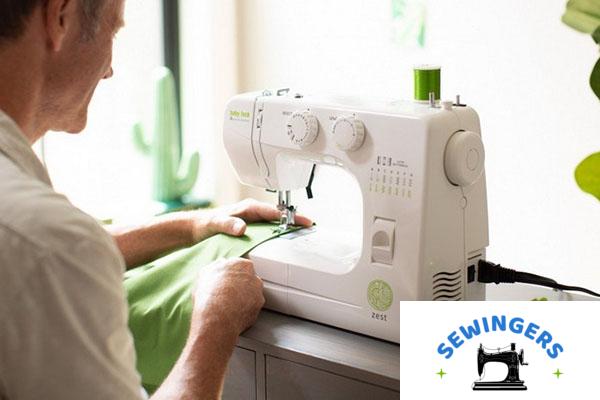
Storage Compartment
If you’re moving your machine around — classes, different rooms, a friend’s place — built-in storage is one of those practical features that sounds boring until you’ve lost a bobbin inside a couch cushion.
A storage compartment keeps your spare bobbins, extra needles, seam ripper, and presser feet all in one place. No separate pouch to forget, no rummaging. Everything travels with the machine because it’s part of the machine.
Some models also include a detachable free arm. When you remove it, you get a narrower cylindrical base that makes sewing sleeves, cuffs, and tight hems significantly easier — things that are otherwise genuinely awkward to maneuver. As a bonus, the detached piece usually doubles as the storage compartment itself.
Together, these two features make a machine meaningfully more portable and organized. Not glamorous, but worth looking for.
Purpose
Before comparing specs, it’s worth getting honest about what you’re actually going to use the machine for. Because every feature costs money, and paying for things you won’t use is a fast way to feel like you overspent.
Routine sewing — garments, small repairs, basic projects — doesn’t require anything fancy. Adjustable speed, a few stitch types, easy threading. That’s usually enough.
Embroidery is a different situation. You’d want built-in designs, a larger embroidery area, and ideally the ability to connect to a computer for custom work. A general-purpose machine adapted for embroidery usually falls short.
Quilting needs table space and specific attachments — an extended sewing table, a walking foot, adjustable presser foot pressure. Without those, working with multiple thick fabric layers gets frustrating quickly.
Mending and alterations? Compact and portable usually wins. You don’t need much stitch variety for hemming pants or fixing a seam.
Knowing your actual use case before you start shopping narrows the field fast — and usually saves you money.
Weight and Size
If you’re planning to carry your machine anywhere — a class, a craft night, even just between rooms — weight matters more than you’d think. A machine that’s heavy enough to be annoying to move tends to stay put, which limits how you use it.
That said, lightweight doesn’t mean underpowered. There are compact machines in this range that handle a solid variety of fabrics and project types. The list below has a few good examples worth comparing side by side.
Features
A few specific features come up again and again in machines that beginners actually find useful — not in a marketing-copy way, but in a “this made a real difference” way:
- Free Arm: Makes sewing cylindrical shapes — sleeves, cuffs, trouser hems — much more manageable. Without it, you’re fighting the fabric the whole time.
- Top-Loading Bobbin: Easy to insert, easy to monitor. You can see when you’re running low without stopping to check, which is a small thing that saves a lot of interrupted sessions.
- Extension Table: Extra surface area for bigger projects or bulkier fabric. Helps keep everything supported and feeding evenly instead of drooping off the edge of the machine.
- Automatic Buttonhole: Takes what used to be a multi-step, easy-to-mess-up process and makes it repeatable. Consistent sizing, much less stress.
- Built-in Stitches: Straight, zigzag, and a few decorative options cover most of what you’ll need for a while. More variety is useful eventually — just not necessarily on day one.
- Thread Cutter: Built right into the machine. You stop reaching for scissors every few minutes, which sounds trivial until you realize how often you’re doing it.
- Storage Compartment: Already covered above, but worth repeating — keeping everything with the machine is genuinely useful.
- Adjustable Stitch Length and Width: Lets you match your stitch to your fabric. Thin fabric needs something different than denim, and being able to dial that in matters for the final look.
5 Top-Rated Sewing Machines For Beginners With Reviews
1. Singer Tradition 2259 Portable Sewing Machine
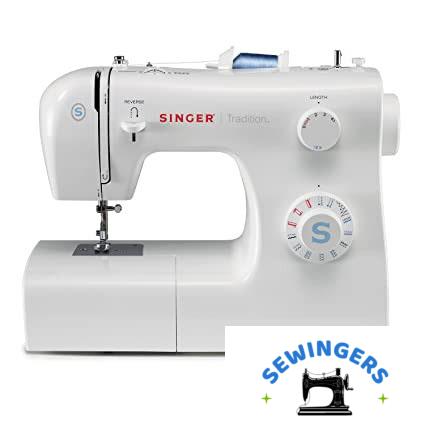
Singer has been around long enough that their name carries weight for a reason. The Tradition 2259 is one of their more practical beginner options — not flashy, but consistently solid.
The internal frame is heavy-duty metal. That matters more than it sounds; a sturdy skeleton keeps stitching consistent and the machine stable when you’re working through tougher fabric. At 15″ x 6.2″ x 12″, it’s compact enough to move around without being flimsy.
You get 19 built-in stitches, which is a solid range for starting out. The stitch selector is simple — no guessing which dial does what. The automatic 4-step buttonhole handles buttons of different sizes without much fuss, which is one of those features that beginners genuinely appreciate once they’ve tried doing it manually.
The free arm is a real plus for sewing collars, cuffs, and hems on finished garments. The on-board storage compartment keeps your accessories from scattering. Adjustable stitch length and tension round out what is honestly a well-thought-out starter package.
It comes with four snap-on presser feet: all-purpose, button sewing, zipper, and buttonhole. Plus needles, thread spool caps, an edge/quilting guide, a lint brush/seam ripper, bobbins, power cord, foot pedal, screwdriver, and an instruction DVD.
The 25-year limited warranty is worth noting. That’s not something every manufacturer offers at this price point.

Pros
- Easy to use, compact yet powerful, portable, ideal for beginners
- Made up of heavy duty metal frame skeleton to give support and stability
- Simple stitch selection to choose the stitch type as per project requirement
- 19 unique built-in stitches to enhance every thread you sew
- 4 step buttonhole automatically fits in all the standard button types
- Flexible stitch length and zigzag width that creates more graceful designs
- Automatic bobbin winding to save your time
- High presser foot lifter plus four segment feed dog segment
- Multiple needle positions with adjustable tensions
- 25 year limited warranty with online customer support
Cons
- One buyer had a rough start — broken needles, repeated jamming — but came back later to say they’d been wrong and that the machine had won them over. (Rethreading issues seem to be at the root of most complaints here.)
- Rethreading can be tricky at first. Beyond that, negative feedback is pretty sparse.
2. Janome 2212 Sewing Machine
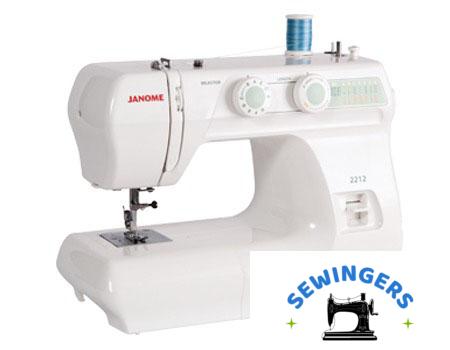
Janome doesn’t oversell itself, and the 2212 is a good example of why that reputation holds. It’s mechanical, lightweight, affordable — and it works.
The 12 built-in stitches are accessible through a stitch chart right on the machine, so you’re not hunting through a manual every time you switch. The stitch selector dial is labeled clearly, which sounds basic but makes a genuine difference when you’re still getting comfortable with the machine.
Stitch length goes up to 4mm, width up to 5mm. The metal needle plate keeps fabric in place without slipping. The 4-step buttonhole covers most standard button sizes without extra fuss.
The free arm makes round shapes — collars, cuffs, trouser hems — manageable. The reverse lever locks your seams so they don’t unravel. Front-loading bobbin means you can see the thread supply without stopping to open a compartment.
This machine can push up to 1,000 stitches per minute. For a machine at this price, that’s not what you’d expect.
Designed for 110V, so it’s built for North American use. Comes with a 25-year warranty and customer support to back it up.
Pros
- Loaded with amazing features at a fantastic price
- Front loading bobbin to keep an eye on the amount of thread left in the spool
- The free arm to swing your machine to sew any cylindrical stuff
- It can gear up to 1000 stitches per minute
- Various options to select pattern, stitches, length, width etc.
- Several customizing options for a dazzling fashion and home decor
- 12 unique stitches with 4 step buttonhole
- Manual needle threading system and locking option through reverse stitching
- Snap on presser feet and built-in thread cutter
- 25-year warranty by Janome
Cons
- One reviewer mentioned the machine ran smaller than expected — but said it handled all the mending jobs just fine.
- A few reports of the foot jamming occasionally.
3. Singer 1507WC Sewing Machine With Canvas Cover
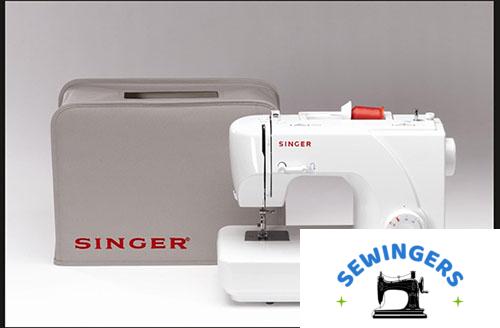
Singer has been at this since 1851 — that’s a long time to work out the kinks. The 1507 isn’t their most feature-packed machine, but it covers the fundamentals well and doesn’t overcomplicate things for people who are still learning.
Eight built-in stitches: enough to handle home decor, mending, and fashion sewing without overwhelming you with choices. The threading diagrams are printed directly on the machine body, which takes a lot of the guesswork out of setup. Most people get it right on the first try.
The automatic bobbin winding clutch disengages the needle bar while you wind — a small safety detail that’s easy to overlook until you’re grateful for it. The detachable free arm makes circular sewing workable. On-board storage keeps accessories in reach without a separate bag.
Zigzag width and stitch length are both adjustable. The maximum width is 5mm. Stitch selection is dial-based — straightforward, no digital screens to navigate.
The canvas cover is included, which matters more than it might seem. Dust buildup causes real problems over time, and covers are usually an added expense.
Accessories included: zipper, buttonhole, all-purpose, and button sewing presser feet; lint brush/seam ripper; darning plate; seam guide; screwdriver; needles; thread spool caps; foot pedal; power cord; and an instruction manual.
Built for 110V — North America only.
Pros
- Singer 1507 is an easy and quick threading sewing machine
- Works great for novice sewists, intermediate seamstress
- 8 different built-in stitches with 1 completely automatic 4-step buttonhole choices
- Ideal for crafts, home decor, fashion, decorative sewing and much more
- Loaded with all the basic features like automatic bobbin winding clutch, free arm, on board storage compartment, simple threading etc
- Snap-On presser feet with 4 possibilities to expand your innovative instincts
- To keep your machine dust free, Singer gives a canvas cover
- Adjustable stitch length plus zigzag width to grace every outfit
- Machine is built to operate at 110 volts specially designed for Canadian and US only
- Bonus free accessories to make it a complete sewing package
Cons
- Some users find it a bit delicate to handle.
- A few reports of thread jamming.
- The instructions aren’t always easy to follow according to some buyers.
4. Mini Portable Sewing Machine By Royalsell

Royalsell’s upgraded mini machine is creating real buzz — partly because the specs don’t match the price tag in a way that makes you suspicious, and partly because it actually delivers.
This one works for a wide range of users. Kids learning to sew, adults in classes, people who need something compact for different rooms of the house — the portability is genuine, not just a marketing claim. It’s lightweight enough to actually carry somewhere without complaining about it.
The eco-friendly construction is worth a mention: durable materials that hold up better than you’d expect at this price, with a lighter environmental footprint. That combination is harder to find than it should be.
The lightweight extension table is the standout feature. It keeps larger pieces of fabric feeding smoothly instead of pulling away from the machine — which matters more than people realize until they’re fighting a tablecloth or a curtain panel. Stability on thicker fabrics is solid too, and the built-in bulb reduces eye strain during longer sessions.
The inbuilt thread cutter handles excess threads cleanly without needing scissors nearby. Two sewing speeds let you match the pace to the project. Automatic winding, top and bottom thread options, both a push button and a foot pedal — it’s genuinely flexible for a machine this small.
Power options: 4 AA batteries or an AC/DC adapter. Meaning you can use it without being near an outlet, which opens things up for travel or outdoor use.
Package includes the extension table, power adapter, 4 bobbins, a needle, needle threader, foot pedal, and user manual.
The manual matters with this one. The company puts real emphasis on reading it carefully, and that’s not just legal boilerplate — following the setup instructions correctly makes a noticeable difference in performance.
Pros
- Ideal machine for beginner’s especially kids
- Easy to carry, lightweight, and compact
- Budget-friendly with ample of features in its kitty
- Extension table to handle heavy and flowing fabric easily
- Made up of environmental material
- Durable, stable and upgraded features
- Comes with bulb to brighten up the working space
- In-built thread cutter to rip off unwanted threads
- Mini machine with high and low speeds
- Automatic winding function for high quality stitch
- Portable so can be carried to classes too
- Well explained manual, if followed carefully, you will face no problem
- Can be operated on two power modes i.e. AC/DC adapter or 4 x AA battery
- Company guarantees exchange and return if not satisfied
Cons
- One user noted the needle is quite delicate — easy to break with minimal provocation.
- Beyond that, serious complaints are hard to find.
5. Janome Arctic Crystal Sewing Machine
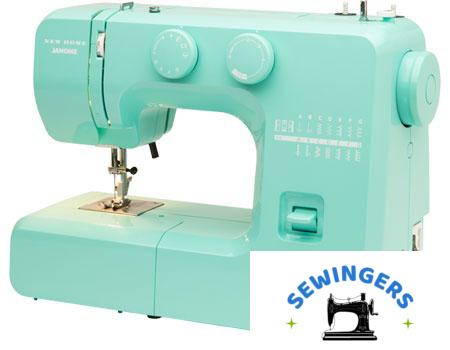
The Arctic Crystal is Janome’s more enthusiast-oriented beginner machine — still approachable, but with enough depth to keep you interested as your skills develop.
The interior metal frame gives it real durability. Fifteen built-in stitches cover quilting, heirloom, basic, fashion, and home decor applications. The 4-step buttonhole works cleanly for garments, curtains, cushions — anything that needs a consistent button attachment.
The three-piece feed dog system handles fabric movement smoothly, and the front-loading bobbin lets you check thread supply without stopping mid-seam. Stitch length and zigzag width are both dial-adjustable, which keeps things simple without being limiting.
Four presser feet are included: blind hemming, general purpose, zipper, and sliding buttonhole. The detachable free arm works for pant hems, cuffs, and similar items — and doubles as storage when removed.
Dual retractable spool pins accommodate large thread cones, and the throat space is generous enough for substantial quilting projects. The built-in LED workspace light reduces eye strain during longer sessions.
Top speed: 800 stitches per minute. That’s fast enough for most projects without feeling like it’s running away from you.
Accessories included: needles, seam ripper, bobbins, darning plate, user manual, and quick start guide. Tutorial videos are available if you get stuck.
The 25-year limited warranty is the same as Janome’s other models — consistent, reliable coverage.
Pros
- Perfect easy-to-use sewing machines for beginners and young enthusiasts
- Built of interior metal frame for durability and stability
- Bobbin diagrams for guidance on every step
- 15 built-in stitches with 4 step buttonhole to attach the button perfectly to your costume or cushion
- Front loading bobbin system for a clear view of thread spool
- Gives enough room to design garments as per your choice
- Options to adjust stitch length and zigzag width
- Reverse lever to lock every seam you stitch plus darning plate
- Removable free arm to design sleeves, collars, cuffs and much more
- Three piece feed dog system and double retractable spool pins
- Several accessories included in the box
- Capable of 800 stitches per minute
- 25 year limited warranty
- Tutorial videos to answer your queries
Cons
- One buyer flagged that spare parts run expensive.
Wrapping It Up
Of the five machines on this list, the Royalsell Mini Portable is the one I keep coming back to as the top pick for most beginners. The feature set relative to price is hard to argue with — extension table, dual power modes, two speed settings, adjustable thread options, both a button and pedal control. That’s a lot of flexibility in a compact package.
That said, you know your situation better than any review does. If portability isn’t a priority and you want something with more stitch variety, the Janome Arctic Crystal or the Singer Tradition 2259 might fit better. If budget is tight and you mostly need basic functionality, the Janome 2212 handles that cleanly.
None of these are wrong choices. Pick the one that matches what you’re actually planning to make — and go from there.


