

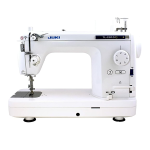
Juki TL-2010Q Portable Sewing Machine
over $75
free returns
checkout
support
A deep look at what makes this $900–$1,200 machine a genuinely different kind of purchase — and who it actually makes sense for.
Key Takeaways
- The TL-2010Q does exactly one thing — straight stitch — and it does it better than almost anything else at this price point.
- At 1,500 stitches per minute with an aluminum die-cast frame, it runs more like a scaled-down industrial machine than a typical home model.
- The 8.5-inch throat space is a real advantage if you work with large quilt projects — king-size backings, dense quilt sandwiches, big patchwork panels.
- It’s not built for beginners or occasional sewists. The controls are more manual, the price tag is real, and it rewards people who already know what they need.
- Productivity gains add up fast — fewer seam corrections, less rethreading, more consistent work per session.
There’s a moment when you sit down at a new machine — usually within the first five minutes — where something either clicks or it doesn’t. The fabric feeds the way it should. The seam runs clean. Nothing stutters through four thick stacked layers the way it does on machines that can’t quite handle the pressure. When you feel that, you stop comparing specs. You start thinking about whether this is the machine you’ll still be sewing on in five years.
The Juki TL-2010Q Portable Sewing Machine tends to produce that moment pretty quickly. It’s built a loyal following among serious quilters who work at volume, home sewing businesses that can’t afford unpredictable downtime, and Etsy sellers who’ve figured out that stitch quality is ultimately what the customer sees — not how many decorative options your machine has.
What makes it genuinely interesting is how deliberately narrow the focus is. No embroidery. No alphabet keys. No decorative stitches you’ll select once, photograph for Instagram, and never actually use again. Just one very clean, very fast, very consistent straight stitch. For a specific kind of sewist, that’s not a compromise — that’s the whole point.
You’re looking at roughly $900 to $1,200 depending on where you buy it. That’s not a casual purchase. But the value argument shifts when you stop thinking of it as a home sewing machine and start thinking of it as an industrial-style tool that actually fits beside your cutting table — no dedicated commercial setup, no separate motor, no machine bolted to a permanent table you can’t move.
Here’s a full breakdown of what it’s built from, how it actually performs, where it genuinely earns its price, and where it falls short for certain buyers.
Overview of the Juki TL-2010Q
The TL-2010Q is a single-needle, straight-stitch-only machine built for quilting, garment work, and anything that qualifies as heavy-duty by home sewing standards. Juki Corporation has a long history in industrial equipment — the kind of machines running eight-hour shifts in production facilities. The TL-2010Q borrows heavily from that engineering tradition and scales it into something that actually fits in a spare bedroom without requiring structural modifications.
That context really matters. When you sit down at this machine for the first time coming from a typical home model, the difference is noticeable almost immediately. It’s quieter than you’d expect for something running this fast. Steadier. The fabric moves through without those small micro-hesitations you’ve learned to compensate for on lighter machines — and once you feel that, it’s hard to go back.
What Comes With the Machine
- Single straight stitch — intentionally, exclusively
- Aluminum die-cast frame (not plastic, not composite)
- Automatic thread trimmer built into the machine
- Speed control system with a variable foot pedal
- Extension table for larger project support
- Knee lift lever — your hands stay on the fabric while you reposition
- LED work light that illuminates the needle area without shadow
- 1,500 stitches per minute maximum speed
That list looks very different from what you’d find on machines from Brother, Janome, or Singer. Those brands compete heavily on stitch variety — 100, 200, sometimes 500+ options. The TL-2010Q doesn’t play that game at all. It does one thing. And for a lot of quilters, doing one thing exceptionally well turns out to be worth far more than doing fifty things adequately.
Technical Specifications and Build Quality
Core Specifications
| Specification | Juki TL-2010Q |
|---|---|
| Stitch Type | Straight Stitch Only |
| Maximum Speed | 1,500 SPM |
| Throat Space | Approx. 8.5 inches |
| Frame Material | Aluminum Die-Cast |
| Lighting | LED |
| Thread Cutter | Automatic |
| Knee Lift | Included |
| Extension Table | Included |
| Weight | Approx. 25 lbs |
Why These Numbers Actually Matter
Most home machines run somewhere between 700 and 1,000 stitches per minute. The TL-2010Q hits 1,500 SPM. That gap becomes very real when you’re piecing a king-size quilt top with hundreds of seams, or running through curtain panels that seem like they’ll never end. It’s not speed for its own sake — faster piecing with consistent stitch formation means less time going back to fix errors that compound across dozens of blocks.
The 8.5-inch throat space is the other number worth paying attention to. Quilters who work big — Texas star designs, California king backings, large patchwork panels — know exactly where the frustration lives when throat space runs short. It’s not the sewing itself. It’s the constant repositioning, the wrestling match between the fabric and the machine’s frame, the half-hour lost coaxing a quilt sandwich through four inches of clearance. (If you’ve been there, you know.)
What Metal Construction Means in Practice
The metal internal components aren’t just a marketing detail. They contribute directly to how stable the machine feels under load and how consistent it stays over long sessions. Plastic components flex under pressure; metal doesn’t. What that translates to is a machine you can switch from thin quilting cotton to thick denim without it suddenly acting like it’s struggling to keep up.
Key internal components worth knowing about:
- Feed dog system — engineered for consistent fabric movement across multiple layers
- Presser foot pressure adjustment — lets you calibrate for different fabric weights without guesswork
- Thread tension dial — manual, responsive, stays where you set it
- Heavy-duty motor assembly — built for sustained output, not occasional bursts
Performance for Quilting
Straight Stitch Precision
Quilting is unforgiving about seam consistency. A quarter-inch allowance that wanders — even slightly — will throw off a block. Do that across dozens of blocks and the whole project starts pulling in directions nobody planned for. The TL-2010Q’s single-stitch focus pays off here in a way that’s genuinely hard to replicate on a multi-function machine that’s trying to do too many things at once.
Patchwork piecing gets faster. More importantly, it gets more predictable — especially when you’re sewing multiple identical blocks in a session and need them to come out dimensionally consistent every single time.
Free-Motion Quilting
The machine holds up well for free-motion quilting, which surprises people who assume it’s purely a piecing tool. In practice, a few things work together here:
- Smooth stitch formation at variable speeds — it doesn’t stutter when you slow down mid-design
- Stable operation without the vibration that throws off intricate patterns
- Responsive foot control that lets you slow down in tight curves without skipping
- Consistent thread delivery that doesn’t require constant tension adjustments mid-project
Paired with a proper quilting foot, the stitch quality across a full quilt surface holds up — not just on a practice piece, but on the actual finished project.
Handling Multiple Layers
A finished quilt involves at least three layers working together:
- Quilt top — often multiple fabric types joined at the seams
- Batting — which adds both thickness and compression pressure
- Backing fabric — frequently a single wide piece under significant tension
Some projects add stabilizers or dense batting on top of all that. The TL-2010Q moves through it without hesitation, largely because the motor and feed system were built with exactly this kind of stacked-layer situation in mind. Whether you’re working on Christmas quilts, memory quilts, or building craft fair inventory — the machine stays consistent.
What tends to happen after a few months of regular use is that the speed number fades into the background, and the time savings show up in other ways — fewer seams to pick out, less time rethreading mid-project, fewer tension adjustments interrupting your rhythm. That productivity gain adds up fast, especially if quilting is part of a home business rather than a weekend hobby.
Portability and Home Studio Setup
“Portable” means something different depending on your frame of reference. At roughly 25 pounds, the TL-2010Q isn’t something you’d toss in a bag and forget about. A basic beginner machine might weigh 12 to 15 pounds. A true industrial setup — table, motor, machine combined — can push past 100 pounds. The TL-2010Q sits between those two worlds, and that turns out to be exactly the right position for most home sewists who want real performance without giving up a room permanently to commercial equipment.
Where It Works
- Apartments with limited floor space — the footprint is manageable
- Craft rooms and dedicated sewing spaces
- Garages converted to studio use
- Spare bedrooms doing double duty
- Basement studios where the machine stays put most of the time
The built-in carrying handle makes it workable for sewing classes and guild meetings — though carrying it up three flights of stairs every week is probably not something most people would sustain long-term, haha.
Workspace Setup
A solid folding sewing table handles it fine. The included extension table does real work expanding your surface area for larger projects — that extra real estate when you’re guiding a full quilt sandwich makes a noticeable difference compared to working off a small platform. For home business owners especially, the setup hits a practical sweet spot: industrial-style output without the permanent infrastructure of actual commercial equipment.
Noise
One thing that catches people off guard: the noise level is more reasonable than expected for a machine running this fast. It sounds purposeful — mechanical, confident — but it doesn’t rattle windows or make you want to close the door on it. (That combination of real performance with livable noise is part of why this model keeps coming up in home studio conversations.)
How It Compares: TL-2010Q vs. Popular U.S. Alternatives
| Model | Max Speed | Stitches | Price (USD) | Best For | Notes |
|---|---|---|---|---|---|
|
Juki TL-2010Q
|
1,500 SPM | Straight only | $900–$1,200 | Quilting, production sewing | Exceptional stitch quality and speed. A focused specialist, not a generalist. |
| Juki TL-15 | 1,500 SPM | Straight only | $800–$1,100 | Quilters | Very similar in performance. The choice often comes down to specific feature preferences or feel in hand. |
| Brother PQ1500SL | 1,500 SPM | Straight only | $700–$1,000 | Quilting | Strong competition with solid value. Slightly different handling during operation. |
| Janome HD3000 | 860 SPM | Multiple | $500–$700 | General sewing | More versatile but considerably slower for production quilting work. |
| Singer HD 4452 | 1,100 SPM | Multiple | $250–$400 | Budget sewing | Accessible price point, capable machine — but a genuinely different performance class. |
The stitch variety question is where most buyers get stuck. The Janome HD3000 and Singer Heavy Duty 4452 both offer decorative and utility stitch ranges — and that sounds appealing until you track how often you actually reach for them. For someone whose primary work is quilting, stitch quality consistently beats stitch quantity. That math isn’t obvious before you’ve spent real time at the machine, but it tends to become clear quickly.
The Brother PQ1500SL is the closest real competitor here — same speed, same target user, same philosophy. The decision between the two usually comes down to which controls feel more intuitive, dealer availability in your area, and small feature preferences that matter more in daily use than they look like they should on a spec sheet.
Honest Pros and Cons
What Works Well
- Exceptional straight stitch quality — every single session
- 1,500 SPM speed cuts large-project time significantly
- Durable metal construction that stays stable long-term
- Handles denim, canvas, and quilt sandwiches without drama
- Productivity gains compound — especially for production sewists
- Noise level is livable even in shared home spaces
Real Trade-offs
- No decorative stitches, embroidery, or monogramming
- $900–$1,200 is a real investment, not a casual purchase
- 25 lbs — manageable, but not effortlessly portable
- Learning curve if you’re coming from computerized machines
- Manual controls require more familiarity than beginner models
- Oiling required — unlike sealed consumer machines
The Long-Term Value Case
For frequent sewists, the value argument actually gets stronger over time. The machine’s durability means the initial investment spreads across years — sometimes decades — of use. For active quilters or business owners, cost-per-project ends up looking very different from the sticker price. That’s not a marketing abstraction; it’s genuinely why well-maintained Juki machines show up in conversations with people who’ve been sewing on the same machine for fifteen or twenty years.
Maintenance, Care, and Longevity
The TL-2010Q rewards regular upkeep — and once you’ve done it a few times, the routine really isn’t complicated.
Routine Care
- Oil the designated lubrication points — the manual specifies exactly where, and that specificity matters
- Clear lint buildup from the bobbin area and feed dogs after each project
- Clean the bobbin case regularly — lint accumulates fast at this speed
- Replace needles more often than you think you need to — dull needles stress everything
- Check thread tension before long sessions rather than troubleshooting mid-project
These are small habits. But they add up to a machine that keeps working long past the point where cheaper builds start causing problems.
On Oiling
Unlike most sealed consumer machines you essentially never oil, the TL-2010Q needs periodic lubrication. This isn’t a drawback — it’s actually part of why the machine lasts. Proper lubrication reduces internal wear and keeps operation smooth. The owner’s manual specifies exactly where oil goes, which matters because oiling the wrong location causes more problems than skipping it entirely.
Thread Quality
Cheap thread creates surprisingly expensive problems over time. Low-quality thread tends to produce excess lint that builds up faster between cleanings, frequent thread breaks that interrupt long sessions at the worst moments, and tension inconsistencies that are easy to misdiagnose as a machine problem. It’s one of those things that’s easy to overlook — until you’ve seen the difference over a few months of regular use.
Professional Servicing
For heavy users — daily or near-daily sewing — professional servicing roughly every one to two years makes sense. Authorized Juki dealers handle tension calibration, feed dog adjustment, internal cleaning, and mechanical timing. Well-maintained machines from this line are known to run for decades, which is genuinely why the brand holds the reputation it does among people who sew seriously.
Is the Juki TL-2010Q Right for You?
The honest answer depends less on your skill level than on what you actually sew and how consistently you sew it.
A Good Fit If You Are…
- A serious quilter working at volume — not just occasionally on weekends
- Running a home quilting or sewing business with consistent production needs
- An Etsy seller where stitch quality directly affects how your product is perceived
- Frequently working with denim, canvas, or other heavy fabrics
- Making home décor items — curtains, cushion covers, thick upholstery projects
- Someone who’s moved past needing flexibility and just wants a machine that works reliably every time
Probably Not the Right Fit If You Are…
- A casual hobbyist who sews occasionally and doesn’t have a consistent project load
- A beginner still figuring out what you actually want from a machine
- Working within a tight budget where the investment doesn’t make practical sense yet
- Someone who prioritizes decorative stitching, embroidery, or monogramming
- Looking for a single machine that handles every possible project type
In those situations, a multi-function machine from Brother, Janome, or Singer likely offers better overall value — more flexibility for how the money is spent, even if the individual performance ceiling is lower.
Final Thoughts
The Juki TL-2010Q holds a specific, well-earned position in the market. Its 1,500 stitches per minute, aluminum die-cast construction, generous throat space, and single-minded focus on straight-stitch precision make it a serious tool for serious sewists. It’s not trying to be everything — and for the quilters, home business owners, and high-volume sewists who’ve moved past needing versatility, that focused approach is exactly what they’re looking for.
If speed, durability, and stitch precision are your priorities, the investment holds up. If decorative capability matters more to you, a multi-stitch machine will serve you better. I hope this helps you figure out which one you actually need!
| Stitch applications | 57 built-in |
| Stitch settings | Preset length & width |
| Weight | Under 13 lbs |
| Needle threader | Automatic |
| Free arm | Yes |
| Power supply | 110V (US standard) |
| Best fabrics | Cotton, polyester blends, light canvas, light denim |
| Skill level | Beginner – Intermediate |
Reviews
There are no reviews yet.