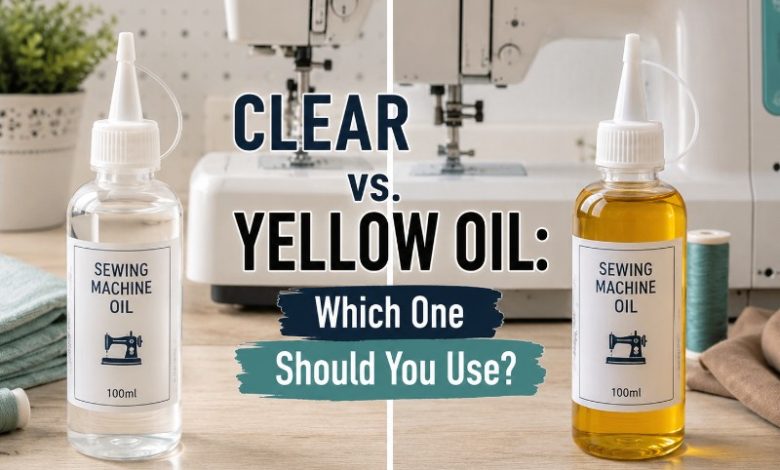
There’s a bottle of sewing machine oil sitting in most craft rooms across the country, and most people grabbed it without thinking twice. Clear or yellow — it’s just oil, right? Actually, no. The color isn’t a branding quirk. It tells you a lot about what’s inside that bottle and whether it belongs anywhere near your machine.
Getting this wrong is surprisingly common. Walk into any Joann or scroll through Amazon and you’ll see both options sitting side by side, priced within a few dollars of each other. No wonder so many home sewists and small business owners treat them as interchangeable. They’re not. And on a machine that cost you $400, $800, or more, that distinction matters more than most people realize.
Contents
- 1 What Is Clear Sewing Machine Oil?
- 2 What Is Yellow Sewing Machine Oil?
- 3 Clear vs. Yellow Sewing Machine Oil: Key Differences
- 4 Which Oil Is Better for Modern Sewing Machines?
- 5 When Is Yellow Sewing Machine Oil Appropriate?
- 6 Risks of Using the Wrong Sewing Machine Oil
- 7 How to Choose the Right Sewing Machine Oil in the US Market
- 8 Final Verdict: Clear vs. Yellow Sewing Machine Oil — Which Is Better?
What Is Clear Sewing Machine Oil?
Clear sewing machine oil is highly refined mineral oil — specifically processed to remove the impurities and color compounds that show up in less refined petroleum distillates. The result is a transparent, lightweight lubricant that flows easily into tight spaces without leaving much behind.
The low viscosity is intentional. Modern electric machines from Brother USA, Singer, and Janome America run at high speeds with tight mechanical tolerances, and those components need oil that moves freely rather than sitting heavy on the parts. Think of it like the difference between water and honey — both are liquids, but one is a lot more useful when you’re trying to coat a tiny metal gear.
Brands like Zoom Spout and Liberty Oil have built their reputations on this type of refined, residue-free lubrication. You’ll find clear oil on the shelves at most US craft stores, and it’s the default recommendation in the manuals for most machines sold today.
Key characteristics at a glance:
- Transparent appearance (sometimes called “white mineral oil”)
- Low ISO viscosity grade, designed for high-speed components
- Non-staining — a genuine concern when you’re sewing light fabrics
- Leaves minimal residue over time
- Compatible with plastic and metal components in modern machines
What Is Yellow Sewing Machine Oil?
Yellow sewing machine oil — sometimes described as amber-tinted — is typically a less refined petroleum distillate. It hasn’t gone through the same purification process, which is why it holds that warm, slightly golden color. That’s not contamination; it’s just the natural state of petroleum-based lubricants before the color compounds are stripped out.
In practice, yellow oil tends to have a slightly heavier viscosity. For certain machines, that’s actually the point. Older cast-iron machines, industrial sewing systems from Juki America or Consew, and the heavy-duty mechanical workhorses you’d find in a tailoring shop or upholstery business — those machines were built with different tolerances and often perform better with a lubricant that has a bit more body to it.
You’re more likely to find yellow oil at vintage repair shops, specialty retailers like Sailrite or the Featherweight Shop, or from suppliers catering to industrial sewing tables. It’s not a bad product. It’s just a product with a more specific use case than the label sometimes suggests.
One real concern with yellow oil: oxidation. Over time, and especially in machines that don’t run regularly, petroleum-based oils can break down and leave a varnish buildup on internal parts. That sticky residue is one of the main reasons a machine starts feeling stiff or grinding after sitting in a closet for a year or two.
Clear vs. Yellow Sewing Machine Oil: Key Differences
Here’s a side-by-side look at the functional differences — with some honest commentary on what actually matters for most US home sewists and small business owners.
| Feature | Clear Sewing Machine Oil | Yellow Sewing Machine Oil |
|---|---|---|
| Appearance | Transparent | Amber/yellow tint |
| Viscosity | Light (low) | Slightly heavier |
| Refinement level | Highly refined mineral oil | Less refined petroleum distillate |
| Residue risk | Low | Higher over time (oxidation/varnish) |
| Stain potential on fabric | Very low | Moderate — use caution near fabric |
| Best machine type | Modern electric, computerized | Vintage, industrial, heavy mechanical |
| Typical US retail price | $5–$12 | $5–$15 |
| Oxidation stability | High | Lower (can gum with age) |
| Available at major retailers | Yes (Amazon, Walmart, Joann) | Specialty/vintage retailers primarily |
The stain potential column deserves a moment. If you’re quilting, working with white fabric, or running delicate material through your machine, oil residue on the thread path is a real problem. Clear oil’s non-staining properties aren’t just a marketing claim — they’re a functional difference that shows up when something goes wrong with over-lubrication.
Climate matters too, though it’s rarely discussed. In high-humidity states like Florida, lighter oils wick away more cleanly and resist moisture-related degradation better. In drier climates like Arizona, the main concern shifts to keeping components from drying out — which both oils handle, but clear oil tends to do with less mess.
Which Oil Is Better for Modern Sewing Machines?
For the vast majority of machines sold in the US today — the computerized Brother models, the mid-range Singer electrics, Janome America’s lineup, Bernina of America’s higher-end options, Baby Lock USA machines — clear oil is the right answer. Full stop.
Modern machines have electronic motor housings, sophisticated bobbin assemblies, and computerized tension systems. Those components weren’t designed with heavy petroleum distillates in mind. Most manufacturer manuals specifically call for lightweight, clear mineral oil, and using something heavier can void your warranty or damage components that aren’t cheap to replace.
The lubrication ports on modern machines are often small and precisely placed. Clear oil’s capillary action — the way it flows into tight spaces naturally — makes it far easier to apply correctly without overdoing it. With a heavier oil, it’s easy to apply too much and end up with oil migrating into areas where it shouldn’t be.
If your machine is under warranty, check the manual before using any oil. Bernina of America and Janome America both specify lubrication types for their models, and deviating from those recommendations gives service centers grounds to deny warranty claims.
When Is Yellow Sewing Machine Oil Appropriate?
There are genuine use cases for yellow oil — they’re just narrower than the broad retail availability might suggest.
The clearest situation is vintage machines. Pre-1970 cast-iron machines, particularly the beloved Singer Featherweight and similar mechanical workhorses, were built to run with heavier lubricants. The mechanical drive shafts and industrial torque requirements of those machines benefit from oil with more body. Many restoration specialists at places like the Featherweight Shop specifically recommend period-appropriate lubricants for these machines.
Industrial settings are another real use case. Juki America and Consew industrial machines running in tailoring shops or upholstery businesses are doing high-load stitching for hours at a time. Those machines have different lubrication cycles and tolerances than a home sewing machine. A slightly heavier lubricant can handle the sustained friction better in those conditions.
If you’re restoring an antique machine and aren’t sure what it needs, the safest approach is to consult a specialist rather than defaulting to whatever’s on the shelf at a big-box retailer.
Risks of Using the Wrong Sewing Machine Oil
The consequences aren’t immediate, which is part of why this mistake is so common. The machine doesn’t seize up the moment you apply the wrong oil. What happens instead is a slow accumulation of problems.
Varnish residue from oxidizing petroleum oil builds up on internal gears over months. Thread contamination can start staining fabric — a nightmare if you’re quilting or working on a bridal project. Heat buildup from inadequate lubrication (or the wrong viscosity lubricant for metal-on-metal contact) accelerates wear on components that weren’t designed to run dry or sticky.
Sewing machine service averages $75 to $200 at most US repair shops, and that’s before parts. Timing that poorly — say, right before a major quilting project or the holiday crafting rush in November and December — turns a minor maintenance oversight into a real problem.
Heavy-oil gumming is also a specific issue worth naming. If you’ve inherited an older machine or bought one secondhand, and it came with yellow oil applied at some point, you might already have varnish buildup to deal with. That’s a cleaning job before re-lubrication, not just a swap of oil types.
How to Choose the Right Sewing Machine Oil in the US Market
The practical checklist is shorter than most people expect:
Start with your manual. This sounds obvious, but most people skip it. Brother USA, Singer, Janome America — they all specify lubricant type. If the manual says clear, non-detergent mineral oil, that’s what you use.
Avoid multi-purpose oils. Products like 3-in-1 oil contain detergents and additives that aren’t compatible with sewing machine components. The label might say “oil,” but the formulation is completely different.
Look for “non-detergent mineral oil” on the label. Liberty Oil and Zoom Spout both hit this mark clearly. On Amazon or at Walmart, check the product description carefully — price isn’t a reliable quality indicator in this category.
Compare price per ounce, not per bottle. Sewing machine oil bottles look similar but hold different amounts. A $7 bottle at Joann and a $10 bottle on Amazon might work out to the same cost per application, or the Amazon option might be a significantly better value.
Applicator tip matters more than people think. A precision tip prevents over-lubrication, which is one of the most common maintenance mistakes. Zoom Spout’s design exists specifically for this reason.
Final Verdict: Clear vs. Yellow Sewing Machine Oil — Which Is Better?
For roughly 90% of US home sewists, clear sewing machine oil is the better choice. It’s what modern machines from Brother USA, Singer, Janome America, and Bernina of America are designed around. It’s widely available, non-staining, leaves minimal residue, and it’s what the manuals actually specify.
Yellow oil isn’t wrong — it’s just specific. Vintage machines, industrial sewing systems from Juki America, and restoration projects have legitimate use cases for heavier petroleum distillates. But if your machine was made in the last 20–30 years and you bought it at a mainstream US retailer, clear oil is almost certainly the right call.
The decision framework doesn’t need to be complicated. Check your manual. If it specifies oil type, follow it. If it doesn’t specify, default to clear, refined mineral oil from a reputable brand. Keep a regular maintenance routine — how often depends on how much you sew, but quarterly is a reasonable baseline for active home sewists.
Your machine’s lifespan is directly tied to the quality of its preventive care. A $10 bottle of the right oil, applied correctly, protects hundreds or thousands of dollars of equipment. That’s not a difficult trade-off.