

Janome HD3000 Sewing Machine
over $75
free returns
checkout
support
There’s a certain kind of sewing machine that just earns trust over time. Not flashy. Not loaded with screens and menus. Just solid, mechanical, built to last. The Janome HD3000 is exactly that kind of machine — and for a big slice of American sewists, it’s become something of a quiet staple in the sewing room.
Whether you’re patching up a pair of worn-out jeans, putting together a tote bag for the farmers market, or finally tackling that patchwork quilt you’ve been planning since January, the HD3000 tends to hold up. This review breaks down what you’re actually getting, where it shines, where it stumbles, and whether it’s worth your money right now.
Janome HD3000 Sewing Machine at a Glance
The HD3000 sits in Janome’s “Heavy Duty” mechanical lineup — no touchscreen, no computerized settings, just dials and levers doing exactly what they’re told. It offers 18 built-in stitches, a free arm for sleeves and cuffs, and an aluminum internal frame that gives it genuine longevity. Sewing speed tops out at roughly 860 stitches per minute, which is more than enough for most home projects.
Quick Specs:
- Stitches: 18 built-in
- Buttonhole: 1-step automatic
- Speed: ~860 SPM
- Frame: Aluminum
- Weight: approximately 14.3 lbs
- Presser feet included: 6
It’s squarely aimed at beginners stepping up from cheap entry-level machines, intermediate sewists who want reliability without complexity, and quilters who need something that won’t complain about thick seams.
In terms of market positioning, it typically retails between $250 and $330 USD, landing in a middle zone that feels justifiable for most home sewing budgets.
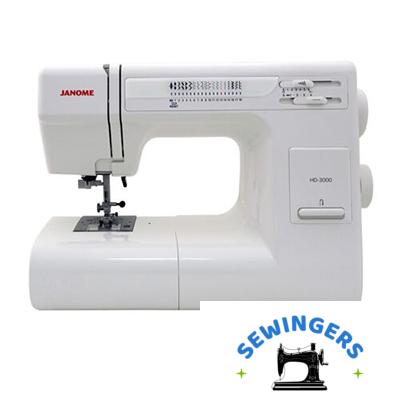

Design and Build Quality
Open the box and the first thing you’ll notice is the weight. At just over 14 pounds, the HD3000 has a solidity to it that lighter plastic machines simply don’t. That comes from the aluminum internal frame — it’s not just marketing language. The frame resists flex, which directly affects stitch consistency when you’re pushing through multiple layers.
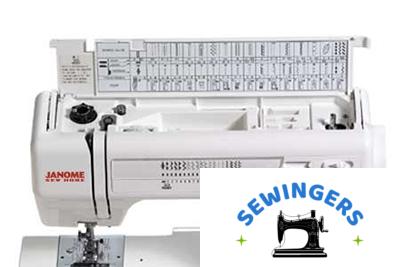
The external housing is hard plastic, which is standard at this price point. Controls are fully mechanical: a stitch selector dial, a tension dial, a reverse lever, and a handwheel on the right. No menus to navigate. No firmware updates. Some people love that. If you’ve ever stared at a computerized machine’s screen trying to figure out why it’s beeping, you’ll understand the appeal.
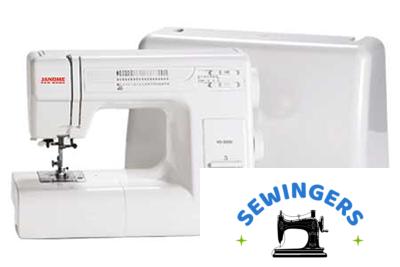
Portability is reasonable. There’s a built-in carrying handle, and the included hard machine cover protects it between projects. The storage compartment under the free arm holds extra presser feet, which is a small but genuinely useful detail.
The needle plate is clearly marked with seam guide measurements — something beginners especially will appreciate. Feed dogs feel robust, not flimsy, and the presser foot lever has a satisfying, confident action to it.
Features and Included Accessories
Eighteen stitches covers most of what home sewists actually use day to day. You get a straight stitch, zigzag, blind hem stitch, satin stitch, overedge stitch, and more. The one-step automatic buttonhole is probably the feature that gets the most praise — it’s reliable in a way that four-step buttonholes on older machines often aren’t.
Stitch length and width are both adjustable via dials, giving you real control over finishing quality. The included presser feet are worth listing out because the set is actually useful:
- Zigzag foot
- Zipper foot
- Buttonhole foot
- Overedge foot
- Satin stitch foot
- Seam guide
That overedge foot in particular gets used more than people expect. For sewists who want clean raw edges without a serger, it’s a genuine workaround. The hard machine cover is a practical bonus — it’s the kind of thing you’re glad exists when the machine sits unused for a few weeks.
Sewing Performance on Different Fabrics
This is where the HD3000 earns its “heavy duty” label, or at least partially earns it.
Cotton and quilting fabric — genuinely excellent. Stitches are even, tension holds consistently, and the machine doesn’t struggle at all. If quilting is your primary use case, the HD3000 is hard to fault at this price.
Denim — solid performance through two or three layers. Four or more layers of thick denim (like a jeans hem) will slow it down and may require a little hand-pressure on the wheel to get through the thickest point. Not a dealbreaker, but worth knowing.
Canvas and tote bag projects — handles this well. Great for DIY tote bags, home décor sewing like pillow covers, or holiday craft projects. The aluminum frame means it doesn’t vibrate excessively when pushing through canvas.
Upholstery fabric — manageable for lighter upholstery work, like throw pillow covers. True heavy upholstery is pushing its limits. For dedicated upholstery sewing, a purpose-built machine makes more sense.
Lightweight fabrics — this is actually where some sewists hit frustration. Very lightweight materials like chiffon or silk can be tricky to manage. Feed control could be better at the lighter end of the fabric spectrum.
Ease of Use for Beginners and Intermediate Sewers
Setup is straightforward. The threading path is clearly labeled, and the color-coded guides walk you through without needing to dig into the instruction manual every time. Bobbin winding happens on top of the machine and takes maybe two minutes once you’ve done it a few times.
The mechanical nature of the machine actually helps beginners. When something goes wrong — and something always eventually goes wrong — there are fewer variables to troubleshoot. Thread tension issues are solved by turning a dial. Stitch selection is a physical click. That simplicity builds confidence.
Maintenance requirements are minimal. Regular lint cleaning around the bobbin case, occasional oiling of the hook assembly and needle bar, and needle changes every 6-8 hours of actual sewing time. Nothing unusual.
One adjustment new users mention: the foot pedal response feels sensitive at first. It takes a session or two to get comfortable with speed control. After that, most people stop noticing.
Janome HD3000 vs Competitors
Here’s a direct comparison of the four machines that come up most often alongside the HD3000:
| Machine | Type | Stitches | Approx. Price | Best For |
|---|---|---|---|---|
| Janome HD3000 | Mechanical | 18 | $250-$330 | Reliability, durability, all-purpose home sewing |
| Singer Heavy Duty 4423 | Mechanical | 23 | $200-$260 | Speed, budget, beginners |
| Brother ST371HD | Mechanical | 37 | $220-$280 | Stitch variety, versatility |
| Janome HD5000 | Mechanical | 18 | $380-$450 | Heavier workloads, upgraded internals |
The Singer 4423 comes in cheaper and actually sews faster at 1,100 SPM. But the build quality difference is noticeable — the HD3000 feels more substantial and tends to hold calibration better over time. The Singer is a smart choice on a tighter budget; the Janome rewards you for spending a little more.
The Brother ST371HD offers more stitch options, which appeals to sewists who want more decorative versatility. In practice, though, most home sewists use maybe 5-6 stitches regularly. More stitches doesn’t always mean more usefulness.
The HD5000 is the natural upgrade if the HD3000 isn’t quite enough — it handles truly heavy fabrics more confidently. But for the vast majority of home sewing use cases, the gap doesn’t justify the price difference.
Pros and Cons of the Janome HD3000
Major Advantages:
- Aluminum frame delivers real long-term durability
- Consistent stitch quality across most fabric weights
- One-step buttonhole works reliably
- Straightforward mechanical controls, low learning curve
- Quiet operation compared to similarly priced machines
- Included accessory set is practical, not filler
Potential Drawbacks:
- Lightweight fabrics require more patience and technique
- Four-plus layers of heavy denim can strain the motor
- Fewer built-in stitches than some competitors at similar prices
- No automatic needle threader (a genuine daily inconvenience)
- Limited decorative stitch options
Long-term ownership tends to be positive. The mechanical design means fewer electronic failure points, and Janome’s parts availability is good. Many HD3000 owners report using the same machine for 8-10 years without major issues.
Best Projects to Make with the Janome HD3000
For American hobbyists, the HD3000 slots into a wide range of practical and seasonal projects.
Home décor sewing is where it consistently performs well — DIY pillow covers, curtain panels, table runners for Thanksgiving and Christmas, and seasonal decorations. The straight stitch quality is clean enough that finished edges look professional.
Holiday gift projects like Christmas stockings, fabric gift bags, and Fourth of July bunting all fall well within its comfort zone. These projects involve manageable fabric weights and repetitive straight stitching — exactly what the HD3000 handles without complaint.
Clothing alterations — hemming jeans, taking in seams, replacing zippers — are genuinely practical applications. This is where the free arm earns its place, making sleeve and leg alterations much more manageable.
Small business and Etsy shop inventory — tote bags, pouches, and simple accessories work well. The machine’s reliability matters here: if you’re sewing for income, unexpected mechanical failures are costly. The HD3000’s durability makes it a reasonable workhorse for small-volume production.
Quilting deserves its own mention. The even stitch quality and consistent tension make it well-suited for patchwork quilts, lap quilts, and wall hangings. A walking foot (sold separately) expands quilting capability significantly.
Maintenance Tips to Extend Machine Life
Most HD3000 longevity comes down to three habits: clean it regularly, oil it correctly, and change needles more often than you think you need to.
Lint accumulates fast, especially when sewing cotton. After every few projects, remove the bobbin case and brush out the feed mechanism and hook assembly. A small lint brush (usually included) handles this in two minutes.
Oiling: a single drop of sewing machine oil on the hook assembly every 8-10 hours of use is the standard recommendation. Don’t over-oil — excess oil transfers to fabric. When in doubt, less is more.
Needle changes matter more than most sewists realize. A dull needle causes skipped stitches, fabric pulls, and unnecessary motor strain. Roughly every 6-8 hours of actual sewing is a reasonable benchmark, or any time you notice stitch quality degrading.
Storage with the hard cover on protects against dust and lint settling into the mechanism during periods of non-use. For long-term storage, a light oiling before covering is worth the two minutes.
Professional servicing every 2-3 years keeps the hook timing accurate and catches wear before it becomes a real problem.
Is the Janome HD3000 Worth the Price?
At $250-$330, the HD3000 sits at a point where cheaper machines start to feel like compromises and more expensive machines start requiring justification.
The honest answer: yes, for most home sewists. The durability difference between this and a $150 entry-level machine is genuinely significant over a 5-year ownership window. A machine that holds calibration, handles moderate fabric weights, and doesn’t develop mysterious electronic issues is worth paying for.
Janome’s warranty coverage (25 years on the machine body, 2 years on electrical components, 1 year on labor in the U.S.) is notably strong for this price range. That’s not marketing fluff — it reflects genuine confidence in the build.
If your sewing is mostly lightweight fabrics and you rarely touch denim or canvas, there are cheaper options that serve you just as well. But if you want a machine that grows with your skills and handles varied projects without drama, the HD3000 delivers real value.
Who Should Buy the Janome HD3000?
Beginners who are serious about learning — not just curious — will find it supportive without being confusing. The mechanical simplicity removes variables while the build quality doesn’t get in the way.
Intermediate sewists who’ve outgrown an entry-level machine and want something that lasts are the ideal buyer. This is the upgrade that actually feels like an upgrade.
Quilters working with cotton and quilting-weight fabrics will find reliable stitch consistency that supports clean patchwork.
DIY crafters running a small Etsy operation or producing market products need dependability. The HD3000 provides that without demanding professional-level investment.
Who might want something else: sewists working primarily with delicate fabrics, anyone needing heavy-duty upholstery capability, or buyers wanting a wide decorative stitch library.
Final Verdict
The Janome HD3000 doesn’t try to impress with a long feature list or a glowing touchscreen. What it does instead is sew reliably, hold together over years of use, and handle the fabric range that most American home sewists actually work with.
It’s not perfect. The missing automatic needle threader is a genuine daily inconvenience. Lightweight fabrics require more patience than they should. And for sewists who want decorative stitch variety, the 18-stitch selection is limiting.
But for what it’s actually designed to do — provide a durable, consistent mechanical sewing machine for home use — the HD3000 delivers. It’s a machine that earns trust gradually and holds onto it. And in the crowded, confusing mid-range sewing machine market, that counts for a lot
| Stitch applications | 57 built-in |
| Stitch settings | Preset length & width |
| Weight | Under 13 lbs |
| Needle threader | Automatic |
| Free arm | Yes |
| Power supply | 110V (US standard) |
| Best fabrics | Cotton, polyester blends, light canvas, light denim |
| Skill level | Beginner – Intermediate |
Reviews
There are no reviews yet.