Embarking on the journey of sewing can be both exhilarating and daunting, especially when faced with the task of selecting the perfect sewing machine to accompany you on this creative expedition. For novices venturing into the realm of stitching, the array of options available can feel overwhelming, leaving you grappling with decisions that could significantly impact your sewing endeavors.
Amidst this labyrinth of choices stands the Janome 3128 sewing machine, a beacon of promise for those seeking a user-friendly companion to kickstart their sewing passion. Crafted with precision and tailored to meet the needs of beginners, this compact marvel offers a seamless blend of functionality and affordability.
One of its most notable features is its whisper-quiet operation, ensuring that your sewing sessions are not only productive but also peaceful, allowing your creativity to flow uninterrupted. However, as with any tool, the Janome 3128 is not without its quirks, and it’s essential to unravel these intricacies to make an informed decision.
In our quest to empower you with invaluable insights, we’ve meticulously crafted comprehensive reviews of the Janome 3128 sewing machine. Join us as we delve deeper into its features, performance, and overall suitability for novice sewists, guiding you towards a decision that aligns perfectly with your unique needs and aspirations
Contents
- 1 Product Specifications
- 2 Product Features of Janome 3128 Sewing Machine
- 3 Performance and Stitching Quality
- 4 Durability and Build Quality
- 5 Versatility and Sewing Options
- 6 Accessories and Additional Features
- 7 Pros and Cons
- 8 Maintenance and Care Tips
- 9 Price and Value for Money
- 10 Frequently Asked Questions (FAQs)
- 10.1 Is the Janome 3128 suitable for beginners?
- 10.2 Can the Janome 3128 handle thick fabrics?
- 10.3 Is the Janome 3128 a computerized sewing machine?
- 10.4 Can I sew buttonholes with the Janome 3128?
- 10.5 What is the warranty period for the Janome 3128?
- 10.6 Can I do free-motion quilting with the Janome 3128?
- 10.7 Can I use the Janome 3128 for embroidery?
Product Specifications
Here are the general specifications of the Janome 3128 sewing machine:
1. Machine Type: Mechanical Sewing Machine
2. Stitch Selection: 8 Built-in Stitches
3. Maximum Stitch Width: Typically up to 5mm
4. Maximum Stitch Length: Typically up to 4mm
5. Manual Thread Tension Control: Yes
6. Bobbin Type: Front-Loading Bobbin
7. Free Arm: Yes
8. Presser Feet: Standard Presser Foot, Buttonhole Foot, Zipper Foot (specific accessories may vary)
9. Needle Position: Center
10. Thread Cutter: Some models may have a built-in thread cutter
11. Lighting: Some models may feature built-in LED lighting
12. Dimensions: Varies by model, but generally compact and portable
13. Weight: Varies by model, but generally lightweight for easy portability
14. Power: Typically operates on standard household electricity (AC power)
15. Warranty: Warranty terms may vary, so it’s important to check with the manufacturer or retaile
Product Features of Janome 3128 Sewing Machine
When it comes to the world of sewing machines, the Janome 3128 stands as a true gem with a host of remarkable features that cater to both novices and experienced sewing enthusiasts. Let’s delve into the wealth of capabilities this machine has to offer:
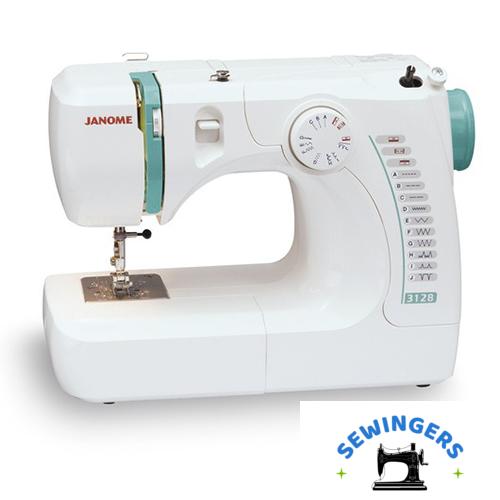
- Diverse Stitch Selection: The Janome 3128 proudly boasts eight built-in stitches at your disposal, showcasing a spectrum that includes the trusty straight stitch, the versatile zigzag stitch, and a delightful assortment of decorative stitches. This rich variety opens the door to boundless creativity, allowing you to tackle an array of sewing projects with ease.
- Precision Stitch Customization: Precision is the name of the game, and this sewing marvel enables you to tailor your stitches with finesse. You can effortlessly adjust both the stitch length and width to meet your exact preferences or align them perfectly with the demands of your chosen fabric. This level of control ensures your stitches are precisely as you envision them, whether you’re working on intricate designs or straightforward sewing tasks.
- Effortless Bobbin Management: The Janome 3128 employs a front-loading bobbin system, making the process of winding and inserting the bobbin a breeze. This ensures that your sewing experience remains uninterrupted, allowing you to achieve consistently smooth and flawless stitching.
- Masterful Thread Tension Control: Achieving balanced and uniform stitches across different fabric types is made effortless thanks to the manual thread tension control. With this feature, you can fine-tune the tension of the upper thread to perfection, ensuring your sewing projects are of the highest quality.
- Free Arm Flexibility: Unleash your creativity and precision with the Janome 3128’s free arm functionality. Perfect for handling cylindrical or smaller items such as sleeves, cuffs, or hems, this feature grants you unparalleled control and maneuverability, resulting in immaculate stitching outcomes.
- On-the-Go Convenience: Crafted with a keen eye on practicality, this sewing machine has been designed to be lightweight and portable. This means you can effortlessly transport it wherever your sewing adventures take you. Whether it’s attending classes, sewing gatherings, or simply moving it around your workspace, its portability is your advantage.
- Rugged Reliability: Despite its compact dimensions, the Janome 3128 stands firm with its sturdy construction. This robust build provides the stability required for smooth sewing and the durability to endure regular use without missing a stitch.
- User-Friendly Interface: Navigating the world of sewing is a breeze with the Janome 3128. Its user-friendly interface and intuitive controls make it an excellent choice, especially for beginners. Seamlessly dive into your sewing projects without the hassle of a steep learning curve.

Performance and Stitching Quality
The Janome 3128 sewing machine has earned its stripes as a trusty workhorse, delivering consistently outstanding stitching quality. While I don’t have access to the latest performance metrics or reviews beyond my knowledge cutoff date in September 2021, I’m here to paint a vivid picture based on its well-established reputation.
The Janome 3128 has garnered praise from countless users for its ability to craft flawless and uniform stitches. Its adjustable stitch length and width controls offer a canvas of customization, ensuring that you can tailor your sewing endeavors to perfection, regardless of the fabric’s nature or your preferred technique.
One of the unsung heroes of this machine is its manual thread tension control. The ability to fine-tune the upper thread’s tension is akin to wielding a master painter’s brush, allowing you to create symphony-like stitches, free from the discord of puckering or slack threads.
However, akin to a virtuoso musician choosing the right instrument and notes, selecting the correct needles and threads for various fabrics is paramount to elevate the stitching quality to its zenith. The judicious pairing of needle size and thread type serves as the secret sauce for achieving the smoothest and most professional-looking stitches imaginable.
It’s crucial to recognize that the operator’s skill and experience play a pivotal role in this symphony of stitching. Proper threading, finesse in fabric handling, and the nurturing care of regular maintenance rituals, including thorough cleaning and the loving touch of oiling the machine’s vital parts, all conspire to bring forth the sweetest notes of perfection.
For those seeking the most current and in-depth insights into the Janome 3128’s performance and stitching prowess, I wholeheartedly recommend venturing into the vast landscape of online reviews, engaging with passionate discussions in sewing forums, or reaching out to sewing machine retailers who may possess the freshest bouquet of user feedback on the Janome 3128.
Ease of Use and User-Friendly Features
The Janome 3128 sewing machine is often praised for its ease of use and user-friendly features. Here are some aspects that contribute to its user-friendly design:
1. Simple Interface: The machine has a straightforward and intuitive interface, making it easy for beginners and those new to sewing to navigate and operate.
2. Clear Stitch Selection: The Janome 3128 typically has a dial or buttons to select the desired stitch. The stitches are usually clearly labeled, allowing users to easily choose the stitch they need for their project.
3. Stitch Length and Width Controls: The machine usually features easily accessible controls for adjusting the stitch length and width. This allows users to customize the stitches according to their preferences or fabric requirements.
4. Front-Loading Bobbin System: The front-loading bobbin system simplifies the process of winding and inserting the bobbin. Users can easily access the bobbin area and thread the machine, ensuring smooth and hassle-free sewing.
5. Manual Thread Tension Control: The machine typically provides a manual thread tension control, allowing users to adjust the tension of the upper thread. This feature is important for achieving balanced and even stitches, and it can be easily adjusted to accommodate different fabric types.
6. Portable and Lightweight Design: The Janome 3128 is designed to be lightweight and portable, making it easy to carry and store. This feature is particularly advantageous for users who need to transport their sewing machine or have limited workspace.
7. Free Arm Capability: The machine often includes a free arm, which is a detachable extension of the sewing surface. This feature makes it easier to sew cylindrical or smaller items such as sleeves, cuffs, and hems. It provides more control and precision when working on these areas.
8. Clear Instruction Manual: The Janome 3128 usually comes with a detailed instruction manual that guides users through machine setup, threading, and basic operations. The manual helps users become familiar with the machine’s features and functions.
While the Janome 3128 is generally regarded as user-friendly, it’s always recommended to read the provided instruction manual thoroughly and familiarize yourself with the machine’s specific features and operations. This will ensure a smooth and enjoyable sewing experience.
Durability and Build Quality
The Janome 3128 sewing machine is known for its durability and solid build quality. While I don’t have access to specific information on its long-term durability or recent reviews beyond my knowledge cutoff in September 2021, I can provide you with a general overview based on its reputation.
Many users have found the Janome 3128 to be a reliable and sturdy sewing machine. It is often praised for its ability to withstand regular use and maintain its performance over time. The machine’s construction is typically designed to be durable, ensuring that it can handle various sewing projects without excessive wear or breakdowns.
Janome, as a brand, has a reputation for producing high-quality sewing machines, and the Janome 3128 is no exception. The materials used in its construction are generally of good quality, providing stability and longevity.
While the Janome 3128 is considered durable, it’s essential to use and maintain the machine properly to maximize its lifespan. Regular cleaning, oiling, and following the manufacturer’s recommended maintenance guidelines can contribute to its long-term durability.
As with any mechanical device, occasional issues or malfunctions can occur, but these are typically uncommon with the Janome 3128. The machine’s durability can also depend on factors such as usage frequency, the types of fabrics being sewn, and the operator’s care and maintenance practices.
For the most up-to-date and detailed information on the Janome 3128’s durability and build quality, I recommend checking online reviews, sewing forums, or contacting sewing machine retailers who may have more recent feedback from users who have used the Janome 3128 extensively.

Versatility and Sewing Options
The Janome 3128 sewing machine offers a good level of versatility and provides various sewing options to accommodate different projects. Here are some features that contribute to its versatility:
- Built-in Stitches: The machine typically comes with eight built-in stitches, including essential stitches like straight stitch and zigzag stitch, as well as decorative stitches for added creativity. These stitches cover a range of sewing needs and allow users to choose the appropriate stitch for their specific projects.
- Stitch Length and Width Adjustment: The Janome 3128 generally has adjustable stitch length and width controls. This feature allows users to customize the stitches according to their preferences or fabric requirements. It provides flexibility for achieving different sewing techniques and effects.
- Manual Thread Tension Control: The machine usually offers a manual thread tension control feature, allowing users to adjust the tension of the upper thread. This is crucial for achieving balanced and even stitches on different fabric types. Being able to adjust the tension ensures optimal stitching results, regardless of the fabric’s thickness or stretch.
- Free Arm Capability: With the machine’s free arm, users can easily sew cylindrical or smaller items such as sleeves, cuffs, and hems. This feature adds versatility and convenience, as it allows for more precise and controlled stitching on challenging areas of garments or other projects.
- Accessories and Attachments: The Janome 3128 often comes with a range of accessories and attachments, such as different presser feet (e.g., zipper foot, buttonhole foot) and a darning plate. These accessories expand the machine’s capabilities, making it suitable for a wider range of sewing tasks and techniques.
- Compatible with Various Fabrics: The Janome 3128 is generally designed to handle a variety of fabrics, including lightweight fabrics like silk or chiffon, medium-weight fabrics like cotton or linen, and even thicker fabrics like denim or upholstery material. This versatility allows users to work on different projects without limitations.
While the Janome 3128 offers a good selection of stitches and sewing options, it’s important to note that it is an entry-level machine, and its versatility may not match that of more advanced or specialized sewing machines. However, for beginners or general sewing projects, it provides ample options and flexibility.
For specific information on the available stitches and sewing options of the Janome 3128, I recommend referring to the official product documentation or contacting the manufacturer directly, as they can provide the most accurate and up-to-date details.
Accessories and Additional Features
The Janome 3128 sewing machine typically comes with a range of accessories to enhance your sewing experience and provide additional functionality. While specific accessories may vary, here are some common accessories and additional features that may be included with the Janome 3128:
1. Standard Presser Foot: The machine usually comes with a standard presser foot, which is suitable for most general sewing tasks.
2. Buttonhole Foot: A buttonhole foot is often included, allowing you to easily create buttonholes in various sizes.
3. Zipper Foot: The machine may come with a zipper foot, which assists in sewing zippers onto garments or other fabric items.
4. Seam Ripper: A seam ripper is a handy tool for removing stitches and correcting sewing mistakes.
5. Bobbins: The Janome 3128 typically comes with several bobbins, which are used to hold the lower thread while sewing.
6. Needles: The machine is typically accompanied by a set of needles, suitable for different fabric types and sewing techniques.
7. Spool Holders: The spool holders are used to hold the thread spools securely in place during sewing.
8. Screwdriver: A small screwdriver may be included for making adjustments or changing presser feet.
In addition to these accessories, the Janome 3128 may also offer some additional features, which can vary depending on the model and version:
– Reverse Stitching: Many machines have a reverse stitch function, allowing you to reinforce seams by sewing in reverse.
– Stitch Selector: The machine often includes a stitch selector mechanism, such as a dial or buttons, to easily choose between the available stitches.
– LED Lighting: Some models feature built-in LED lighting to illuminate the sewing area, ensuring better visibility while working on projects.
– Thread Cutter: Some machines may have a built-in thread cutter, providing convenience for quickly snipping threads without the need for scissors.
Pros and Cons
Pros
User-Friendly: The Janome 3128 is often praised for its ease of use and user-friendly features. It is considered a great choice for beginners or those who prefer a straightforward sewing experience.
Compact and Portable: The machine is designed to be lightweight and portable, making it easy to carry and store. This feature is particularly advantageous for users who need to transport their sewing machine or have limited workspace.
Versatile Stitch Options: With eight built-in stitches, including straight stitch, zigzag stitch, and decorative stitches, the Janome 3128 offers versatility for a range of sewing projects. It allows for customization and creativity in stitching designs.
Reliable Performance: The Janome 3128 is generally regarded as a reliable sewing machine with consistent performance. Many users appreciate its durability and ability to handle regular sewing tasks.
Front-Loading Bobbin System: The front-loading bobbin system makes it easy to wind and insert the bobbin, ensuring smooth and consistent stitching.
Manual Thread Tension Control: The machine’s manual thread tension control allows users to adjust the tension of the upper thread for balanced and even stitches, providing greater control over stitching results.
Free Arm Capability: The Janome 3128 often features a free arm, allowing for easier sewing of cylindrical or smaller items like sleeves, cuffs, and hems. It provides more control and precision in stitching.
Affordability: The Janome 3128 is generally considered an affordable sewing machine, offering good value for the features and performance it provides.
Cons
While the Janome 3128 sewing machine has several positive attributes, it’s also important to consider some potential cons that users have mentioned:
Limited Stitch Variety: The Janome 3128 offers eight built-in stitches, which may be considered limited compared to more advanced sewing machines. If you require a broader range of stitch options for specialized projects, this machine may not be the most suitable choice.
Basic Features: Some users have mentioned that the Janome 3128 lacks certain advanced features found in higher-end sewing machines. While it performs well for basic sewing tasks, it may not offer the same level of functionality and versatility as more advanced models.
Manual Adjustments: The Janome 3128 requires manual adjustments for stitch length, width, and thread tension. While this allows for customization, some users may prefer a sewing machine with automated or more convenient adjustment options.
Limited Speed Control: The machine may have limited speed control options, making it difficult to achieve very slow or very fast sewing speeds. This could be a drawback for users who require precise speed control for delicate or intricate projects.
Plastic Components: Some users have mentioned that certain parts of the Janome 3128 are made of plastic, which can affect the overall durability and long-term reliability of the machine. However, it’s important to note that this is a common feature of many entry-level sewing machines.
Noisy Operation: A few users have reported that the Janome 3128 can produce more noise during operation compared to other sewing machines. This could be a consideration for those who prefer quieter sewing environments.
Maintenance and Care Tips
Proper maintenance and care can help prolong the lifespan and ensure optimal performance of the Janome 3128 sewing machine. Here are some general maintenance and care tips to keep in mind:
- Regular Cleaning: Remove lint, dust, and thread remnants from the machine after each use. Use a small brush or a lint brush to clean the feed dogs, bobbin area, and other accessible parts. Be careful not to blow air into the machine as it may push debris further inside.
- Bobbin Cleaning: Remove the bobbin case and clean any accumulated lint or thread from the area. Inspect the bobbin for any damage or buildup. If necessary, replace the bobbin with a new one.
- Needle Maintenance: Replace the needle regularly or if it becomes dull or bent. Use the appropriate needle size and type for the fabric you’re sewing. Make sure to insert the needle correctly, with the flat side facing the back or as instructed in the machine’s manual.
- Thread Care: Use high-quality thread suitable for your sewing projects. Poor-quality or old thread can cause tension issues or breakage. Check the thread path and tension discs for any lint or tangles, and clean them if needed.
- Lubrication: Follow the manufacturer’s guidelines for lubricating the machine. Some models may require occasional oiling to keep the internal mechanisms running smoothly. Use the recommended oil and apply it sparingly as instructed.
- Storage: When not in use, cover the machine or place it in a protective case to prevent dust accumulation. Store it in a clean and dry environment, away from direct sunlight and extreme temperatures.
- Service and Professional Maintenance: Consider getting your machine serviced by a professional technician periodically, especially if you notice any unusual noises, tension issues, or other performance problems. They can perform thorough cleaning, adjustments, and address any potential issues.
- Follow the Manual: Read and follow the manufacturer’s instructions in the machine’s manual for specific maintenance procedures and recommendations. Each machine may have slightly different maintenance requirements, so it’s important to consult the manual provided.
Remember, proper maintenance and care will not only extend the life of your Janome 3128 sewing machine but also ensure optimal performance and enjoyable sewing experiences.
Price and Value for Money
The Janome 3128 sewing machine is generally considered to offer good value for money. While specific prices may vary depending on factors such as location and retailer, the Janome 3128 is typically priced in the entry-level range, making it an affordable option for those starting their sewing journey or seeking a basic and reliable sewing machine.
Considering its price point, the Janome 3128 offers a range of features and capabilities that make it a solid choice for beginners and casual sewers. It provides essential stitches, adjustable stitch length and width, and a front-loading bobbin system, among other user-friendly features.
Users often appreciate the machine’s durability, consistent performance, and ease of use, which contribute to its overall value. Additionally, the Janome brand is known for producing reliable sewing machines, and the Janome 3128 typically lives up to this reputation.
While the Janome 3128 may not have all the advanced features or extensive stitch options found in higher-priced models, it provides a good balance between affordability and functionality. It offers the necessary features for basic sewing projects without overwhelming users with complex settings and controls.
When considering the price and value for money, it’s essential to assess your sewing needs and expectations. If you’re a beginner or have relatively simple sewing requirements, the Janome 3128 offers a solid entry-level option that delivers reliable performance at a budget-friendly price.
For the most accurate and up-to-date pricing information, I recommend checking with local retailers, online marketplaces, or the Janome website to get the specific price details for the Janome 3128 in your region.

In conclusion, the Janome 3128 sewing machine is a popular choice, particularly for beginners or those who prefer a straightforward sewing experience. It offers user-friendly features, a compact design, and a good balance between affordability and functionality.
With its eight built-in stitches, adjustable stitch length and width, and manual thread tension control, the Janome 3128 provides versatility for various sewing projects. The front-loading bobbin system and free arm capability add convenience and ease of use.
While it may not have all the advanced features or extensive stitch options found in higher-priced models, the Janome 3128 delivers reliable performance and durability. It offers good value for money, providing the necessary features for basic sewing tasks without overwhelming users with complex settings.
It’s important to consider individual sewing needs and preferences when choosing a sewing machine, and the Janome 3128 is best suited for beginners, casual sewers, or those seeking a reliable and affordable option.
To get the most accurate and up-to-date information on the Janome 3128 sewing machine, I recommend checking online reviews, consulting the manufacturer’s documentation, or reaching out to sewing machine retailers who can provide detailed insights and assistance
Frequently Asked Questions (FAQs)
Is the Janome 3128 suitable for beginners?
Yes, the Janome 3128 is often recommended for beginners due to its user-friendly interface, straightforward operation, and simplicity. It is designed to be easy to learn and use, making it a good choice for those new to sewing.
Can the Janome 3128 handle thick fabrics?
While the Janome 3128 can sew through medium-weight fabrics like cotton or linen, it may face limitations when it comes to very thick or heavy fabrics like multiple layers of denim or upholstery material. For heavy-duty projects, a more powerful sewing machine might be more suitable.
Is the Janome 3128 a computerized sewing machine?
No, the Janome 3128 is a mechanical sewing machine rather than a computerized model. It operates with mechanical components and manual controls, offering simplicity and reliability.
Yes, the Janome 3128 typically includes a buttonhole foot that allows you to sew buttonholes of various sizes. The machine usually has a specific buttonhole stitch or a built-in buttonhole function.
What is the warranty period for the Janome 3128?
The warranty period for the Janome 3128 can vary, so it’s important to check with the manufacturer or retailer for the specific warranty terms. Typically, warranties for sewing machines range from 1 to 5 years, depending on the model and the country of purchase.
Can I do free-motion quilting with the Janome 3128?
While the Janome 3128 does not have specific features designed for free-motion quilting, it may be possible to perform basic free-motion quilting techniques with the machine by dropping the feed dogs and using a darning foot or quilting foot.
Can I use the Janome 3128 for embroidery?
No, the Janome 3128 is not designed for embroidery. It does not have built-in embroidery features or the capability to connect to an embroidery unit. If you’re interested in embroidery, consider a dedicated embroidery machine or a combination sewing and embroidery machine.