


Juki has built a serious reputation in the sewing world—not through marketing, but through machines that actually hold up over years of real use. The HZL-F600 sits near the top of that lineup, and if you’ve been researching sewing machines for any length of time, you’ve probably seen it mentioned more than once. There’s a reason for that.
If you’re new to sewing, or switching from a basic machine, the sheer number of Juki models can feel genuinely overwhelming. What sets the F600 apart isn’t always obvious at first glance—it’s the kind of thing that becomes clear once you understand what to look for. That’s what this review is for: a grounded, honest look at what this machine does well, where it falls short, and whether it actually fits your sewing life.
Contents
Overview
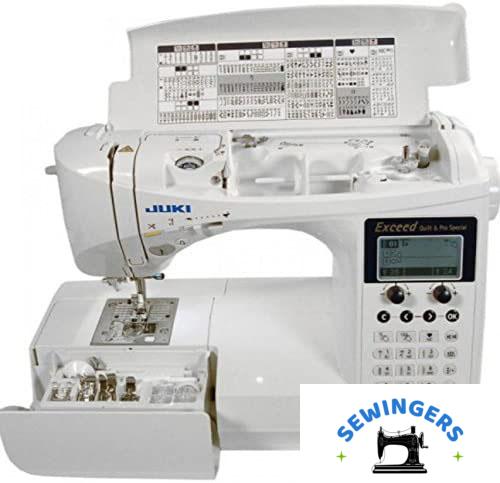
The HZL-F600 is a Japanese-made computerized sewing machine built for sewists who’ve moved past the basics and want something that can grow with them. It’s not a beginner machine—though beginners can certainly learn on it—and it’s not a niche industrial tool either. It lands squarely in that “serious home sewer” category, which is honestly where most people end up once they’ve caught the sewing bug.
What tends to stand out immediately is the build quality. It feels substantial in a way that cheaper machines simply don’t. Whether that matters to you depends on how often you sew—but if you’re putting in regular hours at the machine, you’ll notice the difference.
Features
The feature list on this machine is long, but not in a padded-with-gimmicks way. Most of what’s here gets used. Here’s what actually matters:
- 600+ built-in stitch patterns: Utility stitches, decorative options, alphanumeric characters—you’re unlikely to exhaust the library. In practice, most sewists end up using maybe 20–30 stitches regularly, but having the full range means you’re not hunting for workarounds on specialty projects.
- Adjustable stitch length and width: Fine-tuning these makes a real difference when you’re switching between fabric weights. The range (0–5mm length, 0–7mm width) covers most sewing scenarios comfortably.
- Automatic needle threader: Small thing. Huge quality-of-life improvement, especially under poor lighting or after a long session when your eyes are tired.
- Large LCD display: Clear, easy to navigate. Selecting and adjusting stitches takes seconds rather than minutes—particularly helpful if you’re switching between stitch types mid-project.
- Advanced feeding system: This is where the HZL-F600 genuinely earns its price. Consistent fabric feed matters more than most people realize until they’ve dealt with a machine that skips or bunches.
- Drop feed for free-motion work: Lowering the feed dogs gives you manual control for quilting or embroidery. Works cleanly without fuss.
- Knee lifter: Lifts the presser foot hands-free. Sounds minor until you’re rotating a bulky quilt every few minutes—then it becomes one of those features you’d miss immediately if it were gone.
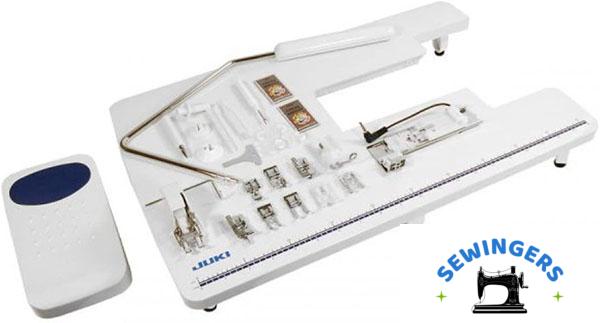
- Extension table: Expands the workspace for larger projects. Quilters especially will appreciate having the extra surface.
Performance and Stitch Quality
This is where the machine earns its reputation. The HZL-F600 tops out at 900 stitches per minute, and the speed control lets you dial it down as needed—useful when you’re working on something precise or learning a new technique.
- Stitch consistency: Even across different fabric types, the stitches stay clean. This comes down to the feeding system and tension control working together well.
- Quiet operation: Noticeably quieter than most machines in this category. Not silent, but you’re not fighting against the noise.
- Thread tension control: Adjustable and responsive. Worth spending time dialing in for different thread types—once you find the right settings, the stitches hold up well through washing and regular use.
- Reinforcement stitches: Built-in options add durability to seams without requiring additional passes.
- Heavy fabric handling: Denim, multiple layers, light leather—the motor handles these without the machine struggling or stalling.
Ease of Use
The HZL-F600 is user-friendly, though that comes with a caveat: there’s still a learning curve if you’re coming from a simpler machine. The feature set is broad enough that it takes time to get comfortable with everything.
- Quick-set bobbin system: Drop-in design with a transparent cover. Easy to monitor thread levels, easy to replace.
- One-touch buttons: Start/stop, reverse, thread trim—these simplify the sewing process and reduce how often you need to reach for manual adjustments.
- Adjustable speed control: Start slow, build up. The speed range accommodates both careful precision work and faster production sewing.
- Stitch reference chart: Printed on the machine itself. More useful than it sounds when you’re mid-project and need to quickly identify a stitch number.
- LED lighting: Bright, well-positioned. Particularly helpful for dark fabrics or intricate detail work.
- Maintenance access: The removable accessory box and accessible bobbin area make routine cleaning straightforward. Nothing requires special tools.
Build Quality and Durability
Juki machines tend to last. The HZL-F600 has a metal internal frame, which gives it the kind of stability you can feel immediately—no flex, no vibration creep during long sessions.
- The internal components are selected for longevity, not just cost. This shows up in consistent performance over time rather than in any single flashy feature.
- The precision of the internal mechanics reduces wear, which in practice means fewer alignment issues and a longer useful lifespan.
- Juki typically backs these machines with a solid warranty and has a well-regarded support network—worth factoring in if you’re planning to use this machine heavily.
Versatility
The range of what this machine handles is genuinely broad. Garment sewing, home décor, quilting, free-motion embroidery—it moves between these without needing much reconfiguration.
- Buttonholes: Multiple styles including automatic one-step. Clean results without fiddling.
- Specialty techniques: Blind hem, overcasting, button sewing—covered. These aren’t headline features, but having them built in saves time on professional finishing work.
- Presser foot pressure adjustment: Lets you adapt to different fabric thicknesses and textures without fighting the machine.
- Twin needle support: Parallel stitching, decorative flourishes, reinforced seams—the machine accommodates twin needle work without issues.
Accessories
- Presser feet: The included set covers standard zigzag, buttonhole, zipper, overcasting, blind hem, and more. Enough to handle most projects without additional purchases.
- Extension table: Included. Genuinely useful for quilt-sized work.
- Knee lifter: Included. As mentioned earlier—you’ll use this more than you expect.
- Hard cover/carrying case: Protects the machine during storage and transport.
- Thread cutter and built-in blade: Automatic trimming plus a built-in cutter on the machine itself. Small conveniences that add up during long sewing sessions.
- Programmable memory (select models): Stores preferred stitch combinations and settings. Useful if you return to the same configurations repeatedly.
- Needle up/down function: Stops the needle in a controlled position. Helpful for pivoting at corners or removing fabric cleanly.
Specifications
- Machine type: Computerized sewing machine
- Dimensions: Approximately 445mm (W) × 291mm (H) × 210mm (D)
- Weight: Roughly 11.5 kg (25.4 lbs)
- Built-in stitches: 600+
- Stitch length: 0.0–5.0mm (adjustable)
- Stitch width: 0.0–7.0mm (adjustable)
- Maximum sewing speed: 900 stitches per minute
- Buttonhole styles: Multiple, including automatic one-step
- Display: LCD
- Lighting: LED
- Bobbin system: Quick-set drop-in with transparent cover
Pros
- Consistently clean stitch quality across a wide range of fabrics and weights
- 600+ built-in stitches with plenty of practical variety beyond just decoration
- User-friendly interface that doesn’t sacrifice depth for simplicity
- Metal frame and quality components that hold up over years of regular use
- Handles garments, quilts, home décor, and specialty work without major adjustments
- Quiet enough for home use without noise being a constant issue
- Strong Juki customer support and warranty backing
Cons
- Price: It’s a significant investment. If your sewing is occasional or your budget is tight, there are capable machines at lower price points worth considering first.
- Learning curve: The feature depth means there’s real time investment to get fully comfortable with everything. That’s not a flaw exactly, but it’s worth knowing going in.
- Weight: At 11.5 kg, it’s not a machine you’ll easily move around. If portability matters to you, factor this in.
- Accessory availability: Model-specific accessories can be harder to find than those for more widely-sold machines.
- No Wi-Fi: There’s no wireless connectivity or smart features. For some sewists this is irrelevant; for others who want software integration, it’s a gap.
- Bobbin winding noise: A few users have noted that the bobbin winding process is louder than expected. Doesn’t affect sewing performance, but worth mentioning.

User Ratings and Reviews
The HZL-F600 has accumulated strongly positive feedback from sewists across skill levels. A few themes come up consistently:
1. Stitch quality: Users frequently mention that their stitches improved noticeably after switching to this machine—particularly the consistency across different fabric types.
2. Versatility: The range of available stitches and the ability to customize length, width, and tension gives sewists flexibility they didn’t have with previous machines.
3. Build quality: Long-term owners often mention the machine performing well after years of heavy use. That kind of feedback is more meaningful than any single feature claim.
4. User-friendly features: The automatic needle threader, quick bobbin setup, and thread trimmer get mentioned repeatedly as genuine time-savers rather than just selling points.
5. Quilting capabilities: Quilters specifically call out the knee lifter and drop feed as features that changed how they work. The extension table also gets regular praise for making larger projects manageable.
How It Compares
- vs. entry-level machines: The gap in stitch quality, feeding consistency, and build is noticeable. Entry-level machines are fine for occasional sewing, but regular sewists tend to outgrow them. The HZL-F600 doesn’t have that ceiling.
- vs. comparable mid-range machines: The feeding system is a genuine differentiator. Most machines at this price point have adequate feeding—this one handles difficult fabrics reliably.
- vs. higher-end machines: Some premium machines add embroidery modules, wireless connectivity, or additional automation. Whether those extras justify a higher price depends entirely on how you sew.
Price and Value
The HZL-F600 is priced in the upper-mid range for home sewing machines. It’s not cheap, and that’s worth being honest about. Prices vary by retailer and any available promotions, so it’s worth comparing before buying.
For sewists who use their machine regularly—weekly at minimum—the investment tends to make sense. The durability means you’re not replacing it every few years, and the feature set means it doesn’t become a limitation as your skills develop. For someone sewing occasionally or just starting out, there’s a reasonable argument for starting with something less expensive and upgrading later.
The honest framing: it’s worth the price if sewing is a genuine part of your life. If it’s a passing interest or a once-in-a-while activity, it might be more machine than you need right now.

Final Thoughts
The Juki HZL-F600 is a well-built, capable machine that holds up well against its competition. The stitch quality is consistently good, the feature set is practical rather than padded, and the build quality is the kind that makes the investment feel justified after a few years of regular use.
It’s not perfect for everyone. The weight and price are real considerations. And if you’re new to sewing, there’s a real adjustment period before you’re using the machine to its potential. But for sewists who’ve moved past basic machines and want something that won’t hold them back—this one deserves its reputation.


