
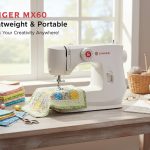
SINGER MX60 Lightweight & Portable Sewing Machine
over $75
free returns
checkout
support
You probably don’t start out thinking about sewing machines while standing in a small apartment kitchen or clearing space on a dorm desk—but that’s exactly where compact machines like the SINGER MX60 quietly prove their worth. Space feels tight, time feels tighter, and complicated tools? Those usually end up unused.
This is where something simple, almost understated, starts to matter more than expected.
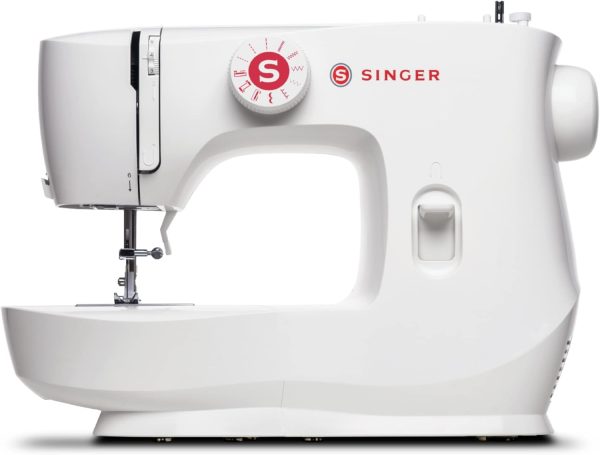
The SINGER MX60 delivers lightweight portability, 57 stitch applications, and beginner-friendly operation under a typical USD $150 price point, which places it firmly in the “practical, not overwhelming” category for most American households.
Overview of the SINGER MX60 Lightweight & Portable Sewing Machine
The MX60 exists for one reason: straightforward sewing without friction. No digital menus. No learning curve that stretches for weeks. Just a dial, a few core features, and a machine that gets out of your way.
Core Specifications at a Glance
| Feature | Details | What It Feels Like in Use |
|---|---|---|
| Stitch Applications | 57 built-in | Enough variety without decision fatigue |
| Stitch Settings | Preset length & width | No guesswork, especially early on |
| Weight | Under 13 lbs | Easy to move, even one-handed |
| Needle Threader | Automatic | Saves time (and patience) |
| Free Arm | Yes | Makes sleeves and hems manageable |
| Power | 110V (US standard) | Plug-and-play in any home |
Here’s the thing—machines packed with features often sound impressive but slow people down. The MX60 trims that excess. Turn the dial, pick a stitch, start sewing. That simplicity tends to stick.
Who the SINGER MX60 Actually Works For
Beginners Across the United States
Starting sewing often feels more confusing than expected. Stitch types, tension settings, threading paths—it stacks up fast. The MX60 removes most of that friction because settings are already optimized.
You’ll notice this most when working on:
- DIY home décor like pillow covers and curtains
- Seasonal crafts (Christmas stockings, Fourth of July table runners)
- Basic clothing fixes—hemming jeans, adjusting waistlines
- Back-to-school repairs that show up last minute
There’s no deep technical barrier here. You just start.
Apartment and Dorm Room Setups
Space changes everything. In cities like New York, Chicago, or Los Angeles, a full-size sewing station isn’t realistic.
The MX60 fits into real-life constraints:
- Slides into a closet shelf
- Tucks under a bed
- Sits comfortably on a kitchen table without dominating it
At under 13 pounds, moving it around doesn’t feel like a chore. That matters more than expected—because if setup feels annoying, sewing simply doesn’t happen.
Casual Crafters Using Everyday Fabrics
If your fabric stash comes from JOANN, Hobby Lobby, or even leftover materials from past projects, this machine handles them comfortably.
Best-performing fabric types include:
- Quilting cottons
- Polyester blends
- Lightweight canvas
- Light denim (single layers or minimal stacking)
But there’s a limit—and it shows up quickly with thicker materials. Heavy upholstery or leather pushes beyond what this machine is built for.
Key Features That Actually Matter in Daily Use
Lightweight and Portable Design
Weight matters more than specs on paper. At under 13 pounds, the MX60 moves easily between rooms.
You’ll feel this when:
- Switching from a dining table to a storage area
- Cleaning up quickly before guests arrive
- Packing it away after short sewing sessions
Machines that stay out all the time tend to collect dust. Portable ones actually get used.
57 Stitch Applications
Fifty-seven sounds like a big number—and it is—but what matters is how those stitches translate into real projects.
Core stitches you’ll actually use:
- Straight stitch for seams
- Zigzag for stretch fabrics
- Satin stitch for decorative edges
- Blind hem for clean pant finishes
- Buttonhole for simple garment work
Most home projects rarely go beyond these. The extra options? They sit there until curiosity kicks in.
Free Arm Capability
This is one of those features people overlook—until sleeves or pant legs enter the picture.
The free arm allows tight, circular sewing, which becomes essential for:
- Sleeve adjustments
- Pant hemming
- Kids’ clothing repairs (especially smaller openings)
Without it, fabric bunches awkwardly. With it, things just… flow better.
Performance on Common American Fabrics
The MX60 performs consistently within a clear range. Stay inside that range, and results feel smooth. Step outside, and resistance shows up fast.
Best Fabric Matches
| Fabric Type | Performance Level | Notes |
|---|---|---|
| Quilting Cotton | Excellent | Clean stitches, minimal adjustment |
| Polyester Blends | Very Good | Slight tension tweaks sometimes help |
| Lightweight Canvas | Good | Works best with sharp needles |
| Light Denim | Moderate | Avoid thick seams |
Where It Struggles
- Heavy leather
- Thick upholstery fabrics
- Multi-layer denim stacks
That’s where machines like the SINGER Heavy Duty 4423 step in. The MX60 isn’t trying to compete there—and honestly, it shouldn’t.
Comparison: MX60 vs Other Entry-Level Machines
Choosing between entry-level machines often comes down to one thing: how much complexity feels manageable.
| Machine | Stitch Count | Ease of Use | Strength | Key Difference |
|---|---|---|---|---|
| SINGER MX60 | 57 | Very High | Moderate | Simplicity-focused |
| Brother XM2701 | 27+ (varies by listing) | High | Moderate | More variety, slightly busier interface |
| SINGER M100 | Basic | Very High | Light | Minimal features, ultra-simple |
What Stands Out in Practice
- MX60 vs Brother XM2701: The Brother offers more stitch flexibility, but menus and options can slow beginners down. The MX60 keeps decisions minimal.
- MX60 vs SINGER M100: The M100 strips things down further, but creative flexibility drops. The MX60 sits in a more balanced middle ground.
That balance tends to matter after a few weeks, when basic projects start feeling repetitive and curiosity grows.
Price and Value in the United States
The MX60 consistently lands under USD $150, which positions it as a low-risk entry point.
Typical discount windows include:
- Black Friday and Cyber Monday
- Back-to-school sales (late summer)
- Amazon Prime events
- Holiday promotions
At this price, expectations shift a bit. You’re not buying a lifetime industrial machine—you’re getting something that covers 80% of everyday needs without overinvestment.

Pros and Cons That Show Up Over Time
Pros
- Lightweight design makes storage effortless
- Beginner-friendly controls reduce learning friction
- Reliable SINGER brand support in the US
- Enough stitch variety for most home projects
- Affordable price point
Cons
- Limited power for heavy-duty materials
- No advanced customization features
- No digital interface (which some users actually prefer, but not all)
There’s a pattern here: strengths and limitations come from the same design choice—simplicity.
Setup and Maintenance: What Actually Keeps It Running Smoothly
Quick Setup Flow
- Plug into a standard 110V outlet
- Insert and align the bobbin
- Follow the threading guide (printed clearly on the machine)
- Select a stitch using the dial
- Test on scrap fabric before starting
This process takes roughly 10–15 minutes the first time. After that, it becomes second nature.
Maintenance Habits That Make a Difference
Machines like this don’t demand much, but neglect shows up quickly.
- Clean lint after larger projects (especially cotton-heavy ones)
- Use quality thread to avoid tension issues
- Replace needles regularly—dull needles cause more problems than expected
- Oil only if the manual specifically recommends it
Skipping these steps doesn’t break the machine immediately—but stitching quality drops in subtle ways first.
Is the SINGER MX60 Worth It for American Buyers?
For small apartments, dorm rooms, and everyday household use, the SINGER MX60 delivers exactly what most people end up needing—simple operation, reliable stitching, and easy storage.
You’ll notice its value most in ordinary moments:
- Fixing a hem the night before a trip
- Adjusting kids’ clothes during the school year
- Experimenting with small DIY projects on weekends
It doesn’t try to do everything. That’s actually the point.
For heavier fabrics or business-scale sewing, limitations appear quickly. But for light to medium tasks—the kind that quietly pile up in real life—it handles them without friction.
And in many homes, that’s more than enough.
| Stitch applications | 57 built-in |
| Stitch settings | Preset length & width |
| Weight | Under 13 lbs |
| Needle threader | Automatic |
| Free arm | Yes |
| Power supply | 110V (US standard) |
| Best fabrics | Cotton, polyester blends, light canvas, light denim |
| Skill level | Beginner – Intermediate |
Reviews
There are no reviews yet.