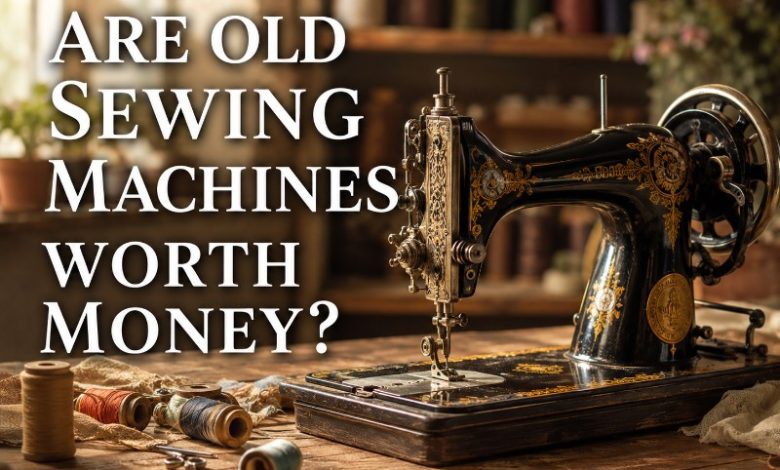
That old Singer sitting in the corner of your grandmother’s basement? It’s getting a second look. Across the U.S., people are pulling dusty machines out of estate sales, attic storage, and inherited furniture piles — and genuinely wondering what they’ve got.
Part of it is timing. Vintage decor is everywhere right now. Farmhouse aesthetics, DIY culture, the whole “make it yourself” wave that picked up momentum over the past several years — it’s put old sewing machines back on people’s radars. Add in platforms like eBay and Facebook Marketplace, and suddenly that treadle machine with the cast iron base isn’t just a relic. It’s a potential listing.
But here’s the thing: not every old machine is worth serious money. Some are. Many aren’t. The difference depends on a handful of specific factors that most people don’t know to look for until they’ve already priced something too high — or given it away for too little.
Key Takeaways
- Most old sewing machines sell for $25 to $400, with a few sought-after models reaching $1,500 or more.
- Brand, model, condition, and whether original parts are included all affect resale value significantly.
- Singer Corporation machines — especially the Featherweight — consistently hold the highest collector demand.
- “Antique” legally means 100+ years old; “vintage” covers roughly 20 to 99 years. The label matters on platforms like Etsy and eBay.
- Mass-produced plastic-body machines from the 1970s and 1980s rarely fetch much, even in working condition.
Contents
- 1 What Determines the Value of Old Sewing Machines?
- 2 Most Valuable Old Sewing Machine Brands in the U.S.
- 3 How Much Are Old Sewing Machines Worth in USD?
- 4 Antique vs. Vintage vs. Used: What’s the Difference?
- 5 How to Identify and Date Your Old Sewing Machine
- 6 Are Old Sewing Machines Valuable as Antiques or Home Decor?
- 7 Where to Sell an Old Sewing Machine in the United States
- 8 When Old Sewing Machines Are Not Worth Much
- 9 Final Thoughts
What Determines the Value of Old Sewing Machines?
Valuing an old sewing machine isn’t guesswork — it follows a fairly consistent pattern once you know what buyers actually care about.
Brand reputation comes first. Singer Corporation built machines by the tens of millions, which sounds like it would hurt value. And for common models, it does. But certain Singer lines developed loyal collector followings that push prices up anyway. On the other side, White Sewing Machine Company and Kenmore (sold through Sears) produced workhorses that rarely excite collectors today.
Model rarity matters more than age alone. A machine from 1910 in a common configuration might sell for $60. A limited-production variant from the same era could sell for ten times that.
Condition is where most estate sale finds fall short. Working condition adds real value. Original finish — meaning it hasn’t been repainted, stripped, or modified — matters to serious collectors. A machine that’s been “restored” by someone who didn’t know what they were doing often sells for less than one left untouched.
Original accessories make a genuine difference. The cabinet, the original manual, the full set of attachments in their original case — these signal to buyers that the machine was cared for. Lose the manual and you’ve lost a chunk of the value.
Then there’s local demand, which is easy to underestimate. A treadle machine with a decorative cabinet might sell fast in rural Tennessee and sit unsold for weeks in a dense urban market where nobody has room for it.
Most Valuable Old Sewing Machine Brands in the U.S.
Not all brands age equally. Here’s what actually holds value versus what people think holds value.
Singer Corporation dominates the collectible market. The 221 Featherweight — a compact, straight-stitch machine produced from 1933 to 1968 — is the most consistently valuable domestic machine in the U.S. resale market. Prices regularly land between $400 and $700, sometimes higher for rare variants or exceptional condition.
Bernina and Pfaff hold value among serious sewists rather than decorators. These Swiss and German-made machines were built to last, and their mechanical precision is still appreciated. Vintage Berninas from the 1960s and 1970s can sell for $200 to $500 depending on model and condition.
Brother Industries and Janome made reliable machines, but their vintage models don’t carry much collector interest. They’re practical buys for people who want a working machine on a budget — not for collectors hunting something rare.
Industrial machines occupy a different category entirely. A heavy-duty commercial head in working order can sell for more than a decorative treadle, but the buyer pool is much smaller and shipping is a serious obstacle.
How Much Are Old Sewing Machines Worth in USD?
Here’s a rough breakdown of what actually moves on the secondary market:
| Machine Type | Typical Price Range | Notes |
|---|---|---|
| Common treadle machines | $25 – $100 | Decorative appeal, rarely functional |
| Mid-century domestic machines | $100 – $400 | Singer, White, Kenmore in working order |
| Singer Featherweight (221) | $400 – $1,500+ | Condition and variant drive wide swings |
| Bernina/Pfaff vintage | $200 – $500 | Collector-sewist crossover demand |
| 1970s–1980s plastic-body machines | $10 – $50 | Low demand, common supply |
| Industrial heads (working) | $150 – $600 | Niche buyer pool, hard to ship |
Honest commentary: These ranges are based on completed listings — meaning machines that actually sold, not just asking prices. Asking prices on eBay and Facebook Marketplace run 30 to 50 percent higher than what buyers actually pay. Always check completed sales before pricing your machine.
The International Sewing Machine Collectors’ Society maintains resources that help with historical context, though for current pricing, eBay’s completed listings filter is the most reliable real-world data you’ll find.
Regional pricing differences are real. Rural areas with active estate sale cultures tend to have more supply and lower prices. Urban buyers on Craigslist or Facebook Marketplace sometimes pay more simply because they’re less likely to stumble across machines at garage sales.
Antique vs. Vintage vs. Used: What’s the Difference?
The terminology isn’t just semantic. It affects how buyers search, what they expect to pay, and how platforms like Etsy and eBay categorize listings.
Antique means the item is 100 or more years old. That’s the standard used by U.S. Customs and Border Protection for import classifications and informally recognized across most resale markets. A machine made in 1924 qualifies. One made in 1930 doesn’t — yet.
Vintage covers roughly 20 to 99 years of age, though the Etsy definition sets the floor at 20 years. In practice, most buyers use “vintage” loosely to mean anything that looks old and pre-dates mass plastic manufacturing.
Used is just used. A Brother from 2005 in working condition is a used sewing machine. It’s not vintage, and it’s definitely not antique. Calling it vintage to justify a higher price is a fast way to earn negative feedback.
The Smithsonian Institution classifies sewing machines as significant artifacts of American domestic history — which sounds grand, but practically speaking, it mostly matters if you’re donating to a museum rather than selling on Facebook Marketplace.
How to Identify and Date Your Old Sewing Machine
Finding out what you actually have takes about 20 minutes if you know where to look.
Start with the serial number plate. On Singer machines, it’s usually stamped on a small metal badge near the base of the machine or on the front panel. Singer Corporation’s serial number lookup database is one of the most comprehensive in the industry — enter the number and get a production year, manufacturing location, and sometimes the original model designation.
Look at the decals. The style, color, and design of the decorative decals (the scrollwork and floral patterns painted on the body) changed by era. Collectors learn to read these almost like tree rings. Earlier machines have different badge designs than later ones, and certain patterns correspond to specific decades.
Check the cabinet style. Treadle cabinets with ornate cast iron legs generally predate the 1940s. Bentwood cases (the rounded wooden carrying case) are common on mid-century portables. A plain metal case with a fold-out handle is almost certainly post-1960.
Consult collector forums. The International Sewing Machine Collectors’ Society has an active community. Post a clear photo of the serial number plate and the machine body and you’ll usually get an identification within a day or two.
Are Old Sewing Machines Valuable as Antiques or Home Decor?
For a lot of machines, decorative value beats functional value. And that’s not a bad thing.
Farmhouse decor trends — the kind HGTV has been pushing for over a decade — made treadle sewing tables genuinely desirable as furniture. The cast iron base, the wooden cabinet, the vintage ironwork: it photographs beautifully and fits right into the rustic-industrial aesthetic that still dominates interior design in a lot of American homes.
Around the holidays, especially heading into Thanksgiving and Christmas market season, vintage sewing machines and tables move well at craft fairs and antique malls. Buyers aren’t always sewists — they’re decorators looking for a statement piece.
Joann and Hobby Lobby sell new furniture pieces that mimic this look. The fact that those sell well tells you the aesthetic has real market demand. An original piece with actual age and patina will beat a reproduction for the right buyer.
If the machine doesn’t run and restoring it isn’t worth the cost, lean into the display angle. A non-working treadle in good cosmetic condition can still sell for $60 to $150 as a decor piece — more if the cabinet is intact and attractive.
Where to Sell an Old Sewing Machine in the United States
eBay is the broadest market with the most buyer competition — which is good for price. The downside is shipping. Most sewing machines are heavy, awkward to pack, and expensive to ship. Many listings end up “local pickup only” because the math doesn’t work otherwise.
Facebook Marketplace has become the go-to for local sales. No shipping, no fees, quick cash transactions. The tradeoff is that local buyers are price-sensitive and often haggle. For a common machine, it’s usually the fastest way to move it.
Craigslist still works in some markets, especially for larger items or machines being sold as-is.
Antique malls and consignment shops take a cut — usually 20 to 40 percent — but they handle the selling process and attract the kind of buyer who’s already in the mindset of paying fair prices for vintage items.
Goodwill Industries and Habitat for Humanity are worth considering if the machine isn’t worth much. A donation may be cleaner than a frustrating two-month listing at a price nobody wants to pay.
One practical note: if the machine is heavy or awkward and you’re listing online, photograph the serial number plate clearly. Serious buyers will ask for it, and having it ready speeds up the sale.
When Old Sewing Machines Are Not Worth Much
This is the section most people don’t want to read — but it’s the most useful one.
Machines made between roughly 1965 and 1990, especially with plastic housings, almost never generate serious collector interest. That includes a lot of Kenmore machines sold through Sears, plastic-body Brother and Janome models, and the generic store-brand machines that flooded the market during that era.
They work. They’re often in fine condition. But there are tens of thousands of them circulating at any given time, which creates an oversupply that keeps prices low. A working Kenmore from 1978 typically sells for $25 to $75 — and that’s if it sells at all.
Non-working machines in this category are largely unsellable at meaningful prices. Repair costs usually exceed the machine’s value, and replacement parts are hit-or-miss. Goodwill sees these constantly.
Shipping costs are a silent killer for lower-value machines. A machine worth $80 that costs $45 to ship is effectively only worth $35 to an out-of-area buyer — which often means it doesn’t sell online at all.
If you’ve inherited one of these machines and you’re hoping for a windfall, that probably won’t happen. But a quick Facebook Marketplace listing at $40 and a clear photo will usually find it a new home within a week.
Final Thoughts
Old sewing machines exist on a wide spectrum — from genuine collector finds worth $1,000 or more, to functional machines worth $50, to decorative pieces with more charm than cash value.
The work of figuring out where yours lands is mostly a matter of identifying the brand and model, checking the serial number, and looking at what similar machines have actually sold for (not just listed at). That takes an hour, not a week.
If it turns out to be a Singer Featherweight or a well-preserved Bernina, take the time to list it properly with good photos and an accurate description. If it’s a plastic Kenmore from 1982, price it honestly, move it quickly, and don’t spend much energy on it.
Either way, now you know the difference.