Thinking of introducing your kid to sewing? Honestly, I didn’t expect it to take off the way it did—one minute we were threading a needle, the next there were fabric bits stuck to the cat. But here’s what caught me off guard: kids get weirdly focused when they’re making something with their hands. It’s not like homework focus—it’s better.
Now, picking a sewing machine for a child isn’t just about grabbing the smallest or cheapest one. What matters (from trial and error on my end) is: safety first, simple controls, and durability that survives a few jammed bobbins.
Kid-aimed machines usually stitch slower (which you’ll be thankful for), are easier to thread, and aren’t back-breaking to move. Fewer knobs means fewer meltdowns. It’s not about making it “kiddie”—it’s about keeping frustration low so they stick with it.
I’ve narrowed it down to four machines that actually work for beginners. Let’s get into them.
Contents
How to Pick a Kid’s Sewing Machine (Without Losing Your Sanity)
I used to think picking the “cute one” would be enough. Spoiler: it’s not. What’s actually saved me? Real safety features—like needle guards (yes, they’re real), a speed limiter, and some kind of jam prevention. Anything that keeps fingers safe and me from panic counts.
Simple machines tend to win. Fewer stitches = fewer distractions. And unless your kid’s built like a forklift, lightweight matters. If they can’t carry it to the table, they’ll ask you to do it. Every. Single. Time.
Threading? Please. Get one with auto-thread. I’ve lost actual daylight hours trying to poke thread through a needle while a child waits impatiently with fabric shaped like a dinosaur cape.
Space is another issue. I live in a small place, so a compact model that fits in a closet or goes to grandma’s is gold.
Oh, and don’t skimp on build. I watched one fall apart mid-plush-donut project. If it’s not got a metal frame and solid motor, pass.
Add a beginner kit with felt shapes, and suddenly it’s fun—not a fight.
What Actually Matters in a Kids’ Sewing Machine
When I first started hunting for a sewing machine for my kid, I figured safety was the no-brainer place to start. And honestly, it is. Fast-moving needles and small, curious hands? Not a mix I’m willing to gamble on. The models with a built-in finger guard—sometimes labeled as a needle guard—aren’t flawless, but they’ve saved me from at least a dozen mini heart attacks.
Speed control surprised me with how useful it actually is. Being able to slow the thing way down helped my kid go from “accidental fabric launcher” to “hey, that’s a straight line!” Some machines even let you cap the speed manually, which, if you’re hovering nearby like I was, feels oddly comforting.
Threading, though—that’s the one that almost broke both of us. If I get annoyed threading a machine, I can’t blame a kid for just giving up. Auto-threaders and drop-in bobbins make the whole process feel more like a game and less like assembling a puzzle with missing pieces. Visual simplicity matters here. A lot.
Then there’s the stuff nobody tells you upfront—like how a bright LED light actually makes a huge difference. Kids lean in close, and if the lighting sucks, suddenly they’re sewing in the dark. Also, if the presser foot isn’t sturdy, forget about neat stitches. Fabric shifts, lines wobble, and next thing you know, someone’s accusing the machine of sabotage.
Weight matters too. I’ve seen kids instantly quit on machines that jam or feel heavy and over-complicated. The ones that get used are usually light, intuitive, and have just enough built-in stitches to experiment without being overwhelming.
If it’s going to last longer than a summer hobby phase, look for something durable. Bonus points for automatic tension control—even if your kid has no clue what that is, you will when you’re not constantly fixing skipped stitches.
It’s weird what ends up mattering.
| MODELS | BROTHER LS2125I | JANOME 2206 | JANOME FAST LANE | BROTHER XL2610 |
|---|---|---|---|---|
 |
 |
 |
 |
|
| # of stitches | 10 | 6 | 10 | 25 |
| Buttonholes | 4 step buttonhole | 4 step buttonhole | None | 10 |
| Finger Guard | No | No | Yes | No |
| Free Arm | Yes | Yes | Yes | Yes |
| Auto needle threader | No | No | No | Yes |
| Bobbin Loading | Drop-in | Front load | Drop-in | Drop-in |
 |
|
|
|
Best Sewing Machine For Kids
Brother LS2125i Easy-to-Use Sewing Machine
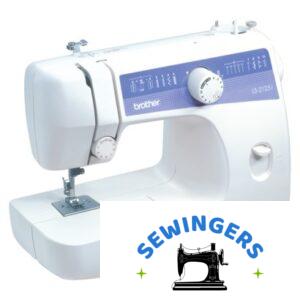

So, here’s the thing. If you’re introducing a kid to sewing—or maybe you’re just after something super low-pressure—the Brother LS2125i hits a sweet spot. It’s light enough (about 13 pounds) that you won’t dread moving it from the closet to the table, and the setup doesn’t make you want to throw it out the window. That alone puts it ahead of half the machines I’ve used.
You get 10 built-in stitches—the usuals like straight and zigzag, plus a couple of decorative ones. There’s a simple dial for stitch selection, which is great because no one (kid or adult) wants to mess with digital menus when they’re just trying to sew a pillowcase. The stitch length is adjustable too, so if your kid is experimenting with different fabrics, they won’t be totally stuck.
It also comes with a free arm (huge win for sewing sleeves or cuffs without wrangling fabric like a maniac), and the foot pedal is responsive enough that beginners won’t feel out of control. Is it flashy? Not at all. But does it do the job without drama? Yes, and that matters way more.
Janome 2206 Sewing Machine

The Janome 2206 is what I’d call a “teaching tool disguised as a sewing machine.” It doesn’t try to impress you with too many features—six stitches total, nothing more—but that’s kind of the point. When someone’s just learning, more buttons usually means more frustration.
This one gives kids room to focus on the how, not just the what. You get manual thread tension control, which sounds intimidating until you realize it’s what teaches you how stitches actually work across different fabrics. I’ve seen kids really “get it” when using this machine—like, they can tell when something feels off and adjust it. That’s rare.
The build? Surprisingly solid. The metal frame doesn’t bounce or rattle, which makes everything feel more stable. Plus, there’s a reverse stitch lever—small thing, but great for locking seams in place. The sewing foot keeps fabric steady, and I’ve found that alone reduces a lot of early sewing frustration.
Not cute. Not gimmicky. Just a solid workhorse that teaches by doing.
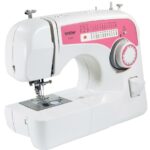
Janome Fast Lane Fuchsia Portable Sewing Machine
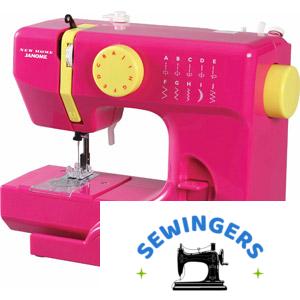
This is the one you grab when your kid wants something fun, or you need a machine that doesn’t take over the whole table. The Janome Fast Lane is about as small and portable as it gets—seriously, it weighs just a few pounds. I’ve carried it to sewing workshops in a tote bag. No lie.
It comes in bold colors (I had the fuchsia one for a while—it’s bright enough to see across the room), and the finger guard on the presser foot is a smart safety touch for kids still figuring out where their hands should be. There’s 10 built-in stitches, which is enough for basic projects like hemming pants or stitching patches without hitting a skill ceiling too fast.
It’s not going to handle thick denim or complex quilting, but for travel, classrooms, or just keeping your kid busy on a rainy afternoon—it works. The vibe is casual, fun, approachable. Think of it like a gateway sewing machine.
Brother XL2610 Free-Arm Sewing Machine

If you’ve got a kid (or honestly, even a teen) who’s starting to take sewing seriously, the Brother XL2610 might be worth looking at. It’s not too complicated, but it’s got enough features to stretch into—which is exactly what you want in a machine that’ll last more than a few months.
You get 25 built-in stitches, which makes it one of the more versatile picks in this list. It also has an automatic needle threader, and if you’ve ever tried threading a needle while a kid’s hovering over your shoulder, you already know how valuable that is. The free-arm design handles smaller, curved areas—like cuffs or doll clothes—without you having to fight the fabric.
It also offers some room to grow. As in, the speed control via foot pedal is smooth enough for beginners, but not so limiting that they’ll outgrow it fast. I’ve seen this machine go from beginner hands to more intermediate projects without feeling like it’s falling behind.
Not the most compact, but not bulky either. If your kid’s interest in sewing seems to be sticking around, this one won’t hold them back.

Keeping Kids Safe Around Sewing Machines: What Actually Works
The first time I let a kid near my sewing machine, I realized how fast “creative fun” can turn into panic. That needle drops with real force. I stay close—close enough to step in, not hovering, but present. Early on, that proximity matters more than any rule sheet.
I always dial the speed way down. Slower stitching reduces errors; it also lowers stress for both of us. When the motor hums gently instead of racing, hands relax. I’ve seen confidence build just from that one adjustment. And yes, I use a finger guard. It’s a small plastic barrier, but it changes behavior immediately—less flinching, steadier guiding.
What’s worked for me isn’t strict commands. It’s repetition. Fingers about an inch from the needle. Fabric guided, not shoved. Scissors passed handle-first. Pins parked in one spot. I say, “Turn it off before fixing that,” so often it echoes in my head.
Eventually, they repeat it back. That’s when I know it’s sticking.
FAQ: Real Talk About Kids’ Sewing Machines
So… when’s the right age to start?
I’ve seen 6-year-olds dive right in, totally focused, while some 10-year-olds can’t make it five minutes without drifting off. Honestly, it’s less about age and more about how their hands work and whether they can stick with a task. If your kid’s the type who lines up puzzle pieces like they’re mapping out a city grid—yeah, they’re probably ready.
Look for a machine with a speed limiter, a chunky handwheel, and some kind of finger guard. I’ve had decent luck with the Brother XM2701—it feels sturdy without overwhelming them. The Janome Fastlane’s another good one. It’s bright, simple, and doesn’t look like a spaceship control panel.
What’s your job while they’re sewing?
Mostly? You’re the human buffer between their curiosity and catastrophe. I use a quick “two fingers back” hand rule, and I’m always within arm’s reach when they’re near the pedal. That thing’s touchy.
Also—good light. Bad lighting turns threading a needle into guesswork. And keep a brush handy. Lint builds up fast, and once the machine jams? Game over.
Which sewing machine makes sense for your kid?
Honestly, it hinges on where they’re at—and what you’re willing to shell out. When my niece first got into patching up her backpack, I handed her the Singer Start 1304. It’s dead simple. No fancy features to trip over. Just enough to see if the interest sticks.
Now, if they’re asking about zig-zag stitches or trying to sew pants for stuffed animals (been there), the Brother XM2701 gives them more room to play without overwhelming them.
I’ve also tried the Janome Arctic Crystal with kids who were ready to dive deeper. It’s sturdy, not cutesy, and feels like a real step up without going full pro.
But honestly? The magic isn’t the machine. It’s the projects. Bookmarks. Wonky pillows. Ugly fabric they picked themselves. That’s when it clicks—when they see they can make something, not just follow steps. Sewing turns into something bigger. Something theirs.
- Related post: Janome 7330 Sewing Machine Review