Sewing is one of those skills that sneaks up on you. You start by hemming a pair of pants, then suddenly you’re three YouTube tutorials deep into making your own curtains. And at some point — usually when you’re fighting with a tangled bobbin at midnight — you realize the machine you’re using actually matters a lot.
That’s where the Brother XM2701 tends to come up. It’s not the flashiest machine on the market, but there’s a reason it keeps showing up in beginner recommendations, and honestly, it holds up even when you’ve moved past the basics.
Contents
- 1 A Sewing Machine for Experts and Beginners
- 2 What You’re Actually Getting: The Features
- 3 Aesthetically Pleasing Design
- 4 Performance and Stitch Quality
- 5 Product Description
- 6 Ease of Use
- 7 Durability and Build Quality
- 8 Versatility and Sewing Options
- 9 Advantages
- 10 Drawbacks
- 11 Accessories
- 12 FAQ and Troubleshooting
- 13 Troubleshooting Guide
- 14 What Other Users Say
A Sewing Machine for Experts and Beginners
Getting into sewing without a reliable machine is a bit like trying to learn to cook with one dull knife. You can technically do it, but everything takes twice as long and nothing turns out quite right.
The Brother XM2701 sits in that sweet spot where it doesn’t overwhelm you, but it also doesn’t hold you back. For someone just starting out, that balance is harder to find than it sounds. A lot of beginner machines feel like they were designed to be outgrown in six months. This one doesn’t quite have that problem.
What tends to happen with this machine is that you grow with it. The features that seem unnecessary early on — adjustable stitch width, tension control — start making sense once you’ve done a few projects. You don’t hit a ceiling as fast as you might expect.


What You’re Actually Getting: The Features
Here’s the thing about the 27 built-in stitches — you probably won’t use most of them right away. But it’s genuinely useful to have them there when a project calls for something specific, like a stretch stitch for knits or a blind hem for dress pants.
The built-in LED light is one of those features you don’t appreciate until you’re working on dark fabric in the evening and suddenly realize you can actually see what you’re doing. Small thing. Makes a difference.
The automatic needle threader is, frankly, a relief. Threading a needle by hand isn’t difficult, but after the fourth or fifth time in a single session, it gets old. Having the machine handle it takes one small frustration off the table.
The jam-resistant bobbin system is worth mentioning too — thread jams are one of the most demoralizing things that can happen mid-project. They’re usually fixable, but they break your focus. This machine handles that better than most in its price range.
Aesthetically Pleasing Design
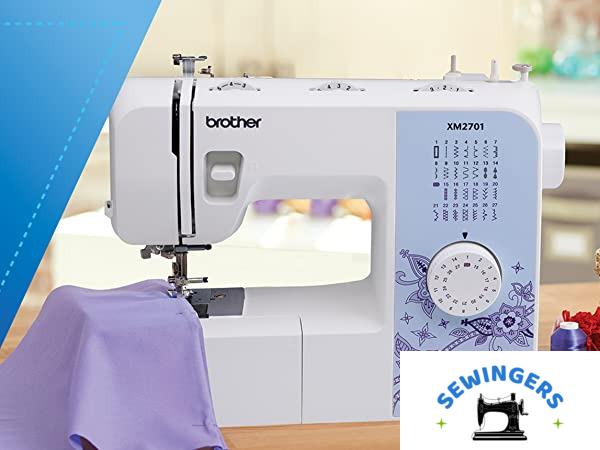
The white and blue color scheme is clean and simple — not trying too hard to look “modern” or “professional.” It fits into most sewing spaces without looking out of place.
The control panel is laid out in a way that actually makes sense. Buttons are labeled clearly. Dials have a satisfying click to them. You don’t need to consult the manual every time you want to change a stitch setting, which is more than can be said for some machines that cost twice as much.
The free arm design deserves a mention here. Sewing a sleeve or a cuff without it is genuinely awkward — you’re constantly adjusting the fabric and hoping for the best. With the free arm, it’s not perfect, but it’s considerably less annoying.
Performance and Stitch Quality
In practice, the motor on this machine is stronger than you’d expect for the price. It moves through cotton and linen without any drama. Denim is manageable — you might need to slow down on multiple layers, but it won’t stall out on you.
The stitch quality is consistent. Not in a “technically perfect under a microscope” way, but in a “your finished project looks like you knew what you were doing” way. The stitches hold up to washing, which is the real test.
Adjustable stitch length is one of those features that sounds technical but just means you can make longer stitches for basting (temporary stitching you’ll pull out later) or shorter ones for anything that needs to be secure. Once you start using it, you’ll wonder how you managed without it.
The tension control is similar. Getting the upper and lower threads to play nicely with each other is crucial — if they’re off, you get puckering or loose loops on the underside of your fabric. This machine gives you enough control to sort that out, which not every entry-level machine does.
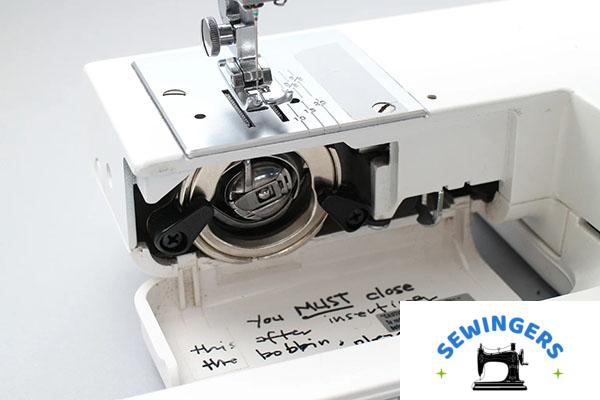
The drop-in bobbin is easy to load and reasonably easy to monitor. The clear cover lets you see how much thread is left, which sounds minor until you run out mid-seam and have to re-stitch a section.
Product Description
The Brother XM2701 lands at a price point that doesn’t feel like a compromise. You’re not buying a machine and immediately thinking about what you’ll upgrade to next year.
The stitch selector is a dial, not a touchscreen, not a menu — just a dial. For most projects, that’s all you need. The automatic needle threader is on the side of the machine, within easy reach. The bobbin loads from the top, which is significantly more user-friendly than front-loading designs.
The customizable buttonhole feature is a nice touch for anyone doing garment work. Buttonholes are one of those things that can look homemade in a bad way if they’re not even. The auto-size function handles most of the guesswork.
Your purchase includes an instructional DVD, which is old-fashioned but genuinely useful if you’re starting from scratch. It covers setup, basic operation, and some fundamental techniques — enough to get you through your first few projects without constantly searching online.
Ease of Use
The learning curve on this machine is genuinely manageable. Within a few hours of setup, you’ll have a feel for the controls. That’s not always the case with machines that pack in more features than the average beginner actually needs.
The automatic needle threader alone probably saves a few minutes per session. That doesn’t sound like much, but across a whole afternoon of sewing, it adds up. And more importantly, it removes a moment of frustration that can derail your focus before you’ve even started.
The jam-resistant bobbin system earns its description. Thread jams still happen occasionally — that’s just the nature of sewing machines — but they’re less frequent and easier to clear than on machines without this design.
The instructional DVD is a better resource than the manual for visual learners. Step-by-step demonstrations are easier to follow than diagrams when you’re trying to figure out how to thread the machine for the first time.
Portability is a real feature here, not just a selling point. The machine is light enough that one person can carry it comfortably. For sewing classes, craft fairs, or just moving it from one room to another, that matters.
Durability and Build Quality
Honestly, the build quality is solid for the price. It doesn’t feel cheap in the way that some budget machines do — there’s no excessive plastic rattling, the dials feel stable, and the frame doesn’t flex when you’re working on heavier fabric.
The motor runs consistently without overheating during normal use. Vibration is minimal, which keeps your stitches from wandering on detailed work.
Maintenance is straightforward. Regular cleaning — removing lint from the bobbin area, occasional oiling — keeps the machine running well. The user manual covers this in enough detail that you don’t have to guess.
Brother’s 25-year limited warranty is worth noting. Most budget machines don’t come with that kind of coverage, and it says something about how the company feels about this machine’s longevity. Whether you’ll ever need to use the warranty is a different question, but it’s reassuring to know it exists.
Versatility and Sewing Options
The 27 built-in stitches cover most situations you’ll encounter as a home sewer. Straight stitch, zigzag, stretch stitches for knit fabrics, decorative options, blind hem — the range is broader than what you’d typically get at this price point.
Adjustable stitch length and width give you control over the look and function of your stitches. Wider zigzag for appliqué work, narrow for a subtle seam finish — it’s the kind of flexibility that makes a meaningful difference over time.
The one-step buttonhole is more reliable than doing it manually. You set the button in the sensor, the machine reads the size, and the buttonhole comes out consistent. It’s not foolproof, but it’s close.
Free arm capability is genuinely useful for cylindrical pieces — sleeves, cuffs, pant legs. Without it, you’re doing awkward workarounds. With it, the process is just cleaner.
Fabric compatibility is decent across the range. Lightweight silks and chiffons require some finesse (and the right needle), but the machine handles them. Cotton, linen, medium-weight fabrics — no issues. Denim and canvas work, though you’ll want to go slower on thick seams. The machine supports various presser feet, so you can add zipper feet, walking feet, and other attachments as your projects get more ambitious.

Advantages
Here’s what actually works well about this machine:
- Affordable entry point. You’re not making a risky financial commitment here, which matters when you’re not sure yet how serious you’ll get about sewing.
- 27 built-in stitches. More variety than most machines at this price — straight, zigzag, stretch, decorative, blind hem. Enough to handle most projects without feeling limited.
- Intuitive controls. The dial and button layout makes sense. You won’t need to reference the manual every session once you’ve spent a few hours with it.
- Automatic needle threader. Saves time, reduces frustration. Especially useful when you’re switching thread colors frequently.
- One-step buttonhole. Consistent results with minimal effort. Good for garment work where uneven buttonholes are immediately obvious.
- LED lighting. The work area stays well lit, which helps with precision on detailed stitching or dark fabrics.
- Adjustable stitch length and width. More control than entry-level machines typically offer. Useful as your projects become more specific.
- Lightweight and portable. Easy to carry to a class, move between rooms, or store when not in use.
- Reliable across project types. Handles garment repairs, home decor projects, and basic construction without major complaints.
Drawbacks
To be fair about it, there are some legitimate limitations:
- Feature ceiling for advanced sewers. If you’re doing complex embroidery, quilting with precise pattern matching, or professional garment construction, this machine will eventually feel limiting. It’s not built for that level of work.
- Speed control is somewhat basic. The foot pedal controls speed, but fine-tuning for very slow, precise work on delicate fabric takes some practice. There’s no variable speed slider, which some machines in the next price range offer.
- LED could be brighter. For most work it’s fine, but on intricate detail work or very fine fabric, more light would help.
- Occasional quality control inconsistencies. Some users have received units with minor defects or missing accessories. Not common, but worth inspecting your machine when it arrives.
- Audible during operation. It’s not excessively loud, but it’s not quiet either. If you sew while others are sleeping or in a shared space, this is worth knowing ahead of time.
- Customer support can be slow. Brother’s support has mixed reviews — some people get quick resolutions, others report long wait times. The 25-year warranty is valuable, but actually using it can be an exercise in patience.
Accessories
The machine comes with a reasonable set of accessories out of the box:
- Bobbins. Several are included so you can pre-wind multiple thread colors and switch without stopping mid-project.
- Needles. A small assortment of needle sizes, enough to get started on a variety of fabrics.
- Foot pedal. Standard design, responsive enough for most purposes.
- Power cord. Included, standard length.
- Dust cover. Worth using — keeps lint and dust out of the machine when you’re not working. Extends the time between deep cleanings.
- Instruction manual. More detailed than average. Covers setup, basic operations, maintenance, and some troubleshooting.
FAQ and Troubleshooting
FAQ
Q: How many built-in stitches does the Brother XM2701 have?
A: 27 built-in stitches, including basic, decorative, and stretch options.
Q: Can you control the sewing speed?
A: Yes — speed is controlled through the foot pedal. Press harder for faster, ease up to slow down.
Q: Does it have an automatic needle threader?
A: Yes, and it’s straightforward to use once you’ve done it a couple of times.
Q: What accessories come included?
A: Bobbins, needles, a foot pedal, power cord, dust cover, and instruction manual.
Q: Can you adjust stitch length and width?
A: Yes, both are adjustable, which gives you meaningful control over your stitch appearance and function.
Troubleshooting Guide
Issue: Stitching Problems
Stitching issues usually trace back to one of two things: the needle or the bobbin.
- Check the needle. Make sure it’s fully inserted and tightened. A needle that’s even slightly loose will cause skipped stitches or irregular tension.
- Check the bobbin. Re-seat it if you’re not sure it’s fully loaded. A bobbin that’s off by even a little can cause loops or uneven stitching on the underside.
- Test on scrap fabric. Run a few inches of stitching on something you don’t care about before returning to your project.
If the problem continues, the instruction manual has more specific guidance. And if that doesn’t resolve it, Brother’s customer support line is the next step.
Issue: Fabric Feeding Problems
If the fabric isn’t moving through smoothly, a couple of things are worth checking before assuming something is wrong with the machine.
- Presser foot position. Confirm it’s lowered and seated correctly. Fabric feeding is controlled partly by the presser foot, and if it’s not making proper contact, the feed dogs underneath can’t do their job.
- Fabric alignment. Make sure the fabric isn’t bunched or folded in a way that’s catching somewhere it shouldn’t be.
- Test on scrap fabric. Feed a piece of scrap through and see if the issue persists before troubleshooting further.
Issue: Unusual Noise
Some noise during operation is normal. A sudden increase in noise, or a sound that wasn’t there before, usually points to one of these:
- Needle condition. A bent or dull needle will make more noise than a sharp one, and it’ll affect your stitch quality too. When in doubt, change the needle.
- Thread or fabric jam. Check the bobbin area and the needle plate for any thread tangles or small fabric scraps caught in the mechanism.
- Test run. After checking both, run a short test to see if the noise continues.
Issue: LED Light Not Working
- Check the power connection. Confirm the machine is fully plugged in at both ends — the cord can work loose from the machine itself as well as from the wall outlet.
- Inspect the bulb. LED lights don’t burn out as often as traditional bulbs, but it does happen. If the bulb looks damaged, it’ll need replacing.
- Test the light. Turn the machine on and off to confirm whether the light responds at all.
If none of these steps resolve the issue, the instruction manual has more detail, or contact Brother support directly.
What Other Users Say
Before committing to any machine, it’s worth seeing what people who’ve actually used it have to say — not the marketing description, but real feedback from people who’ve put it through actual projects.
The general consensus on the Brother XM2701 is positive, particularly around its portability, stitch reliability, and value at its price point. Users who do basic to intermediate sewing tend to be satisfied. Those with more advanced needs mention the feature ceiling as a limitation, but most acknowledge it’s not what the machine is designed for.
For what it’s meant to do — provide a dependable, accessible, affordable sewing experience — it largely delivers.
Related post: Brother SE400 Combination Computerized Sewing Machine Review