Sewing machine oil keeps your Brother, Singer, or Janome running like a dream. One careless drip, though, and you’ve got a dark, greasy mark spreading through fabric you spent real time on. It’s frustrating — especially mid-project.
The good news: most sewing oil stains come out completely, as long as you know what you’re doing. This guide walks you through the whole process, from fresh spills to stubborn set-in stains, using products you can grab at any US grocery or hardware store.
Contents
- 1 Key Takeaways
- 2 What Is Sewing Oil and Why It Stains So Stubbornly
- 3 Act Fast: What to Do Immediately After a Spill
- 4 How to Remove Sewing Oil Stains from Cotton and Denim
- 5 How to Remove Sewing Oil Stains from Delicate Fabrics
- 6 Best Household Products for Oil Stain Removal
- 7 How to Remove Set-In Sewing Oil Stains
- 8 Prevent Sewing Oil Stains in the Future
- 9 Final Thoughts
Key Takeaways
- Act within the first few minutes — blotting immediately stops the stain from penetrating deeper into fabric fibers.
- Never use heat on an oil stain until it’s fully gone; dryers and irons permanently bond grease to fabric.
- Dawn dish soap is one of the most effective and affordable tools for cotton and denim stains.
- For silk, rayon, and polyester, cornstarch or baking soda should be your first move before any liquid treatment.
- Set-in stains need enzyme-based detergents like Persil or Tide Ultra Stain Release and a bit of patience.
What Is Sewing Oil and Why It Stains So Stubbornly
Sewing machine oil is a petroleum-based lubricant — not the same thing as olive oil or motor oil, but it behaves similarly once it touches fabric. Most brands (including the bottles sold with Singer and Bernina machines) use a very thin, clear mineral oil designed to penetrate tiny metal components like the needle bar, feed dogs, and bobbin case without gumming them up.
That thinness is exactly what makes it a nightmare for fabric. It wicks fast. Cotton absorbs it almost immediately, polyester traps it in its synthetic fibers, and fabric blends tend to hold it in layers that are tough to reach.
The other problem is heat. Oil stains that go through a dryer essentially get baked into the fabric weave. At that point, you’re fighting a much harder battle. Most common causes of spills are over-oiling the machine, a leaking bobbin case, or fabric accidentally resting against an oiled presser foot or needle bar between projects.
Act Fast: What to Do Immediately After a Spill
Speed matters more than anything here. Within the first few minutes, the oil is still sitting near the surface of the fabric — you can interrupt it before it fully bonds.
First: blot, don’t rub. Grab a Bounty paper towel or a clean microfiber cloth and press firmly onto the stain. Rubbing just spreads it outward and pushes it deeper. Blot from the outside of the stain inward, lifting as much oil as possible.
Check the garment care label before doing anything else. The FTC Textile Fiber Products Identification Act requires US garments to carry washing instructions, and ignoring them — especially on delicates — can damage the fabric beyond repair.
Cold water is fine to rinse with at this stage, but skip the iron and keep it away from the dryer entirely. Warmth sets oil stains fast.
How to Remove Sewing Oil Stains from Cotton and Denim
Cotton and denim are the most forgiving fabrics to work with here. Levi’s denim and standard quilting cotton both respond well to this method.
Step-by-Step for Cotton and Denim
- Apply Dawn dish soap directly onto the stain. Dawn’s grease-cutting formula was originally designed for oily dishes, and it works just as well on fabric. Don’t dilute it.
- Let it sit for roughly 5 to 10 minutes. The surfactants in the soap need time to break down the oil bonds in the fabric weave.
- Rinse with warm water and check. In most cases, you’ll already see significant improvement.
- Wash in your Whirlpool or Maytag on the warmest setting safe for the fabric, using an enzyme detergent like Arm & Hammer.
- Air dry. Check the stain before putting it anywhere near a dryer. If there’s still a mark, repeat the process before applying heat.
Most fresh cotton stains come out in one round. Denim can sometimes take two.
How to Remove Sewing Oil Stains from Delicate Fabrics
Silk, rayon, and polyester blends need a gentler approach. The wrong product can leave you with a damaged texture that’s worse than the original stain.
Starting with Absorbent Powder
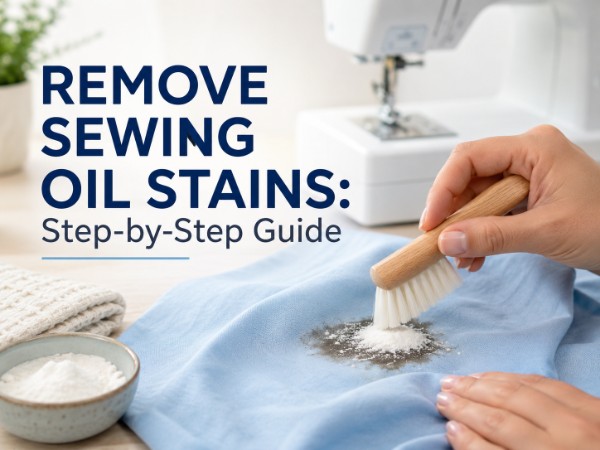
Cover the stain with cornstarch or baking soda. Either one pulls oil up and out of silk fibers and synthetic blends without the friction or chemicals that delicate fabrics can’t handle. Let it sit — ideally overnight, but at least a few hours. Then brush it off gently with a soft cloth.
After that:
- Hand wash with a mild detergent like Woolite or The Laundress in cool water.
- Avoid the washing machine’s agitator cycle, which can distort delicate weaves.
- OxiClean can be used carefully on polyester but skip it entirely on silk.
If the fabric is labeled dry clean only, take it to a professional. Dry cleaners have solvent-based treatments that handle oil stains on silk far better than anything available at Target.
Best Household Products for Oil Stain Removal
Here’s a quick comparison of the most widely available US options and where each one actually earns its place.
| Product | Best For | Price Range | Notes |
|---|---|---|---|
| Dawn Dish Soap | Cotton, denim, most blends | Under $5 | The grease-cutting formula is the go-to for a reason |
| Baking soda / cornstarch | Delicates, first response | Under $3 | Works as absorption, not a cleaner — use before any liquid |
| Shout Spray | General pretreatment | $4-$6 | Good for light stains; less effective on heavy petroleum oil |
| OxiClean | Polyester, synthetic blends | $8-$12 | Strong stain-lifting agents; avoid on silk and wool |
| Seventh Generation Detergent | Eco-conscious households | $10-$14 | Enzyme-based, gentler degreaser for everyday loads |
| Persil Pro Clean | Set-in or tough stains | $10-$15 | High enzyme concentration; best heavy-duty option at Costco |
Honestly, Dawn handles roughly 80% of sewing oil stain situations. The others earn their place when you’re dealing with delicate fabrics or stains that have already been through a wash cycle.
How to Remove Set-In Sewing Oil Stains
If the stain went through the dryer before you caught it, don’t give up — but don’t expect a one-step fix either.
Start by re-wetting the stain area and applying a generous amount of enzyme-based detergent like Tide Ultra Stain Release or Persil directly onto the fabric. Enzyme detergents contain biological agents that break down the oil molecules at a molecular level. Let it pre-soak for at least 30 minutes before washing.
Run a heavy-duty cycle in your LG or GE washing machine on the warmest setting the fabric can handle. Then check again before drying — this part is critical. Heat-set stains that go back into the dryer can become genuinely permanent.
Repeat the whole process two or three times if needed. Most set-in stains eventually respond to repeated enzyme treatment, though very old stains that have gone through multiple dryer cycles may not come out fully.
Prevent Sewing Oil Stains in the Future
Prevention is mostly about habits. A few small adjustments to your maintenance routine make a noticeable difference.
Oil only where the manual says. Singer and Brother both include specific oiling guides in their manuals. Most machines need only a drop or two at designated oil ports — over-oiling is the most common cause of leaks.
After oiling any machine, run a piece of scrap muslin through it before touching your actual project fabric. Joann Fabrics and Hobby Lobby both sell inexpensive muslin by the yard specifically for this purpose. It catches any excess oil before it reaches your real work.
Keep a dust cover on your machine when it’s not in use, and wipe down the presser foot and needle bar area with a dry cloth before each sewing session. A basic sewing machine maintenance kit — available at most craft stores for under $15 — usually includes the right tools to do this properly.
Store your machine upright and on a stable surface. Machines stored on their sides can leak oil in ways that aren’t obvious until you’re already working on a project.
Final Thoughts
Sewing oil stains are genuinely one of those problems that feel worse than they are. With the right first response — blotting, no heat, dish soap for most fabrics — you can get through most spills without losing the piece entirely.
The main thing to remember: heat is the enemy until the stain is completely gone. Everything else is just matching the right product to the right fabric and giving it enough time to work