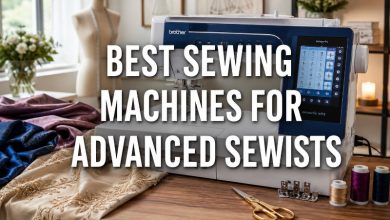
Free motion quilting is a popular technique among quilting enthusiasts, allowing for greater creativity and personalization in quilting projects. Unlike traditional quilting methods that follow set stitch patterns, free motion quilting gives the quilter full control over stitch direction and design. This technique transforms fabric into a canvas, enabling intricate patterns and custom motifs that elevate the artistic quality of the final piece.
Choosing the right sewing machine for quilting plays a crucial role in achieving high-quality results. The machine’s stitch quality, thread tension control, and compatibility with specialized accessories like the presser foot and needle plate directly impact the precision of the quilting design. Understanding the key quilting machine features helps quilters set up an efficient free motion quilting setup and achieve consistent, professional-looking outcomes.
Contents
- 1 What is Free Motion Quilting?
- 2 Must-Have Features for Optimal Quilting Performance
- 3 Best Sewing Machine For Free Motion Quilting
- 3.1 1) Brother HC1850 Sewing and Quilting Machine
- 3.2 2) Singer Quantum Stylist 9960 Portable Sewing Machine
- 3.3 3) Brother CS7000i Computerized Quilting Machine
- 3.4 4) Brother XR9550PRW Sewing and Quilting Machine
- 3.5 5) Janome 4120QDC Computerized Sewing Machine
- 3.6 6) Brother SE600 Sewing and Embroidery Machine
- 3.7 7) Juki HZL-F600 Computerized Sewing and Quilting Machine
- 3.8 8) Brother PQ1500SL Sewing and Quilting Machine
- 3.9 9) SINGER 7258 100-Stitch Sewing Machine
- 3.10 10) JUKI TL-2000Qi Sewing and Quilting Machine
- 4 How to Set Up Your Sewing Machine for Free Motion Quilting
- 5 Common Problems and Troubleshooting in Free Motion Quilting
What is Free Motion Quilting?
Free motion quilting is a quilting technique where the fabric is manually guided under the sewing machine needle to create intricate, decorative stitch patterns. Unlike standard quilting, which relies on the machine’s feed dogs to move the fabric in straight lines, free motion quilting requires lowering the feed dogs. This allows the quilter to move the fabric freely in any direction, offering greater creative control over the stitch design. The process typically involves using a free motion foot or darning foot, along with a quilt sandwich—a layered combination of the quilt top, batting, and backing fabric.
To achieve consistent stitches, quilters often use a stitch regulator or adjust the foot pedal speed in coordination with hand movements. Tools like an extension table provide additional workspace, while fine-tuning tension settings helps prevent thread breakage. Popular free motion quilting techniques include stippling, loops, and feather designs. Mastering how to free motion quilt requires practice, but the freedom to create personalized patterns makes this method a favorite among quilting enthusiasts.
Must-Have Features for Optimal Quilting Performance
When choosing a sewing machine for free motion quilting, certain features are essential to achieve precision and ease. Stitch speed control allows for consistent stitching, especially when working on intricate quilt patterns. Look for machines with adjustable speeds up to 1,000 stitches per minute to handle both detailed work and larger sections efficiently. The needle up/down function helps pivot fabric without losing stitch accuracy, making it easier to quilt around curves or corners.
Another critical feature is throat space, the area between the needle and the machine’s body. Machines with at least 8–10 inches of throat space offer more room for maneuvering large quilt layers. Automatic tension adjustment ensures balanced stitches on different fabric thicknesses, while drop feed dogs allow smooth free motion stitching. Additional features like an adjustable presser foot, LED lighting, and a bobbin winder enhance convenience and overall quilting performance. Investing in a machine with these key features improves quilting precision and helps create high-quality projects.
Best Sewing Machine For Free Motion Quilting
1) Brother HC1850 Sewing and Quilting Machine

Brother HC1850 is one of the best quilting sewing machines available out there. If you are looking for a simple and easy to use free motion quilting machines, then you can buy this sewing machine without thinking twice. This machine has got a throat space of 5.75 inches which is more than any other sewing machine of this price range.
This machine comes with a built-in 130 stitches and embroidery pattern designs that helps you in doing various work. Automatic needle threader and LCD display screen are just some other benefits of having this sewing machine. While quilting with this machine, you can take advantage of the 8 presser feet and detachable wide table.
Pros
- Detachable wide table.
- Built-in 130 stitches.
- 850 stitches per minute.
- Light-weight and easy to use.
- Automatic needle threader.
Cons
- Not suitable for heavy fabrics.
2) Singer Quantum Stylist 9960 Portable Sewing Machine

Singer manufactures the highest number of free motion quilting machines and this sewing machine from Singer is best among all. Singer 9960 is a mid-ranged sewing machine that comes with the top speed of 850 stitches per minute. Along with it, you can enjoy 600 built-in stitches and automatic needle threader like features in this machine.
This machine is perfect for quilting because it comes with an extension table and a drop-in bobbin system. Also, for some professionals, this machine offers a twin-needle system that can be configured accordingly. Heavy and high-quality material is used in this machine so you can expect it to last longer and use it without any worries.
Pros
- Made from high-quality material.
- 850 Stitches Per Minute.
- 600 built-in stitches.
- The extension table included.
- Easy to use.
Cons
- Pretty heavy as compared to other machines.
3) Brother CS7000i Computerized Quilting Machine

We are listing this sewing machine on the third position doesn’t mean it is not better than the one we have mentioned above. This machine is currently one of the most popular sewing machines around the world and you can read some sewing machine buying to know how to pick the best among all. It is an improved version of the CS6000i and comes with a variety of advanced features that can help you in free motion quilting.
Apart from automatic needle threader and thread cutter, you can also enjoy a touch-screen LCD display that allows you to select the type of stitch you want. Also, a built-in LED light has been added to this machine that provides guidance while quilting. There are 70 built-in stitches and 7 styles of 1-step buttonholes.
Pros
- Very big throat space.
- 70 built-in stitches.
- Touch screen LCD display.
- LED light for guidance.
- Automatic needle threader and thread cutter.
Cons
- Light in weight so it may misbalance sometimes.
4) Brother XR9550PRW Sewing and Quilting Machine

This is not just another sewing machine from Brother but it has got some special and useful features. This sewing machine comes with an extra-wide sewing table that makes the quilting easier. Also, you can take the help of the LCD display panel to review your settings before using the sewing machine for free motion quilting.
It weighs around 18 pounds so it is quite heavy but that is all because of the high quality heavy metal frame. There are 100 built-in stitches available in this machine and it also features automatic needle threader. Not only quilting but you can also use this machine for basic sewing and doing different types of stitches like overcasting, zig-zag, etc.
Pros
- Very cheap compared to others.
- Perfect sewing machines for beginners.
- Can be used for sewing and quilting.
- Light in weight and portable.
- High-quality metal frame.
Cons
- No LED lights.
5) Janome 4120QDC Computerized Sewing Machine

Janome 4120QDC is a computerized sewing machine which is suitable for free motion quilting. This machine has got a lot of useful features that give you a very handful of experience of sewing, stitching, and quilting. This is the only machine of this list that comes with a jam-proof top-loading bobbin system which keeps it safe from jamming.
You can enjoy 120 built-in stitches and other features like automatic threading, auto thread cutter, LCD panel to review settings, and many more. Also, you can make different types of stitches using this machine and it is very light-weight too. Another good thing about Janome 4120QDC is that it comes with a lot of accessories and instructional DVD.
Pros
- 27 different accessories.
- Top-load bobbin system.
- Easy to use and light-weight.
- 120 built-in stitches.
- LCD panel.
Cons
- N/A.
6) Brother SE600 Sewing and Embroidery Machine

Brother SE600 sewing machine is made specially for sewing and embroidery work but if you want then you can also do quilting with this machine. It is definitely one of the best sewing machines for free motion quilting that is available right now. This machine has got a 3.2 inch LCD touchscreen display panel that allows you to see your embroidery designs.
Not only this but in this free-motion quilting home sewing machine you will also get 80 built-in designs. Also, other important features like automatic needle threader and drop-in top bobbin are also available in it. For stitching and sewing you can use 130 built-in sewing stitches else you can make some yourself.
Pros
- Touchscreen LCD display panel.
- 80 built-in designs.
- #1 Best Seller on Amazon.
- Fully computerized sewing machine.
- Automatic needle threader.
Cons
- N/A.
7) Juki HZL-F600 Computerized Sewing and Quilting Machine

If you are looking for sewing machines for free motion embroidery then you should read about the Juki HZL-F600 sewing machine. This machine comes with built-in 225 embroideries which can be configured manually. Also, the topstitching speed of this sewing machine is 900 stitches per minute so if you are a profession it can help you in doing your work faster.
This machine is made with Box Feed Technology that controls the needle and gives you accurtate fabric feeding. The buttonhole settings can be control via sensor and you can choose from 10 professional buttonhole designs. The throat space of this sewing machine is 8 inches long and 4.5 inches tall that makes it perfect machine for quilters.
Pros
- Large throat space.
- In-built embroidery designs.
- LCD display panel.
- Full computerized sewing machine.
- Thread tension control.
Cons
- Not suitable for beginners.
8) Brother PQ1500SL Sewing and Quilting Machine

Brother PQ1500SL is made from high-quality metal so it is very durable and will last longer. This machine comes with a fast needle threader that makes it possible even for a newbie to start using this machine without any difficulties. Remember that this machine weighs around 32 pounds so it may be heavy for some users.
Though the extension table of these sewing machines makes it a perfect sewing machine for quilting. Well, if you are looking for free motion quilting machine recommendation then we will definitely recommend you to buy this machine. Not only this but in this machine, you will get 4 feed dog settings so you can use both of your hands while quilting.
Pros
- Industrial level working system.
- The high-quality material used.
- Suitable to beginners.
- 4-feed dog settings.
- Doesn’t require any setup.
Cons
- Quite expensive.
9) SINGER 7258 100-Stitch Sewing Machine

If you are more into doing decorative stuff, then you can consider buying the SINGER 7258 sewing machine. Even though the stitching speed of this machine is 750 stitches per minute but it has 100 built-in stitches. There is a small LCD display panel where you can see some basic settings of your machine before starting your work.
If you are looking for the best home sewing machine for free motion quilting then you should definitely look at it once. There is a memory function in this machine that can be used to select when you want to needle move up and down according to your needs. There are two variants of this sewing machine available out there, one is just the machine while another one comes with an accessories kit.
Pros
- 100 built-in stitches.
- Programmable Needle Up/Down.
- 13 different needle positions.
- It comes with all the necessary accessories.
- Storage box to keep your accessories safe.
Cons
- Cannot process thick fabrics.
10) JUKI TL-2000Qi Sewing and Quilting Machine

JUKI TL-2000Qi is one of the fastest sewing machines with a speed of up to 1500 stitches per minute. Also, if you are looking for a sewing machine with a stitch regulator then you can consider buying this machine. Though, remember that this sewing machine weighs 36 pounds which is higher than other sewing machines of this price range.
You can do various types of stitching using this machine which makes it suitable for quilting. Also, you will get 3 quilting presser feet and knee lift lever with this sewing machine to get your work done faster. Even if you are a beginner to sewing then you can use this sewing machine to do quilting and sewing.
Pros
- 1500 stitches per minute.
- LED display lights.
- Automatic needle threader & knee lift lever.
- A perfect machine for quilting.
- Can be used by beginners too.
Cons
- Might look pricy to some.

How to Set Up Your Sewing Machine for Free Motion Quilting
Setting up your sewing machine for free motion quilting requires careful adjustments to ensure smooth stitching and precision. Begin by installing the free motion foot or darning foot, which allows the fabric to move freely in any direction. Next, lower the feed dogs using your machine’s lever or settings panel—this disables the automatic fabric feed, essential for free motion quilting.
Adjust the thread tension using the tension dial, typically starting with a medium setting and fine-tuning based on stitch quality. Wind the bobbin evenly and insert it, ensuring the thread feeds smoothly. Set the presser foot pressure to a lighter setting to prevent puckering, especially when working with thicker quilt layers. Choose a quilting needle like a size 80/12 or 90/14, depending on fabric thickness. Finally, test on scrap fabric to fine-tune stitch length, speed control, and tension settings for consistent stitches.
Common Problems and Troubleshooting in Free Motion Quilting
Free motion quilting often presents challenges like thread breakage, skipped stitches, and uneven tension, which can disrupt the quilting process. One frequent cause of thread breakage is improper needle size or a dull needle. Using the correct needle type, such as a quilting or topstitch needle, and ensuring it is sharp helps prevent thread shredding. Additionally, adjusting the thread tension—both upper and bobbin—can resolve issues like puckering fabric or tangled bobbin thread. Always test tension settings on scrap fabric before quilting on your main project.
Skipped stitches commonly occur due to incorrect needle installation or incompatible thread and needle combinations. Ensure the needle is inserted correctly and fully seated. If the problem persists, switch to a larger needle size or adjust the tension settings. Regular machine maintenance, including cleaning lint buildup and oiling moving parts, also prevents tension inconsistencies and improves overall stitch regulation. Troubleshooting these common problems ensures smoother, more consistent free motion quilting results.