

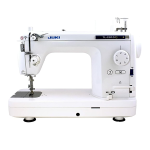
Juki TL-2010Q Portable Sewing Machine
over $75
free returns
checkout
support
You can usually tell when a sewing machine is built for serious work within the first few minutes of using it. The machine feels stable. The motor sounds confident instead of strained. Seams stay straight even when fabric layers start getting thick.
The Juki TL-2010Q Portable Sewing Machine has earned that reputation across the United States. Quilters use it for king-size quilt tops. Home-based sewing businesses rely on it for daily production. Etsy sellers often choose it when speed and stitch quality matter more than decorative features.
Unlike many computerized home machines, the TL-2010Q focuses on one thing: producing exceptionally clean straight stitches at high speed. That narrow focus is exactly why it has become one of the most respected straight-stitch machines available in the U.S. market.
With a typical price ranging from $900 to $1,200, it represents a significant investment. The value comes from industrial-inspired performance without requiring the dedicated space, table, and power setup associated with a full industrial sewing machine.
This guide breaks down the machine’s features, performance, strengths, limitations, and how it compares with competing models available in America.
Overview of the Juki TL-2010Q Portable Sewing Machine
The Juki TL-2010Q portable sewing machine is a single-needle, straight-stitch machine designed for quilting, garment construction, and heavy-duty sewing projects.
Manufactured by Juki Corporation, a company known globally for industrial sewing equipment, the TL-2010Q brings industrial-style engineering into a home sewing environment.
Key Features
The machine includes:
- Single straight stitch operation
- Aluminum die-cast frame
- Automatic thread trimmer
- Speed control system
- Extension table
- Knee lift lever
- LED work light
- 1,500 stitches per minute sewing speed
The design philosophy differs significantly from brands such as Brother Sewing Machines, Janome America, and Singer Sewing Company, which often emphasize stitch variety.
The TL-2010Q takes the opposite approach.
Instead of offering 100, 200, or even 500 decorative stitches, it focuses on creating one exceptionally consistent stitch. For many quilters, that’s the feature that matters most.
Why It Stands Out
The combination of an aluminum die-cast frame, high-speed motor, and automatic thread trimmer creates a sewing experience that feels remarkably close to commercial equipment.
In practice, that means less vibration, better stitch consistency, and fewer interruptions during long sewing sessions.
For anyone searching for a detailed Juki TL-2010Q review, the machine’s reputation centers on reliability rather than flashy technology.
Technical Specifications and Build Quality
The TL-2010Q combines industrial-inspired construction with home-friendly portability.
Core Specifications
| Specification | Juki TL-2010Q |
|---|---|
| Stitch Type | Straight Stitch Only |
| Maximum Speed | 1,500 SPM |
| Throat Space | Approximately 8.5 inches |
| Frame Material | Aluminum Die-Cast |
| Lighting | LED |
| Thread Cutter | Automatic |
| Knee Lift | Included |
| Extension Table | Included |
| Weight | Approximately 25 pounds |
How These Specifications Affect Performance
The 1,500 stitches-per-minute speed is one of the machine’s biggest selling points.
Many standard home sewing machines operate between 700 and 1,000 stitches per minute. The additional speed becomes noticeable during large projects such as:
- Queen-size quilts
- King-size quilts
- Curtain panels
- Denim garments
- Home décor items
The large 8.5-inch throat space also deserves attention.
American quilters frequently work on oversized projects. Whether you’re finishing a Texas star quilt, a California king quilt, or a Midwest-inspired patchwork design, extra room around the needle reduces fabric wrestling.
And that’s where frustration often disappears.
Instead of constantly rolling and repositioning fabric, you gain more working space around the sewing area.
Internal Construction
The machine contains substantial metal internal components, contributing to durability and stitch stability.
Key performance-related components include:
- Feed dog system
- Presser foot pressure adjustment
- Thread tension dial
- Heavy-duty motor assembly
The result is a machine capable of sewing lightweight cotton one minute and thick denim the next without dramatic performance changes.
For anyone researching a heavy duty sewing machine USA buyers consistently recommend, build quality remains one of the strongest arguments for the TL-2010Q.
Performance for Quilting in the U.S.
The TL-2010Q has become especially popular among American quilters.
There are good reasons for that.
Straight Stitch Precision
Quilting relies heavily on straight seams.
A quarter-inch seam allowance that drifts slightly can affect an entire quilt block. Multiply that across dozens or hundreds of pieces, and accuracy becomes critical.
The TL-2010Q delivers exceptional seam consistency because the machine focuses exclusively on straight stitching.
That specialization pays off.
Patchwork piecing becomes faster and more predictable, particularly when producing multiple blocks in a single session.
Free-Motion Quilting Performance
The machine performs impressively during free-motion quilting.
Features that support free-motion work include:
- Smooth stitch formation
- Stable high-speed operation
- Responsive foot control
- Even thread delivery
When paired with a quilting foot, many users report professional-looking stitch quality across large quilt surfaces.
Handling Multiple Layers
Quilts often involve several layers:
- Quilt top
- Batting
- Backing fabric
Some projects include additional stabilizers or dense batting materials.
The TL-2010Q handles these layers confidently thanks to its strong motor and effective feeding system.
Whether you’re creating:
- Christmas quilts
- Fourth of July quilts
- Memory quilts
- Craft fair inventory
The machine remains remarkably consistent.
Real-World Quilting Advantages
What tends to happen after several months of quilting is simple.
Time savings become more noticeable than speed specifications.
A machine capable of accurate high-speed piecing reduces interruptions. Less time goes toward correcting seams, rethreading, or adjusting inconsistent tension.
That productivity gain matters, especially if quilting supports a home business.
Portability and Home Studio Setup
The word “portable” means different things depending on your sewing experience.
How Portable Is It?
At roughly 25 pounds, the TL-2010Q is not lightweight.
A beginner machine made primarily from plastic may weigh 12 to 15 pounds.
A full industrial setup can easily exceed 100 pounds when the table and motor system are included.
The TL-2010Q sits comfortably between those extremes.
Home Sewing Studio Benefits
The machine works well in:
- Apartments
- Craft rooms
- Garages
- Spare bedrooms
- Basement studios
The built-in carrying handle makes transportation manageable for sewing classes and quilting workshops.
Workspace Requirements
A folding sewing table usually provides enough support.
The included extension table expands the workspace significantly, making large projects easier to manage.
For many home-based business owners, the setup hits a practical sweet spot.
You gain industrial-style performance without dedicating an entire room to commercial equipment.
Noise and Power Usage
Another pleasant surprise is the noise level.
The machine produces a purposeful mechanical sound, but it generally avoids the harsh vibration associated with cheaper high-speed machines.
Power consumption also remains reasonable for home use.
That balance between performance and convenience explains why the machine appears frequently in discussions about the ideal Juki home studio setup.
Comparison: Juki TL-2010Q vs Other Popular U.S. Models
Choosing a sewing machine often comes down to trade-offs.
The table below highlights key differences.
Juki TL-2010Q Comparison Table
| Model | Max Speed | Stitch Types | Price Range (USD) | Best For | Commentary |
|---|---|---|---|---|---|
| Juki TL-2010Q | 1,500 SPM | Straight Stitch | $900-$1,200 | Quilting, production sewing | Exceptional stitch quality and speed. Focused specialist. |
| Juki TL-15 | 1,500 SPM | Straight Stitch | $800-$1,100 | Quilters | Very similar performance. Feature preferences often determine the choice. |
| Brother PQ1500SL | 1,500 SPM | Straight Stitch | $700-$1,000 | Quilting | Strong competitor with excellent value. Slightly different feel during operation. |
| Janome HD3000 | 860 SPM | Multiple Stitches | $500-$700 | General sewing | More versatile but significantly slower. |
| Singer Heavy Duty 4452 | 1,100 SPM | Multiple Stitches | $250-$400 | Budget sewing | Affordable and capable, though not in the same performance class. |
Understanding the Differences
The most important distinction is stitch variety.
The Janome HD3000 and Singer Heavy Duty 4452 offer numerous decorative and utility stitches.
The TL-2010Q does not.
That limitation sounds significant until quilting becomes the primary focus.
At that point, stitch quality often outweighs stitch quantity.
The Brother PQ1500SL remains the closest competitor. Both machines target serious quilters and high-volume sewists. The choice frequently comes down to feature preferences, dealer availability, and personal comfort with controls.
For straight-stitch performance alone, the TL-2010Q remains among the strongest options under $1,200.
Pros and Cons for American Buyers
No sewing machine fits every user.
The TL-2010Q has clear strengths and equally clear limitations.
Pros
Exceptional Straight Stitch Quality
Stitches appear clean, uniform, and professional.
This remains the machine’s defining advantage.
High-Speed Performance
The 1,500-SPM motor dramatically reduces production time on large projects.
Durable Metal Construction
The metal body contributes to stability and long-term reliability.
Excellent for Quilting and Heavy Fabrics
Denim, canvas, quilt sandwiches, and layered projects generally pose few problems.
Suitable for Small Businesses
Many sewing entrepreneurs appreciate the productivity increase gained through speed and consistency.
Cons
Straight Stitch Only
No decorative stitches.
No embroidery features.
No built-in alphabet functions.
Premium Price
The machine costs substantially more than many home sewing machines.
Heavier Than Entry-Level Models
Portability exists, but carrying 25 pounds regularly isn’t ideal for everyone.
Learning Curve
The industrial-style feel differs from beginner-friendly computerized machines.
Long-Term Value
For frequent sewing, the value proposition strengthens over time.
The machine’s durability means the initial investment spreads across years of use.
Cost-per-project often decreases significantly for active quilters and business owners.
Maintenance, Care, and Longevity
The TL-2010Q rewards regular maintenance.
Fortunately, upkeep remains straightforward.
Routine Care Tasks
Regular maintenance includes:
- Oiling designated points
- Removing lint buildup
- Cleaning the bobbin area
- Replacing needles
- Checking thread tension
These small tasks help preserve stitch quality and machine longevity.
Importance of Oiling
Unlike many fully sealed consumer machines, the TL-2010Q benefits from periodic oil lubrication.
Proper lubrication reduces wear and supports smooth operation.
Consulting the official owner’s manual ensures oil reaches the correct locations.
Thread Quality Matters
Cheap thread creates surprisingly expensive problems.
Low-quality thread can contribute to:
- Excess lint
- Thread breaks
- Tension issues
- Needle wear
Quality thread generally improves machine performance and reduces maintenance requirements.
Professional Service Intervals
For heavy users, professional servicing every 1 to 2 years makes sense.
Authorized Juki dealers and reputable sewing repair shops can handle:
- Tension calibration
- Feed dog maintenance
- Internal cleaning
- Mechanical adjustments
Many well-maintained Juki machines remain operational for decades.
That’s one reason the brand enjoys such a strong reputation among serious sewists.
Is the Juki TL-2010Q Portable Sewing Machine Right for You?
The answer depends less on skill level and more on sewing priorities.
Best For
The TL-2010Q works particularly well for:
- Serious quilters
- Home quilting businesses
- Etsy sellers
- High-volume sewists
- Denim project enthusiasts
- Home décor makers
- Sewing workshop participants
If your projects involve long seams, repetitive stitching, and production efficiency, this machine offers substantial advantages.
Less Ideal For
The machine may not be the best fit for:
- Casual hobbyists
- Occasional sewists
- Budget-focused buyers
- Beginners seeking decorative features
- Embroidery enthusiasts
A multi-function machine from Brother, Janome, or Singer often provides greater versatility in those situations.
Investment Perspective
Viewed purely as a sewing machine, the TL-2010Q appears expensive.
Viewed as a productivity tool, the calculation changes.
The combination of speed, reliability, stitch quality, and durability creates meaningful time savings. For sewists producing inventory, client projects, or frequent quilts, those saved hours accumulate quickly.
Professional-looking results also become easier to achieve.
Conclusion
The Juki TL-2010Q Portable Sewing Machine remains one of the strongest straight-stitch machines available in the United States. Its combination of 1,500 stitches per minute, durable aluminum die-cast construction, large throat space, and quilting-focused design makes it a favorite among serious sewists.
The machine isn’t built for decorative stitching, embroidery, or all-purpose versatility. Instead, it excels at producing fast, precise, professional-quality straight stitches.
For quilting projects, home-based sewing businesses, denim construction, and high-volume sewing, the TL-2010Q consistently delivers performance that approaches industrial equipment while remaining practical for a home studio.
If your sewing goals center on speed, strength, and precision, the TL-2010Q represents a worthwhile investment. If decorative stitches and creative embellishments sit higher on your priority list, a multi-stitch model may offer better overall value.
For many American quilters and sewing entrepreneurs, however, the TL-2010Q occupies a unique space in the market: powerful enough for professional-level work, yet compact enough to fit comfortably beside a cutting table in a spare bedroom or craft room. That balance is exactly why it continues to earn such strong recommendations year after year.
| Stitch applications | 57 built-in |
| Stitch settings | Preset length & width |
| Weight | Under 13 lbs |
| Needle threader | Automatic |
| Free arm | Yes |
| Power supply | 110V (US standard) |
| Best fabrics | Cotton, polyester blends, light canvas, light denim |
| Skill level | Beginner – Intermediate |
Reviews
There are no reviews yet.