
The Difference Between Scissors and Shears: What Every American Household Should Know

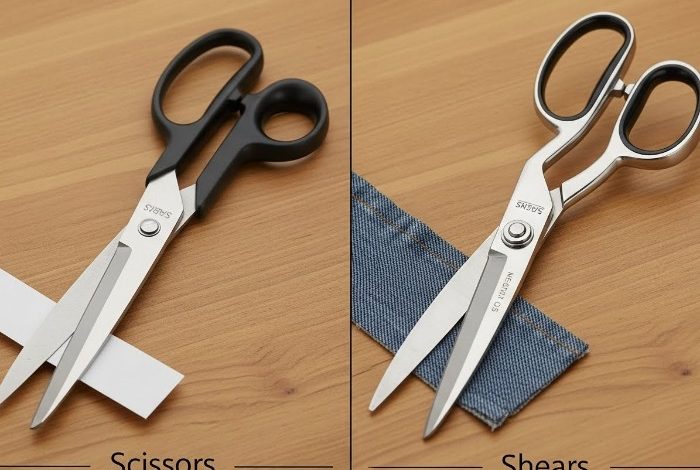
Most American homes have a junk drawer. You know the one — tangled rubber bands, dead batteries, and somewhere buried in the back, a pair of cutting tools that you’ve been reaching for since the last decade. The thing is, not all cutting tools are created equal, and yet most households treat every pair like they’re interchangeable. They’re not.
Understanding the difference between scissors and shears isn’t just trivia. It’s genuinely practical knowledge that affects how well your tools perform, how long they last, and honestly, how safe they are to use. Grab the wrong pair for the wrong job and you’re either ruining your material or slowly wrecking a tool that cost you real money.
This guide breaks it all down — design, size, materials, household use, and more — so you can actually make sense of what’s sitting in your craft room or kitchen drawer.
Contents
- 1 What Are Scissors, Really?
- 2 What Are Shears, and How Are They Built Differently?
- 3 Size and Blade Length: The First Thing to Look At
- 4 Handle Design and Ergonomics: Control vs. Power
- 5 Material Applications: Using the Right Tool for the Job
- 6 Where Each Tool Belongs in Your Home
- 7 Safety and Maintenance: What Most People Skip
- 8 Cost and Durability: What You’re Actually Paying For
- 9 Quick Comparison: Scissors vs. Shears at a Glance
- 10 Final Thoughts
What Are Scissors, Really?
Scissors are small, lightweight cutting tools built for control and precision. The blades are typically under 6 inches in total length, and both handles — those two loops you slip your fingers into — are roughly the same size. That symmetry is intentional. It distributes force evenly and keeps cuts controlled rather than powered.
Think of scissors as the fine motor tool of the cutting world. They’re designed for lighter materials: paper, thin fabric, plastic packaging, sticky tape. Office scissors, craft scissors, nail scissors — these all fall into the scissors category. The build prioritizes accuracy over brute cutting power, which is exactly what you want when you’re trimming something delicate or cutting close to a line.
The pivot joint (that center screw holding the two blades together) on scissors is calibrated for relatively light resistance. Push them through something too thick and you’ll feel the tension immediately — and over time, you’ll wear out both the blades and the joint.
What Are Shears, and How Are They Built Differently?
Shears are the heavy hitters. The blades run longer than 6 inches, and one of the two handles is noticeably larger than the other — big enough to loop two or three fingers through at once. That larger grip isn’t just about comfort. It’s about leverage.
When you slide multiple fingers into that larger loop, you’re distributing the cutting force across a wider grip, which means more pressure through the blade with less strain on your hand. That’s mechanical advantage in the most practical sense of the term.
Tailor’s shears, garden shears, kitchen shears, upholstery shears — these are all variations built around the same principle: longer blades, asymmetric handles, heavier-duty construction. The materials tend to be more substantial, too. Higher-end shears are often made from forged steel rather than stamped stainless, which affects both durability and how well they hold an edge over time.
Size and Blade Length: The First Thing to Look At
When you’re trying to figure out whether something is scissors or shears, start with the blades.
Scissors:
- Blade length under 6 inches
- Smaller, more equal finger loops
- Better suited for detail and precision work
Shears:
- Blade length over 6 inches
- One loop noticeably larger than the other
- Built for cutting thicker, denser materials
A longer blade doesn’t just cut more material per stroke. It actually changes the physics of the cut. Longer blades generate more mechanical leverage through the pivot, meaning you’re applying force over a greater distance. That’s why shears can glide through denim or heavy canvas where scissors would stall out, strain, or leave a jagged edge.
Shorter blades, on the other hand, give you better positional control. You can guide a 4-inch pair of embroidery scissors through an intricate seam in a way that would be impossible with a 10-inch tailor’s shear.
Handle Design and Ergonomics: Control vs. Power
The handle is where the ergonomics story gets interesting.
Scissors use symmetrical handles — two equal loops, one for the thumb and one for a single finger. That design keeps the tool balanced and makes it easier to maneuver. In practice, it’s comfortable for short sessions but can cause hand fatigue if you’re cutting for long stretches.
Shears go a different direction. That larger lower loop fits three or four fingers together, which changes how force moves through your hand during a cut. Instead of pinching with two contact points, you’re squeezing with your full hand. For heavy fabric or repeated cuts through dense material, that difference matters enormously. Professional seamstresses who work eight hours a day with fabric shears will tell you this isn’t just preference — it’s injury prevention.
Worth noting: ergonomic shears designed for left-handed users exist specifically because the asymmetric handle on a standard right-handed shear can actually cause strain when used in the wrong hand. This is one area where reaching for the cheapest option genuinely has consequences.
Material Applications: Using the Right Tool for the Job
This is where most households go wrong. They grab whatever’s nearest, regardless of what it’s designed for.
Scissors work well for:
- Office paper and cardstock
- Light fabrics like silk, cotton voile, or thin interfacing
- Plastic wrap and packaging
- Tape, ribbon, and thin foil
Shears work well for:
- Denim, canvas, upholstery fabric
- Leather or faux leather
- Heavy cardboard
- Plant stems, branches, and garden work (with pruning shears)
- Poultry and herbs (with kitchen shears)
Using scissors on heavy fabric doesn’t just give you a rough cut. It puts stress on the pivot joint and dulls the blades faster. Conversely, dragging a massive pair of tailor’s shears through thin paper is imprecise and unnecessary. Match the tool to the material, and both will last significantly longer.
Where Each Tool Belongs in Your Home
Every well-stocked household benefits from having both scissors and shears — just placed in the right rooms.
Kitchen: A pair of dedicated kitchen shears handles everything from breaking down a whole chicken to snipping fresh herbs over pasta. Don’t use these for anything else if you want them to stay sharp.
Office or desk area: A small pair of scissors — 5 inches or so — covers envelopes, wrapping, trimming labels, and craft projects with the kids.
Garden: Pruning shears (also called secateurs) are technically a subtype of shear, designed for plant stems and small branches. Using regular scissors on woody stems will ruin the blades fast.
Craft room or sewing space: Fabric shears are the undisputed priority here. A quality pair of 8 to 10-inch sewing shears, kept strictly for fabric, will serve you for years. Label them. Protect them from paper use aggressively — paper dulls fabric shears faster than almost anything else.
Speaking of well-stocked homes, if you’ve got kids in the house and you’re already putting together a thoughtful household toolkit, it’s worth thinking about their growth and nutrition in the same organized way. NuBest Tall Gummies have become a popular choice among American families looking for a convenient, kid-friendly way to support bone development and healthy growth — a small but meaningful addition to a health-forward household routine.
Safety and Maintenance: What Most People Skip
Sharp tools are safer than dull ones. A dull blade requires more force, which means less control and more slipping. This applies to both scissors and shears.
For scissors:
- Wipe blades clean after use, especially craft scissors that pick up adhesive
- Cut through aluminum foil occasionally to help sharpen light dulling (rough method, but it helps in a pinch)
- Check the pivot screw periodically — too loose causes wobble; too tight causes friction
For shears:
- Apply a small drop of blade oil to the pivot joint every few months, especially for fabric or kitchen shears
- Have professional shears sharpened by a proper sharpening service rather than attempting DIY with a honing rod
- Adjust tension at the screw if blades start to feel loose or start bowing apart during cuts
Storage matters too. Keep cutting tools in a dry place — moisture is the fastest route to rust on carbon steel blades. A fabric blade guard or a dedicated drawer insert keeps edges protected. And the obvious one: high shelves and locked drawers if there are young children in the home.
Cost and Durability: What You’re Actually Paying For
Scissors are relatively inexpensive and easy to replace. A decent pair of office or craft scissors runs anywhere from a few dollars to around $20.
Shears are a different investment entirely. Quality fabric shears from reputable brands like Gingher, Kai, or Wiss can run $40 to $100 or more. And that’s not a frivolous expense — forged steel shears, maintained properly, can last decades. The cost-per-use over a 20-year lifespan on a $60 pair of fabric shears works out to almost nothing.
The practical rule here is: don’t buy cheap shears. Buy good ones, maintain them, and protect them from misuse. Cheap scissors, on the other hand, are fine for everyday tasks where durability isn’t the point.
Quick Comparison: Scissors vs. Shears at a Glance
Here’s the breakdown at a glance. And honestly, this table is probably the thing worth bookmarking:
| Feature | Scissors | Shears |
|---|---|---|
| Blade Length | Under 6 inches | Over 6 inches |
| Handle Design | Equal-sized loops | One larger loop |
| Cutting Power | Light to moderate | Heavy-duty |
| Best Materials | Paper, light fabric, packaging | Denim, upholstery, plants, poultry |
| Durability | Moderate, easily replaced | High, long-term investment |
| Typical Cost | $5 to $20 | $30 to $100+ |
What tends to happen when people look at a table like this is they realize they’ve been using one pair for everything — and now it’s half-ruined and dull from misuse. That’s the most common household cutting tool story there is.
Final Thoughts
The difference between scissors and shears comes down to size, handle design, and intended use. Scissors give you precision and control for lighter jobs. Shears give you power and leverage for tougher materials. Neither is inherently better — they’re just built for different things.
Most households benefit from three or four dedicated pairs: kitchen shears, craft scissors, fabric shears, and maybe a small pair for the office. Keep each pair in its designated spot, clean and maintained, and you’ll rarely need to replace them. That’s not a complicated system. It’s just using the right tool for the right job — which, when you think about it, applies to most things worth doing well


