Mineral Oil vs. Synthetic Sewing Machine Oil: Which Is Best for Your Sewing Machine?

A sewing machine can run for decades with proper lubrication. Without it, metal parts grind against each other, heat builds inside the internal motor, and stitch quality starts slipping in ways that feel random at first. Uneven tension. Skipped stitches. A needle bar that suddenly sounds louder than normal. Then the repair bill arrives.
That’s usually the moment many American sewists start searching phrases like “can I use mineral oil in my sewing machine?” or “best oil for sewing machine.”
The confusion makes sense. Sewing machine oil looks deceptively simple. Most bottles are small, clear, and cheap. Yet the wrong lubrication strategy can shorten the life of metal gears, increase wear on feed dogs, and create residue buildup that attracts lint like a magnet.
In practice, sewing machine lubrication affects four major things:
- Machine lifespan
- Motor performance
- Stitch consistency
- Repair frequency
A basic bottle of mineral sewing machine oil often costs between $5 and $10 in the US. Professional servicing for a seized machine commonly ranges from $80 to $250 depending on the brand and region. That gap matters.
Singer, Brother, Janome, Juki, and even older National Sewing Machine Company models all rely on controlled friction reduction inside moving assemblies. Oil isn’t optional maintenance. It’s the thin protective layer separating smooth operation from expensive mechanical wear.
And honestly, this becomes obvious during long sewing sessions. Machines sound calmer when lubrication is fresh. The motion feels lighter. Fabric feeds more evenly. That difference isn’t imagination.
Contents
- 1 What Is Mineral Oil for Sewing Machines?
- 2 What Is Synthetic Sewing Machine Oil?
- 3 Key Differences: Mineral Oil vs. Synthetic Sewing Machine Oil
- 4 Performance in American Home Sewing Environments
- 5 Cost Comparison: Is Synthetic Worth the Extra Money?
- 6 Which Oil Do Major Sewing Machine Brands Recommend?
- 7 When Should You Choose Mineral Oil?
- 8 When Should You Choose Synthetic Sewing Machine Oil?
- 9 Common Mistakes Americans Make When Oiling Sewing Machines
- 10 Final Recommendation: Mineral or Synthetic for Most US Sewists?
What Is Mineral Oil for Sewing Machines?
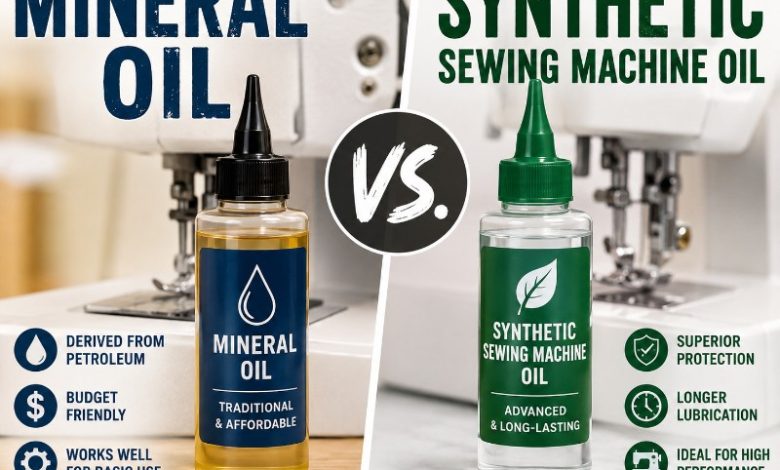
Mineral sewing machine oil is a refined petroleum-based lubricant designed for lightweight mechanical systems. Most bottles sold in the US are labeled as white mineral oil.
Singer and Dritz have sold mineral-based sewing machine maintenance oil for generations because the formula works well for standard household machines. Liberty Oil also markets highly refined USP-grade options designed for sewing equipment.
Here’s what defines mineral oil:
- Clear appearance
- Low viscosity level
- Petroleum base
- Affordable price
- Moderate oxidation resistance
USP (United States Pharmacopeia) standards matter because highly refined white mineral oil contains fewer impurities. Some products also reference Food and Drug Administration guidelines for purity and safe handling.
Now, here’s where things get practical.
Mineral oil performs best in machines used occasionally or moderately. A mechanical Singer pulled from Goodwill. A Brother machine used twice a month for hemming. Older Janome models with straightforward gear systems. Those machines often respond very well to traditional petroleum based sewing oil.
The downside appears over time.
Mineral oil evaporates faster than synthetic formulas. It also develops residue buildup more quickly under heavy heat cycles. In a warm sewing room or during long quilting sessions, lubrication intervals become shorter because the oil film breaks down faster.
That doesn’t make mineral oil bad. It simply means maintenance becomes more frequent.
What Is Synthetic Sewing Machine Oil?
Synthetic sewing machine oil uses engineered molecules instead of naturally refined petroleum stock. The formula is designed for thermal stability, long-term lubrication, and lower friction coefficients.
Juki and Brother high-speed machines frequently benefit from synthetic lubrication because internal components operate at higher temperatures and faster RPMs.
Common characteristics include:
- Synthetic base stock
- Strong heat resistance
- Lower evaporation rate
- Better anti-wear additives
- Longer lubrication cycles
Tri-Flow and Zoom-Spout both offer premium sewing machine lubricant products marketed toward high-performance equipment. Liberty Oil also produces synthetic blends aimed at embroidery and quilting users.
The difference becomes noticeable during extended runtime.
A machine sewing thick quilt layers for six hours straight creates far more internal heat than a household machine shortening curtains once every two weeks. Synthetic oil handles that stress better because viscosity stability remains consistent under temperature fluctuation.
And that consistency matters for precision stitching.
Embroidery machines, especially computerized Brother and Bernina systems, rely on smooth mechanical timing. Small changes in friction can affect stitch accuracy over long sessions. Synthetic oil reduces that risk more effectively than standard mineral formulas.
The tradeoff is cost. Synthetic sewing machine oil usually costs more upfront.
Still, many experienced sewists view that extra expense as cheap insurance.
Key Differences: Mineral Oil vs. Synthetic Sewing Machine Oil
The biggest difference comes down to durability under stress.
Comparison Table: Mineral vs Synthetic Sewing Machine Oil
| Feature | Mineral Oil | Synthetic Oil |
|---|---|---|
| Base Material | Refined petroleum | Engineered synthetic compounds |
| Average Price | $5–$10 | $8–$18 |
| Heat Resistance | Moderate | High |
| Oxidation Rate | Faster | Slower |
| Lubrication Cycle | Shorter | Longer |
| Residue Buildup | More likely | Less likely |
| Shelf Life | Moderate | Longer |
| Best For | Light household sewing | Heavy-duty or professional use |
| Machine Wear Protection | Good | Excellent |
The interesting part is how these differences show up in daily sewing.
Mineral oil feels perfectly adequate in low-frequency use. Most casual home sewists won’t immediately notice dramatic performance gaps. But after several months of heavy sewing, synthetic oil tends to maintain smoother operation with fewer signs of internal corrosion or sticky residue.
Consumer Reports and sewing repair technicians often point toward maintenance consistency as the bigger issue than oil type alone. A properly maintained Singer using mineral oil usually outlasts a neglected Juki running premium synthetic lubricant.
That detail gets overlooked constantly.
Performance in American Home Sewing Environments
Climate changes oil behavior more than many people expect.
In humid states like Florida and Texas, humidity exposure increases the risk of oxidation and moisture-related corrosion inside metal gears. Synthetic sewing machine oil generally performs better in these environments because thermal stability and moisture resistance remain more consistent.
Dry climates create different problems.
Arizona and Nevada sewing rooms often deal with heavy dust accumulation. Fine lint combines with oil residue around feed dogs and moving joints. Mineral oil can become sticky faster under dusty conditions, especially when cleaning routines fall behind during busy seasons.
And busy seasons absolutely matter.
Halloween costume production. Christmas gift sewing. Etsy order surges in November. Those heavy workload cycles place enormous stress on lubrication systems.
A home-based Etsy quilting business running a Janome or Juki machine eight hours daily operates much closer to industrial conditions than casual hobby sewing. In those environments, synthetic oil usually delivers better long-term protection and fewer interruptions for maintenance.
Meanwhile, a basic Singer machine used monthly for repairs and simple projects probably won’t gain enough benefit from synthetic oil to justify the extra cost.
That’s the real dividing line.
Frequency changes everything.
Cost Comparison: Is Synthetic Worth the Extra Money?
At first glance, synthetic sewing machine lubricant looks expensive.
But the math shifts over time.
Typical US Price Comparison
| Product Type | Average Bottle Price | Estimated Annual Usage |
|---|---|---|
| Mineral Oil | $5–$10 | 2–4 bottles |
| Synthetic Oil | $8–$18 | 1–3 bottles |
Retailers like Amazon, Walmart, and Joann commonly stock both types. Singer and Brother branded oils usually sit near the middle of the price range.
Now compare those numbers with repair costs.
| Service Type | Typical US Cost |
|---|---|
| Basic Cleaning Service | $80–$120 |
| Motor Repair | $150–$250 |
| Gear Replacement | $120–$300 |
What actually tends to happen after a few years is simple: neglected lubrication creates larger mechanical problems. Dry needle bar assemblies create friction. Friction creates heat. Heat damages moving parts.
Synthetic oil reduces maintenance frequency because long-term lubrication remains stable longer. For heavy users, that lowers annual operating cost despite the higher upfront price.
For occasional users, mineral oil often remains the more economical option.
Which Oil Do Major Sewing Machine Brands Recommend?
Most manufacturers recommend checking the owner’s manual before changing lubrication types.
That sounds obvious, but many people skip it.
Singer and Brother home sewing machines commonly accept standard sewing machine maintenance oil, particularly lightweight mineral formulas. Janome and Juki machines sometimes specify premium lubricants for high-speed systems.
Bernina models frequently require tighter maintenance compliance because computerized precision components operate differently from older mechanical systems.
Manufacturer guidelines matter for three reasons:
- Warranty coverage
- Approved lubricant compatibility
- Motor speed requirements
High-speed motors generate more heat and demand greater viscosity stability. Industrial Juki machines, for example, often benefit from synthetic formulations designed for extended runtime.
Older mechanical Singer machines usually tolerate mineral oil extremely well because the engineering originally assumed traditional lubrication methods.
That historical detail matters more than marketing claims.
When Should You Choose Mineral Oil?
Mineral oil makes sense for many home sewists.
Especially beginners.
An entry-level Brother machine used for occasional hemming and craft projects doesn’t necessarily need premium synthetic lubrication. In low frequency use, affordable sewing machine oil often performs perfectly well.
Mineral oil works especially well for:
- Beginner sewing setups
- Older manual machines
- Light household sewing
- Budget-conscious maintenance
- Vintage Singer restorations
Machines purchased through Facebook Marketplace or Goodwill often benefit from careful cleaning and fresh mineral oil because older systems were designed around petroleum-based lubrication.
And honestly, many vintage machines run beautifully with simple maintenance.
The key is consistency.
Regular cleaning, proper lubrication intervals, and avoiding contamination matter more than chasing expensive oil formulas for casual sewing use.
When Should You Choose Synthetic Sewing Machine Oil?
Synthetic oil shines under heavy duty usage.
Long quilting sessions. Commercial embroidery work. Daily Etsy production cycles. High-speed Juki systems. Those environments create sustained friction and heat that mineral oil struggles to manage over time.
Synthetic sewing machine oil works best for:
- Embroidery machines
- Quilting businesses
- Professional alterations
- Extended runtime sessions
- Precision stitching systems
Bernina and Janome embroidery modules especially benefit from stable friction reduction because computerized stitching depends on consistent mechanical timing.
Heavy users also appreciate fewer lubrication interruptions.
That convenience becomes surprisingly valuable during large projects. Stopping every few days to clean sticky residue gets old fast.
Common Mistakes Americans Make When Oiling Sewing Machines
The biggest mistake is using the wrong product entirely.
3-IN-ONE oil and WD-40 are not proper sewing machine lubricants. Both products create long-term problems inside precision sewing systems.
Common lubrication mistakes include:
- Using cooking oil
- Over-oiling components
- Ignoring lint buildup
- Skipping annual servicing
- Applying automotive lubricants
Cooking oils oxidize rapidly and become gummy. WD-40 functions primarily as a solvent and water displacer, not long-term lubrication. Heavy household oils attract dust and create sludge around feed dogs and moving joints.
YouTube tutorials sometimes make these shortcuts sound harmless. They aren’t.
Another common issue involves over-oiling.
Too much oil spreads into belts, motors, and fabric pathways. Stains appear on projects. Lint sticks to excess lubricant. Gear damage becomes more likely because contamination builds inside moving assemblies.
In practice, small controlled drops work far better than soaking the machine.
Final Recommendation: Mineral or Synthetic for Most US Sewists?
For most occasional hobby sewists, mineral sewing machine oil remains practical, affordable, and effective.
A standard Singer or Brother machine used weekly for home projects usually performs very well with quality white mineral oil and regular maintenance.
Synthetic sewing machine oil becomes the better choice when sewing frequency increases dramatically. Quilting businesses, embroidery users, and heavy Etsy production setups gain stronger machine longevity, better thermal stability, and longer lubrication cycles.
The smartest approach looks like this:
| Sewing Style | Best Oil Choice |
|---|---|
| Occasional home sewing | Mineral oil |
| Vintage mechanical machines | Mineral oil |
| Daily sewing business | Synthetic oil |
| High-speed embroidery | Synthetic oil |
| Heavy quilting sessions | Synthetic oil |
One thing stays consistent across every machine type: preventive maintenance protects equipment far better than reactive repairs.
A properly lubricated sewing machine runs quieter, lasts longer, and produces cleaner stitches. That remains true whether the bottle says Singer, Liberty Oil, Tri-Flow, or Brother.