Finding the right sewing machine feels overwhelming — there are dozens of options, each claiming to be the best. But after spending considerable time testing and comparing computerized models, the field narrows down pretty quickly once you know what actually matters.
Computerized sewing machines handle everything from delicate silk to stubborn denim with far less fuss than mechanical ones. They’ve opened up embroidery, decorative stitching, and quilting to people who’d never attempted those techniques before. That’s genuinely useful, not just marketing language.
To help narrow your search, here’s a breakdown of five well-regarded computerized sewing machines — what they do well, where they fall short, and who they’re best suited for.
Contents
- 1 Why Computerized Machines Work Better for Most Sewists
- 2 What to Look for Before You Buy
- 3 5 Top-Rated Computerized Sewing Machines With Reviews
- 3.1 1. Brother Designio Series DZ2400 Computerized Sewing and Quilting Machine
- 3.2 2. Singer Confidence Quilter 7469Q Computerized Sewing Machine
- 3.3 3. Janome JW8100 Fully Featured Computerized Sewing Machine
- 3.4 4. Juki HZL-LB5020 Computerized Sewing Machine
- 3.5 5. Brother Project Runway CE7070PRW Computerized Sewing Machine
- 4 How These Machines Actually Expand What You Can Make
- 5 Keeping Your Machine Running Well
- 6 Summary
Why Computerized Machines Work Better for Most Sewists
Here’s what tends to surprise people switching from mechanical machines: it’s not the stitch count that changes things — it’s the consistency. Computerized machines take the guesswork out of tension, needle position, and speed. You spend less time adjusting and more time actually sewing.
A few practical advantages worth knowing:
- Speed without sacrifice: These machines move fast, but the quality doesn’t drop. For anyone juggling multiple projects or working toward deadlines, that efficiency adds up quickly.
- Precision on demand: Stitch length, width, and tension are dialed in digitally. The results look professional even when you’re still figuring out the craft.
- Built-in variety: Dozens of stitch patterns — including decorative, quilting, and embroidery options — come standard. You don’t need to buy attachments or accessories just to try something new.
- Automation that actually helps: Auto thread cutting, programmable needle positions, and drop-in bobbins aren’t gimmicks. They genuinely reduce errors, especially during repetitive tasks.
- Accessible for beginners: Digital displays walk you through settings. Most people are sewing confidently within a session or two.
What to Look for Before You Buy
Most people focus on stitch count. In practice, that matters less than you’d think — what you actually use regularly is a much shorter list. Here’s what tends to matter more:
Features That Match Your Projects
Think about what you sew most. Quilters need walking feet and a generous extension table. Garment sewists care more about buttonhole options and free-arm capability. If embroidery is your thing, look for machines with dedicated embroidery feet and programmable patterns. Don’t pay for features you’ll never touch.
Size and Workspace
Compact machines are genuinely portable — useful if you take classes or share a sewing space. Larger machines tend to offer more throat space, which matters a lot when you’re wrestling a quilt through the machine. Neither is universally better; it depends on your setup.
Your Actual Skill Level
Some machines marketed as “beginner-friendly” have interfaces that frustrate even experienced sewists. Others that look intimidating are actually quite intuitive once you spend an hour with the manual. Read user reviews from people at your skill level — they’ll tell you more than the product description will.
5 Top-Rated Computerized Sewing Machines With Reviews
1. Brother Designio Series DZ2400 Computerized Sewing and Quilting Machine
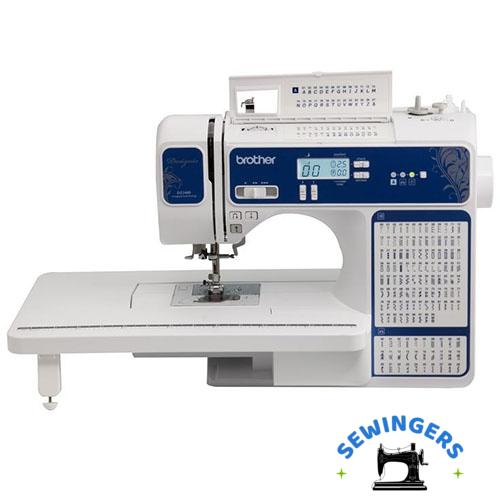
The DZ2400 is a serious machine for anyone who quilts regularly or works across a wide variety of projects. With 185 built-in stitches — including 55 alphanumeric options for monogramming — it’s built for creative range. The backlit LCD display is a small detail that makes a real difference during longer sessions or in dim lighting.
Threading is simplified through an advanced automatic system, and the top-load anti-jam bobbin keeps interruptions minimal. The wide workspace handles blankets, formal wear, and large costumes without feeling cramped. Speed control via the shift lever gives you precise command over different fabric types.
The package includes a wide extension table, accessory bag, foot controller, nine presser feet, power cord, manual, and a 25-year limited warranty.
Pros
- 185 built-in stitches with 55 alphanumeric options for monogramming
- Backlit LCD works well even in low-light conditions
- Anti-jam bobbin system with easy thread-level monitoring
- Wide workspace accommodates large, complex projects
- LED lighting makes dark fabric much easier to work with
- 8 automatic buttonhole styles sized to fit specific buttons
- Adjustable speed control for different fabric types
- 25-year limited warranty
Cons
- Some users report bobbin winding issues
- A few buyers felt the workspace was still too small for their needs
2. Singer Confidence Quilter 7469Q Computerized Sewing Machine
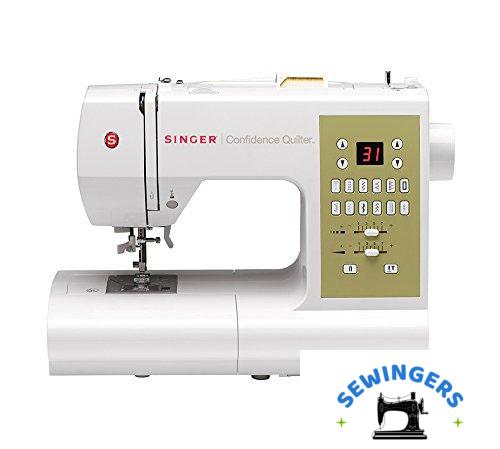
The Singer 7469Q is built around a sturdy metal frame — you notice the stability immediately when working with heavier fabrics. It’s not the flashiest machine on this list, but it’s reliable and thoughtfully designed for quilters specifically.
Ninety-eight built-in stitches cover most needs, and the programmable needle up/down feature is genuinely helpful during patchwork and appliqué. The drop-in bobbin is as simple as it sounds — drop it in and start sewing. Dual LED lights eliminate the usual squinting over dark thread on dark fabric.
The drop feed feature handles button sewing and free-motion work cleanly. An extension table is included for larger projects, along with multiple quilting feet, 13 needle positions, and automatic reverse stitching to lock seams. The package covers the essentials: several presser feet, class 15J bobbin, needles, foot pedal, lint brush, screwdriver, manual, and instructional DVD. Backed by a 25-year limited warranty with 24/7 online support.
Pros
- Heavy-duty metal frame with excellent stability on thick fabrics
- 98 built-in stitches including automatic one-step buttonholes
- Programmable needle up/down — particularly useful for quilting
- Drop-in bobbin with no threading fuss
- Dual bright LED lights reduce eye strain
- Extension table included for larger projects
- 13 needle positions for precise fabric control
- Portable and cabinet-mountable
Cons
- At least one user reported the machine failed within weeks of purchase
- Some buyers feel the price-to-performance ratio doesn’t meet expectations
3. Janome JW8100 Fully Featured Computerized Sewing Machine

The JW8100 packs 100 stitches into a heavy-duty metal frame — including 27 heirloom, 28 home décor, 18 quilting, and 7 buttonhole styles. That’s a lot of range without feeling bloated. The LCD display guides you through each step clearly.
One genuinely useful design detail: removing the storage compartment converts it into a free-arm machine, which makes sewing sleeves, collars, and pant hems significantly easier. The 7-piece feed dog system handles tricky fabrics like fleece, knits, and wool better than most machines in this range. A one-handed needle threader gets you set up in seconds.
The package includes a dust cover, presser foot set, needle set, lint brush, stitch card, screwdriver, class 15 bobbin, bobbin holders, foot organizer, power cord, and a 25-year limited warranty.
Pros
- 100 built-in stitches covering quilting, heirloom, décor, and basic styles
- Metal frame keeps stitching consistent even on heavy fabric
- Free-arm conversion by removing the storage compartment
- 7-piece feed dog system handles stretchy and textured fabrics well
- Removable stitch chart makes selection quick and easy
- Wide extension table included
- Speed controller, start/stop button, and reverse lever all straightforward
Cons
- Some beginners find the interface less intuitive than expected
- A few users struggled with very thick fabric layers
4. Juki HZL-LB5020 Computerized Sewing Machine

Juki has a long history in industrial sewing — that background shows up in how the LB5020 handles tougher materials. Leather and denim that would bog down other machines in this category move through this one with noticeably less resistance.
The design is compact, which makes it a solid pick for smaller spaces or anyone who moves their setup around. Twenty signature stitch patterns won’t overwhelm you with choices, but they cover the fundamentals well. The LCD screen and stitch chart keep you oriented. Automatic needle threading, a 7-point feed dog system, and variable speed control round out the feature set.
Free-arm sewing handles cylindrical sections like cuffs and collars cleanly. The 1-step buttonhole fits standard sizes without fuss. Package includes multiple foot styles, bobbin cap and holder, lint brush, seam ripper, screwdriver, needles, hard case, and manuals. Warranty covers 5 years for mechanical defects, 2 years for electrical, and 90 days for materials.
Pros
- Handles leather and denim better than most machines at this price point
- Compact form works well for smaller sewing spaces
- 20 stitch patterns with a 7-point feed dog system
- Automatic needle threader saves time on setup
- Free-arm sewing for cylindrical garment sections
- LCD screen and variable speed control easy to use
- Bright LED lighting for dark fabrics
Cons
- Some buyers reported receiving incomplete accessory sets
- A few beginners found the learning curve steeper than expected
5. Brother Project Runway CE7070PRW Computerized Sewing Machine
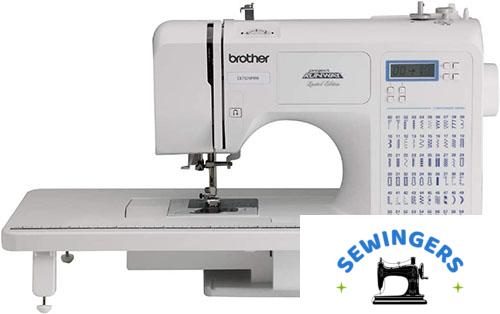
Brother built the CE7070PRW with a clear target in mind: people who want capable features without spending a fortune. Seventy built-in stitches span decorative, quilting, heirloom, and utility styles. It won’t match the stitch count of the DZ2400, but for most everyday sewing, 70 is more than enough.
The wide table handles large projects comfortably — dresses, quilts, anything that needs room to breathe. Seven integrated one-step buttonholes cover standard and specialty sizes cleanly. Stitch selection via push-button, confirmed on the LCD screen, keeps errors minimal. The top-load drop-in bobbin winds fast and stays in place.
All stitch options are printed on the front of the machine for quick reference — a small thing that turns out to be genuinely handy. Bright LED lighting across the work area keeps visibility sharp on dark fabrics. The package includes nine presser feet, a foot control pedal, wide table with markings, accessory bag, four bobbins, needle set, twin needle, seam ripper, and cleaning brush. Backed by a 25-year limited warranty.
Pros
- 70 built-in stitches at a competitive price point
- Wide extension table handles large, heavy projects
- 7 one-step buttonholes with a clean, consistent finish
- Stitch chart printed directly on the machine for quick reference
- Fast top-loading bobbin setup
- Bright LED workspace lighting
- Solid accessory package included out of the box
- 25-year limited warranty
Cons
- Some users report the LCD screen is hard to read clearly
- A few buyers experienced thread jamming issues
How These Machines Actually Expand What You Can Make
The creativity argument for computerized machines isn’t hype — it’s practical. When the technical side runs smoothly, you spend more mental energy on the actual design decisions. Here’s where that shows up most clearly:
- Consistent stitching across a whole project: No variance between the beginning and end of a seam. That consistency makes complex patterns and layered designs far more achievable.
- Embroidery becomes accessible: Built-in embroidery settings remove the need for a separate dedicated machine when you’re just adding detail work to garments.
- Fabric flexibility: Switching between silk, denim, and knits in the same session is realistic — not something you’d attempt on a mechanical machine without significant adjustment.
- Custom stitch patterns: Programmable options let you design and save your own sequences, which starts to feel less like operating a machine and more like having a creative tool.
- Time savings compound: Faster project completion means more room to experiment, try techniques you’ve been putting off, or simply take on more work.
Keeping Your Machine Running Well
Computerized machines aren’t especially fragile, but they do need regular attention to stay reliable. Neglect tends to show up gradually — slightly uneven stitches, bobbin issues, the occasional jam — before becoming a real problem.
- Clean regularly: Lint collects fast around the feed dogs and bobbin area. A soft brush or compressed air every few sessions prevents buildup that affects stitch quality.
- Check your needle more often than you think: A dull or bent needle causes missed stitches and fabric snags before you even notice it’s the culprit. Change it after every major project, or sooner if something feels off.
- Bobbin maintenance matters: An improperly wound bobbin causes more tension problems than most sewists realize. Wind it clean, seat it correctly, and replace it before starting something important.
- Use quality thread: Cheap thread breaks more, sheds more lint, and creates tension inconsistencies. It’s a small cost difference that affects performance noticeably.
- Oil only if specified: Some computerized machines are oil-free by design. Check your manual — adding oil where it isn’t needed can cause damage rather than prevent it.
- Cover it when not in use: Dust accumulation inside the machine is the most avoidable source of long-term wear. A basic dust cover does the job.
- Schedule professional servicing: Roughly once a year, or whenever performance feels inconsistent, a technician can catch things you can’t see — worn internal parts, calibration drift, electrical issues.
Summary
After evaluating all five machines, the Singer Confidence Quilter 7469Q stands out for quilters specifically — the metal frame, programmable needle control, and quilting-focused accessories make it the most purposeful option on the list. The Brother DZ2400 is the better pick if you want maximum stitch variety and a wider creative range. For tight budgets without sacrificing too much, the Brother CE7070PRW delivers solid value. The Janome JW8100 suits sewists who work across a range of fabric types and want the free-arm flexibility. And the Juki LB5020 earns its place for anyone regularly working with heavy materials like denim or leather.
None of them are perfect for every situation. But any of these five machines will perform noticeably better than a basic mechanical model — and that gap tends to grow the more complex your projects get.
- Related post: Best Heat Transfer Vinyl for T-Shirts