Most people don’t think too hard about sewing machines until they’ve been burned by a bad one. You buy something cheap, it jams on the third project, and suddenly you’re questioning whether the hobby was ever worth starting. Then you hear someone mention Baby Lock — usually with a kind of quiet reverence, like they’re talking about a car that never let them down — and you start wondering if the price tag is actually justified.
Here’s what’s worth knowing before you decide.
Contents
- 1 Baby Lock vs. Competing Brands: Where the Difference Actually Shows Up
- 2 Customer Support: The Part That Often Gets Overlooked
- 3 Long-Arm Quilting Machines: A Closer Look
- 4 Key Features Worth Understanding Before You Buy
- 5 Advantages Worth Weighing
- 6 Are Baby Lock Machines a Good Fit for Beginners?
- 7 FAQs
Baby Lock vs. Competing Brands: Where the Difference Actually Shows Up
Walk into any fabric store or scroll through sewing forums long enough and you’ll find strong opinions about every brand under the sun. Brother loyalists. Singer traditionalists. The occasional Bernina devotee who acts like they’ve discovered religion. Baby Lock sits in a different category — not because the marketing says so, but because the machines tend to behave differently under pressure.
Budget machines have an appeal that’s hard to argue with upfront. Lower price, gets the job done for basic projects, easy to find. But what tends to happen — especially once you start working with heavier fabrics or attempting anything more structured — is that the limitations stack up quietly. Tension issues. Skipped stitches. A bobbin mechanism that feels like it’s held together with optimism. None of this shows up in the product listing.
Baby Lock machines are engineered for a different kind of use. Not just “occasional sewing on weekends” use, but sustained, serious crafting. A few things that actually distinguish them in practice:
- Build quality that holds up over years, not months. The internal components are built tighter, which matters when you’re running long quilting sessions or working with multiple fabric layers at once.
- Features that aren’t afterthoughts. Things like automatic needle threading and thread trimming aren’t tacked-on conveniences — they’re integrated in ways that actually reduce interruptions to your workflow.
- Pricing that sits between “disposable” and “professional studio equipment.” This is probably the most underappreciated thing about Baby Lock. It’s not the cheapest option, but it’s also not asking you to spend what you’d pay for a used car.
- A loyal user base that tends to stick around. You don’t see many people who switched to Baby Lock loudly wishing they’d stayed with their old machine. That’s not nothing.
The brand has built its reputation on a straightforward premise: give people genuinely good machines at prices that don’t require a second mortgage. Whether that proposition works for you depends on what you’re making and how often — but for anyone past the complete beginner stage, it’s worth taking seriously.
Customer Support: The Part That Often Gets Overlooked
Here’s something most buying guides don’t really dig into: what happens after you’ve bought the machine and something goes sideways?
With a lot of brands, that question has an unsatisfying answer. You’re handed a manual, pointed toward an online forum, and left to figure it out. Baby Lock handles this differently — and it’s one of those things that users tend to mention unprompted when they talk about why they’d buy again.
Their customer support team is available around the clock, which sounds like standard boilerplate until you’re troubleshooting a tension issue at 11pm before a project deadline and actually need someone to pick up. Beyond remote support, they’ll dispatch a technician to your location when a problem genuinely can’t be resolved over the phone. That kind of service structure is unusual at this price point.
What it comes down to is this: when you buy a Baby Lock machine, you’re not just acquiring hardware. You’re getting access to an ongoing support system — which, for anyone who’s ever felt completely abandoned by a manufacturer, is a more meaningful distinction than it might sound.
Long-Arm Quilting Machines: A Closer Look
Quilting is one of those crafts that looks approachable from the outside and reveals its complexity the moment you actually start. The scale, the layering, the precision required across large surfaces — it adds up fast. And most standard sewing machines, even good ones, start showing their limits when you’re working on a full-sized quilt.
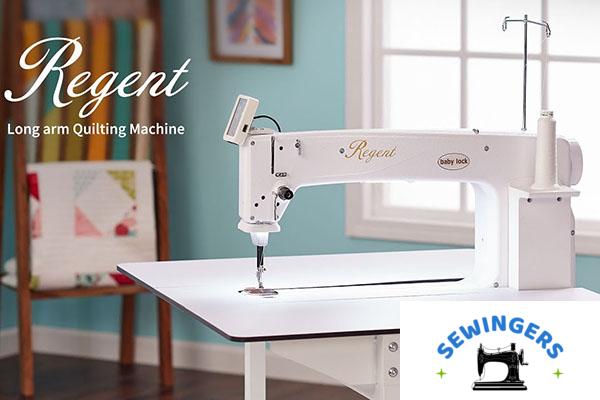
Baby Lock’s long-arm quilting machines address this directly. They’re built with workspace and maneuverability in mind — the kind of machines where the design choices clearly came from people who actually quilt, not just engineers optimizing for a spec sheet.
What tends to matter most for quilters:
- Extended throat space that lets large quilt sections move freely without bunching or resistance
- Consistent stitch quality across the full length of a project, even hours into a session
- Free tutorials available directly through Baby Lock’s website — genuinely useful ones, not just marketing content dressed up as education
- Durable construction that handles the repetitive motion demands of long quilting sessions without degrading performance over time
If quilting is a serious part of your creative practice, these machines are worth a hands-on look. They don’t promise to make quilting effortless — nothing really does — but they remove a lot of the friction that comes from working on under-powered equipment.
Key Features Worth Understanding Before You Buy
Stitching Technology
Built-in sensors monitor and adjust tension and stitch length as you sew. In practice, this means fewer manual adjustments mid-project and more consistent results across fabric types. For anyone who’s spent time manually fiddling with tension dials, the difference is noticeable fairly quickly.
Automatic Thread Cutter
This is one of those features that sounds minor until it’s built into your routine. A single button press trims the thread cleanly. No scissors, no searching for the right moment to cut. It’s a small thing that adds up across a long sewing session.
Stitch Library
Baby Lock machines come with an extensive range of built-in stitches — from basic utility stitches to decorative patterns that would otherwise require specialty equipment. The breadth here is genuinely useful, not just impressive on paper. It means you can explore different techniques without immediately needing to upgrade.
Workspace and Table Surface
The working area on Baby Lock machines is more generous than most comparable machines. This matters more than people expect when you’re handling large fabric pieces — extra surface area means better control and less wrestling with the material to keep it flat.
Adjustable Speed Control
You can dial the sewing speed up or down depending on what you’re working on. Beginners tend to appreciate starting slower while they find their rhythm. More experienced sewers use it to slow down for tricky corners or detailed work. Either way, the control is there when you need it.
Build Quality and Durability
Baby Lock machines are built to handle regular use over years — not daily light use for a year and then retirement. The materials and construction reflect this. It’s not the kind of thing you notice immediately, but it’s the kind of thing you notice after two or three years when the machine is still running smoothly.
Advantages Worth Weighing
Stitch Quality That Holds Up on Difficult Fabrics
Delicate silks and thick quilting layers behave very differently under a needle. Baby Lock machines handle both ends of that spectrum without requiring completely different setups — the underlying technology keeps stitch consistency across fabric types. That’s harder to engineer than it sounds.
Feature Range for Different Skill Levels
Beginners can use these machines without feeling overwhelmed. More advanced users can access stitch customization, embroidery capabilities, and decorative options that keep the machine relevant as their skills grow. It’s not common to find a machine that genuinely works for both — most lean heavily one direction.
Interface Design
The controls are laid out in a way that makes sense without a lot of trial-and-error. Adjusting tension, switching stitch patterns, working with embroidery designs — these are straightforward operations rather than buried menu items. Clear instructions come with every machine.
Creative Range
Garments, home decor, detailed quilt patterns — Baby Lock machines are capable across a wide enough range that they tend to stay useful as a sewer’s interests shift over time. That flexibility has value, especially if you’re still figuring out which directions you want to take your craft.
Are Baby Lock Machines a Good Fit for Beginners?
Generally, yes — more so than many machines in this price range. The learning curve is manageable from the start, and most models come ready to use out of the box with everything included: a hard cover, a needle plate guard, bobbins, a needle threader, scissors. One introductory lesson is usually enough to get comfortable with the basics. After that, it’s a matter of practice rather than figuring out the machine itself.
FAQs
How long does it take to thread a Baby Lock sewing machine?
It depends on which bobbin system your model uses. Drop-in bobbins are faster — one motion, done. Front-loading bobbins take slightly longer because you wind the bobbin separately before loading it. Neither is complicated once you’ve done it a few times. Most people get comfortable with the process within the first hour of using the machine.
Which Baby Lock model makes the most sense to start with?
That genuinely depends on what you’re making. A few rough guidelines:
- If you’re mostly doing garments, alterations, or general sewing projects — the Baby Lock overlocker (serger) series is a solid starting point. Versatile, user-friendly, and capable enough for projects that go well beyond basic.
- If quilting is your main focus — especially larger quilts — a long-arm quilting machine is worth the higher investment. The features are specifically designed for that kind of work, and the difference in output quality is significant.
- If you’re still exploring both — a mid-range Baby Lock sewing machine gives you room to experiment before committing to a specialty model.
Visiting a dealer to try a few models in person before deciding is worth the trip. What feels intuitive varies from person to person, and it’s easier to tell with your hands on the machine than from a spec comparison online.