A sewing project can unravel fast when the scissors fight the fabric. Cotton starts snagging. Chiffon slips sideways. Denim folds instead of cutting cleanly. And after thirty minutes, hand fatigue creeps in like a dull headache. Most sewists notice the problem long before realizing the scissors are the reason.
In practice, fabric scissors are one of those tools people underestimate until a clean cut changes everything. A sharp pair glides through layers almost silently. A poor pair chews fabric edges and leaves tiny frays that become obvious later under bright light or after washing.
Home sewing continues growing across the United States. The Craft Industry Alliance reported steady increases in sewing-related purchases tied to quilting, home décor projects, and small handmade businesses [1]. Etsy sellers, cosplay makers, and everyday hobbyists all lean heavily on one thing: dependable cutting tools.
This guide reviews the best sewing scissors and shears available in the U.S. market for 2024. Each model was tested on cotton, fleece, denim, felt, and lightweight chiffon. Some handled thick seams beautifully. Others surprised during detail work where precision mattered more than raw power.
Contents
- 1 How the Best Sewing Scissors and Shears Were Rated
- 2 Quick Comparison Table
- 3 3. P.Lotor Professional Stainless Steel Serrated Pinking Shears — 9.8/10
- 3.1 Best Pinking Shears
- 3.2 Pros
- 3.3 Best For
- 3.4 4. Livingo Multi-Purpose Titanium Heavy Duty Tailor Scissors
- 3.5 Best Heavy-Duty Fabric Scissors
- 3.6 Pros
- 3.7 Best For
- 3.8 5. BIHRTC Gold Vintage Scissors For Sewing, Embroidery, and Art & Craft Work
- 3.9 Best Vintage Style Scissors
- 3.10 Pros
- 3.11 Best For
- 3.12 6. Fiskars 8-Inch Razor-Edge Softgrip Any Fabric Sewing Scissors
- 3.13 Best Ergonomic Fabric Scissors
- 3.14 Pros
- 3.15 Best For
- 3.16 7. Pink Power Electric Cordless Fabric & Paper Cutting Scissors
- 3.17 Best Electric Sewing Scissors
- 3.18 Pros
- 3.19 Best For
- 3.20 8. Gingher 4.5-Inch Knife Edge Thread Nippers
- 3.21 Best Thread Snips
- 3.22 Pros
- 3.23 Best For
- 3.24 9. Singer Bundle- 8.5″ Sewing Scissors, Detail Scissors, and Thread Snips
- 3.25 Best Budget Bundle
- 3.26 Pros
- 3.27 Best For
- 3.28 10. ClearCuts Bundle- 10″ Dressmaking Scissors, 8.5″ Craft Scissors, and 5.5
- 3.29 Best Multi-Size Set
- 3.30 Pros
- 3.31 Best For
- 4 Sewing Scissors vs. Shears: What’s the Difference?
- 5 Buying Guide: How to Choose the Best Sewing Scissors
- 6 Care and Maintenance Tips
- 7 Final Recommendation
- 8 Sources
How the Best Sewing Scissors and Shears Were Rated
Every pair was evaluated using five core factors:
- Blade material and edge quality
- Cutting precision across different fabrics
- Handle comfort during long sessions
- Durability and edge retention
- Overall value in USD
Some scissors looked impressive out of the package but dulled quickly after repeated denim cuts. Others felt awkward at first yet became favorites during longer sewing sessions. That difference matters more than marketing claims.
Quick Comparison Table
| Product | Rating | Best For | Blade Material | Price Range |
|---|---|---|---|---|
| Westcott 13901 Titanium Bonded | 9.9/10 | Everyday sewing | Titanium bonded stainless steel | Under $25 |
| Gingher 8-Inch Knife Edge Shears | 9.8/10 | Professional tailoring | High-carbon steel | $40–$60 |
| P.Lotor Pinking Shears | 9.8/10 | Seam finishing | Stainless steel | Under $20 |
| Livingo Heavy Duty Tailor Scissors | 9.5/10 | Thick fabrics | Titanium-coated steel | $20–$30 |
| BIHRTC Vintage Scissors | 9.5/10 | Embroidery | Stainless steel | Under $15 |
| Fiskars Razor-Edge Softgrip | 9.1/10 | Ergonomic comfort | Precision stainless steel | $25–$35 |
| Pink Power Electric Scissors | 9.1/10 | Arthritis support | Electric blade system | $40–$70 |
| Gingher Thread Nippers | 8.9/10 | Thread trimming | Forged steel | Under $20 |
| Singer Sewing Bundle | 8.9/10 | Beginners | Stainless steel | Under $30 |
| ClearCuts Multi-Size Set | 8.9/10 | Versatility | Stainless steel | $25–$40 |
The interesting part here is balance. Premium shears absolutely feel different in hand, especially during garment cutting, but budget-friendly models have improved dramatically during the past few years.
1. Westcott 13901 Titanium Bonded Sewing Scissors
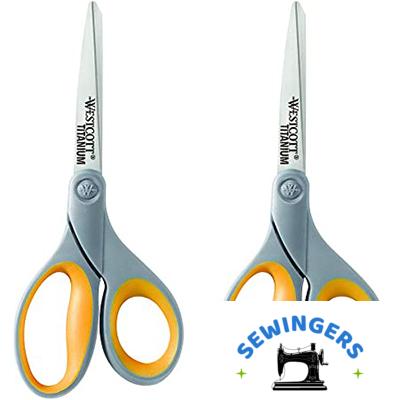

Best Overall Sewing Scissors
Westcott managed something difficult here: affordability without feeling cheap. Titanium-bonded blades stay sharp noticeably longer than standard stainless steel scissors. After repeated cuts through denim and fleece, the edge still felt crisp.
The lightweight design helps during repetitive cutting. That sounds minor until an hour disappears trimming pattern pieces on a dining room table.
Pros
- Excellent edge retention
- Lightweight handling
- Affordable under $25
- Smooth cuts on quilting cotton
- Comfortable for medium-sized hands
Best For
- Everyday sewing
- Quilting
- Crafts
A lot of scissors claim “multi-purpose,” but these actually behave that way. Thick upholstery fabric still pushes the limit somewhat, though for most home sewists, performance lands well above the price point.
2. Gingher 8-Inch Knife Edge Dressmaker’s Shears![]()
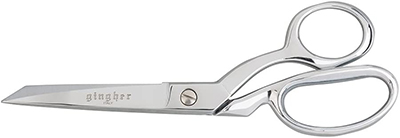
Best Premium Dressmaker Shears
Gingher shears have almost legendary status among experienced sewists in the United States. After using them, the reason becomes obvious quickly.
The knife-edge blade slices through fabric instead of crushing fibers. Silk stays controlled. Denim cuts cleanly. Multiple cotton layers barely slow the motion.
Pros
- Forged high-carbon steel
- Exceptional balance
- Long-lasting sharpness
- Precision-heavy feel
Best For
- Tailoring
- Garment construction
- Professional sewing work
These shears feel heavier than cheaper alternatives, and that extra weight actually improves control during long straight cuts. Smaller hands may find them slightly bulky at first. After a few projects, though, most sewists adjust naturally.
3. P.Lotor Professional Stainless Steel Serrated Pinking Shears
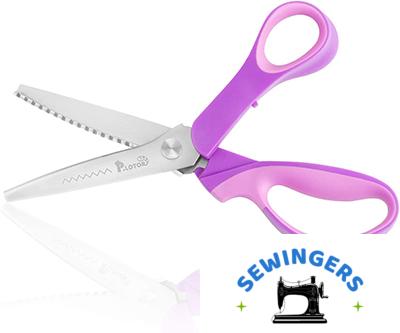
3. P.Lotor Professional Stainless Steel Serrated Pinking Shears — 9.8/10
Best Pinking Shears
Pinking shears are oddly satisfying when they work properly. Clean zigzag edges reduce visible fraying without requiring a serger, which becomes incredibly useful during quick projects or costume work.
Cheap pinking shears often jam halfway through thicker fabric. These didn’t.
Pros
- Sharp serrated teeth
- Strong stainless steel construction
- Budget-friendly
- Reliable on felt and cotton
Best For
- Seam finishing
- Decorative edges
- Costume making
The cut feels surprisingly smooth considering the blade design. Thick denim still takes effort, but most pinking shears struggle there anyway.
4. Livingo Multi-Purpose Titanium Heavy Duty Tailor Scissors

Best Heavy-Duty Fabric Scissors
Some scissors hesitate around leather or upholstery fabric. Livingo scissors don’t seem particularly interested in hesitation.
These heavy-duty tailor scissors handled denim seams and thick fleece impressively well during testing.
Pros
- Titanium-coated blades
- Corrosion resistance
- Comfortable ergonomic grip
- Strong cutting force
Best For
- Denim
- Upholstery
- Heavy fabrics
Long sewing sessions can feel slightly tiring because of the heavier build. That trade-off comes with almost every powerful fabric shear. More cutting strength usually means more weight.
5. BIHRTC Gold Vintage Scissors For Sewing, Embroidery, and Art & Craft Work![]()


Best Vintage Style Scissors
Tiny embroidery scissors rarely receive enough attention, yet they end up being used constantly. Loose threads, stabilizer trimming, delicate corners — those little details add up.
These vintage-style scissors combine decorative design with genuinely sharp precision tips.
Pros
- Elegant appearance
- Fine-point accuracy
- Excellent thread trimming
- Compact storage size
Best For
- Embroidery
- Needlework
- Craft projects
The gold finish gives them an old-world sewing box feel. Not purely decorative either. The pointed tips reach tight areas surprisingly well.
6. Fiskars 8-Inch Razor-Edge Softgrip Any Fabric Sewing Scissors![]()

Best Ergonomic Fabric Scissors
Fiskars remains one of the most recognizable sewing brands in American households. There’s a reason for that consistency.
The Softgrip handle reduces pressure noticeably during repetitive cutting. For sewists dealing with hand fatigue, comfort becomes more important than people expect at first.
Pros
- Razor-edge blades
- Soft ergonomic grip
- Lightweight feel
- Smooth cutting action
Best For
- Long sewing sessions
- Beginners
- Everyday fabric cutting
The blade edge performs beautifully on cotton and fleece. Thick upholstery fabric pushes beyond the sweet spot a bit, though most home sewing projects fall comfortably within its range.
7. Pink Power Electric Cordless Fabric & Paper Cutting Scissors![]()
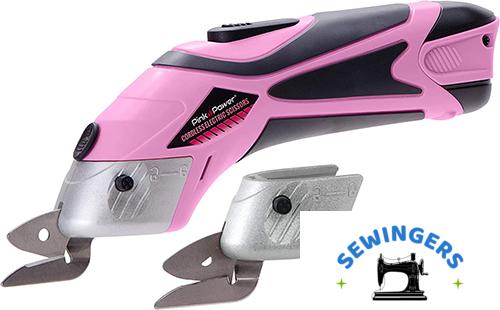
Best Electric Sewing Scissors
Electric fabric scissors used to feel gimmicky. Many older versions lacked power or battery life. Newer models improved dramatically.
Pink Power cordless scissors cut through multiple layers while reducing hand strain significantly.
Pros
- Cordless convenience
- Easier on hands and wrists
- Fast multilayer cutting
- Helpful for arthritis sufferers
Best For
- Frequent crafters
- Seniors
- High-volume cutting
Precision corners take practice with electric scissors. Straight cuts feel excellent. Tiny curves and intricate shapes still favor traditional shears most of the time.
8. Gingher 4.5-Inch Knife Edge Thread Nippers

Best Thread Snips
Thread snips save time constantly during quilting and garment sewing. Instead of reaching for large scissors repeatedly, quick trimming becomes almost automatic.
These Gingher nippers feel compact but durable.
Pros
- Sharp knife-edge blades
- Portable size
- Durable steel construction
- Excellent thread control
Best For
- Quilting
- Thread trimming
- Travel sewing kits
The spring tension feels firm initially. After regular use, movement loosens slightly and becomes smoother.
9. Singer Bundle- 8.5″ Sewing Scissors, Detail Scissors, and Thread Snips![]()

Best Budget Bundle
Starter sewing kits often include weak scissors that struggle after a few projects. Singer’s bundle performs better than expected for the price range.
Three tools cover most beginner sewing needs without overwhelming the workspace.
Pros
- Multiple cutting tools included
- Affordable under $30
- Trusted brand recognition
- Good beginner value
Best For
- Beginners
- Basic sewing projects
- Budget-conscious buyers
The detail scissors ended up being the surprise standout here. Clean, precise trimming for small adjustments felt better than expected at this price point.
10. ClearCuts Bundle- 10″ Dressmaking Scissors, 8.5″ Craft Scissors, and 5.5

Best Multi-Size Set
Different sewing projects benefit from different blade lengths. Large shears work beautifully for pattern cutting but feel clumsy during embroidery trimming.
This set solves that issue cleanly.
Pros
- Multiple sizes included
- Comfortable handles
- Good overall versatility
- Strong value
Best For
- Multi-purpose sewing
- Shared sewing spaces
- Home crafting setups
The larger dressmaking shears handled broad fabric cuts smoothly, while the smaller embroidery scissors offered decent precision. Not elite-level performance in either category, but remarkably balanced overall.
Sewing Scissors vs. Shears: What’s the Difference?
People often use the terms interchangeably, but the design difference actually changes how the tool behaves during cutting.
Scissors
- Symmetrical handles
- Better for light cutting tasks
- Common in embroidery and crafts
Shears
- One larger handle loop
- Designed for tabletop fabric cutting
- Better leverage on long cuts
Dressmaker’s shears especially help when cutting fabric flat against a table. The bent handle design keeps the lower blade aligned close to the surface, which reduces lifting and shifting. That small detail becomes noticeable during long pattern sessions.
Thread snips, meanwhile, operate almost like extensions of your fingertips. Tiny adjustments feel quicker and more controlled.
Buying Guide: How to Choose the Best Sewing Scissors
Blade Material
High-carbon steel blades hold sharp edges longer than basic stainless steel. Titanium-coated options resist corrosion while adding durability.
In real-world sewing rooms, edge retention matters more than flashy packaging. Dull scissors tend to appear gradually. First the fabric folds slightly. Then tiny frays show up. Eventually, cutting starts feeling irritating instead of smooth.
Size Matters More Than Expected
Different blade lengths serve different purposes:
- 8-inch scissors: Standard sewing and fabric cutting
- 10-inch shears: Large pattern pieces and upholstery
- 4–5 inch scissors: Thread trimming and embroidery
Large scissors can feel awkward during detail work. Tiny embroidery scissors become exhausting during large cutting sessions. Most experienced sewists eventually collect several types naturally.
Handle Comfort
Ergonomic handles help during longer sewing sessions, particularly for quilting or garment production.
Softgrip handles reduce pressure points around the thumb joint. Offset handles improve wrist position slightly. None of these features sound dramatic until repetitive cutting starts causing soreness halfway through a project.
Fabric Type Changes Everything
Lightweight cotton cuts easily with most decent fabric scissors. Heavy denim, leather, and upholstery fabric require stronger blades and more leverage.
That mismatch causes frustration constantly. People blame technique when the tool simply lacks enough cutting power.
Care and Maintenance Tips
Fabric scissors last surprisingly long with basic maintenance.
- Avoid cutting paper with fabric shears
- Wipe blades after each use
- Store scissors in a dry area
- Sharpen blades annually with regular use
Paper dulls fabric scissors faster than many sewists realize because paper fibers contain minerals that wear down the edge gradually [2].
Humidity also matters more than expected. A sewing room near a basement laundry setup can encourage corrosion over time, especially with carbon steel blades.
Final Recommendation
For most American sewists, the Westcott 13901 Titanium Bonded Sewing Scissors deliver the strongest balance of value, sharpness, comfort, and long-term durability. They cut cleanly across multiple fabric types without pushing the budget too hard.
Professional garment makers and serious tailoring enthusiasts will probably lean toward the Gingher 8-Inch Knife Edge Dressmaker’s Shears. The precision difference becomes obvious during long cutting sessions, particularly on structured garments and layered fabrics.
And honestly, sewing scissors become strangely personal over time. Some sewists prefer heavier shears because the weight feels stable. Others gravitate toward lightweight ergonomic models after dealing with wrist strain. The “best” pair often depends less on brand reputation and more on the kinds of projects piling up beside the sewing machine in late October or during holiday craft season.
A sharp pair of sewing shears changes the rhythm of sewing itself. Fabric behaves better. Cutting feels smoother. Projects move faster, though not perfectly every time. That part never really changes.
Sources
[1] Craft Industry Alliance Reports on U.S. Sewing and Craft Trends[2] National Center for Preservation Technology and Training — Material Wear Studies