

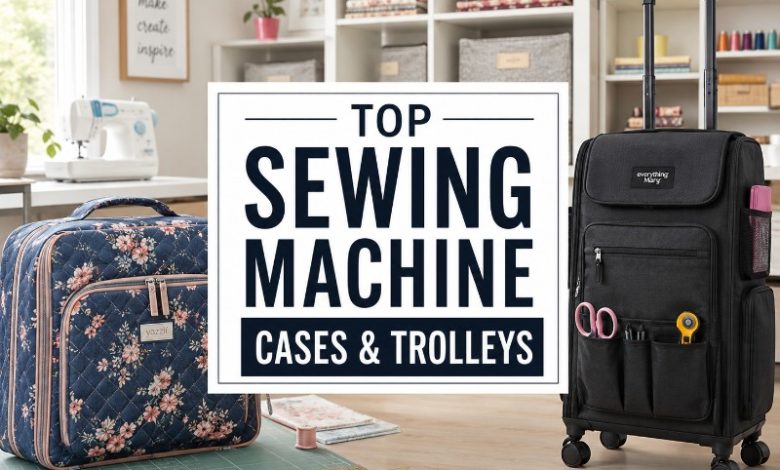
A sewing machine rarely stays in one place anymore. One weekend, it travels to a quilting retreat in Texas. The next month, it rides in the back of an SUV headed to QuiltCon. Then comes a local class at Joann or a holiday craft fair setup in a windy parking lot at 6 a.m. That constant movement changes everything.
Modern sewing machines are heavier, more computerized, and dramatically more expensive than older mechanical models. A Brother Luminaire, Bernina 770 QE, or Janome Continental Series machine can easily exceed $5,000 USD. Even mid-range domestic models like the Singer Heavy Duty 4452 or Brother SE1900 represent a serious investment. Unfortunately, transport damage happens far more often than many sewists expect.
Transit vibration loosens calibration. Sudden impacts crack plastic housings. Heat inside parked vehicles affects electronic components. Humidity in basements corrodes internal metal assemblies over time. And warranty coverage? Most manufacturers exclude accidental transport damage.
That reality explains why sewing machine carrying cases and trolleys have evolved from simple storage accessories into engineered protection systems.
This guide breaks down exactly how modern sewing machine cases work, which materials matter, how trolley systems differ, and what actually holds up after years of American travel conditions.
Contents
- 1 1. Sewing Machine Carrying Cases and Trolleys: Definitions and Core Differences
- 2 2. Why Proper Machine Protection Matters in the U.S. Market
- 3 3. Types of Sewing Machine Carrying Cases
- 4 4. Sewing Machine Trolleys: Rolling Systems for Heavy Equipment
- 5 5. Sizing and Compatibility: How to Measure Your Sewing Machine
- 6 6. Materials and Construction Quality
- 7 7. Storage Organization and Accessory Management
- 8 8. Travel Scenarios: Classes, Quilt Shows, and Air Travel
- 9 9. Budget Considerations and Value Analysis
- 10 10. Maintenance and Long-Term Care of Your Case or Trolley
- 11 11. Advanced Buying Checklist for American Sewists
- 12 12. Future Trends in Sewing Machine Transport Solutions
- 13 Final Thoughts
1. Sewing Machine Carrying Cases and Trolleys: Definitions and Core Differences
A sewing machine case and a sewing machine trolley serve different purposes, even though retailers often blur the distinction.
Carrying Cases
A sewing machine carrying case relies on manual lifting. These cases work best for machines under roughly 25 pounds.
Most soft cases feature:
- Padded lining
- Reinforced base panels
- Accessory pockets
- Shoulder straps
- Internal stabilizer straps
Domestic machines from Brother, Singer, and Janome commonly fit into this category.
Soft carrying bags excel during:
- Short car trips
- Sewing classes
- Apartment storage
- Occasional travel
But carrying weight adds up quickly. A machine that feels manageable at home suddenly becomes exhausting after crossing a convention center parking lot in August heat.
That’s the point where many sewists start looking at trolleys.
Rolling Sewing Machine Trolleys
A sewing machine trolley uses wheels and a telescoping handle to reduce lifting strain.
These systems are designed for:
- Heavy embroidery machines
- Long-distance convention travel
- Quilt retreats
- Frequent transport
Machines like the Bernina 770 QE or Brother Luminaire often exceed comfortable carrying limits once cords, embroidery modules, and accessories enter the equation.
The biggest difference isn’t convenience alone. It’s load distribution.
A reinforced trolley shifts stress away from your shoulders and keeps the machine more stable during movement.
Hybrid Systems
Hybrid sewing machine travel cases combine:
- Soft shell construction
- Rolling wheels
- Pull handles
Tutto Machine On Wheels helped popularize this category in the U.S. market. These systems balance portability with lighter overall weight.
In practice, hybrid systems work extremely well for sewists who:
- Drive frequently
- Attend retreats several times yearly
- Need staircase flexibility
- Want lighter storage between trips
2. Why Proper Machine Protection Matters in the U.S. Market
American travel conditions create unusual stress on sewing machines.
A machine transported across Arizona desert heat experiences entirely different environmental pressure than one stored through a Midwest winter in Minnesota.
And honestly, that climate shift matters more than many people realize.
Transit Vibration Causes Long-Term Damage
Interstate driving creates constant micro-vibration. Over time, vibration affects:
- Needle bar alignment
- Internal timing systems
- Thread tension calibration
- Electronic sensor stability
Computerized embroidery machines are especially vulnerable.
Repair costs for modern machines regularly fall between $300 and $800 USD per incident, particularly when circuit boards or touchscreen systems require replacement.
Climate Exposure Creates Hidden Problems
Garage storage sounds convenient until humidity enters the equation.
What tends to happen after several months:
- Condensation forms internally
- Metal components corrode
- Foam padding deteriorates
- Mold develops in fabric linings
Southern states create additional risks because parked vehicle temperatures can exceed 120°F during summer.
A padded sewing machine bag with climate-resistant materials helps buffer those extremes.
Insurance Limitations
Many sewists assume homeowners insurance automatically covers transport damage.
Usually, coverage becomes complicated once:
- Commercial vending enters the picture
- Travel occurs across state lines
- Damage results from improper storage
Companies like Allstate and State Farm often require documentation proving accidental external damage rather than gradual deterioration.
That distinction matters.
3. Types of Sewing Machine Carrying Cases
Not all sewing machine cases provide equal protection.
The material structure changes everything.
Soft Sewing Machine Cases
Soft cases remain the most common option for domestic machines.
Typical Features
- Foam padding
- Ballistic nylon or polyester fabric
- Lightweight construction
- External storage pockets
Price Range
$40–$120 USD
Best For
- Lightweight Brother or Singer machines
- Casual transport
- Local sewing classes
Soft cases prioritize convenience over impact resistance.
A quality soft case still needs:
- Reinforced base support
- Dense foam padding
- Load-bearing seams
- Heavy zipper systems
Cheap soft cases often fail at the bottom corners first.
Hard Sewing Machine Cases
Hard shell cases prioritize structural integrity and impact resistance.
These systems commonly use:
- Molded EVA shell construction
- Rigid polymer panels
- Internal foam compression layers
Hard cases excel during:
- Airline travel
- Long-distance shipping
- Embroidery machine transport
The downside is weight.
A heavy-duty hard sewing machine case can become awkward before the machine even goes inside.
Semi-Rigid Reinforced Cases
Semi-rigid systems sit between soft and hard designs.
And honestly, this category currently offers the best balance for most American sewists.
Advantages
- Better shock absorption
- Reduced overall weight
- Improved portability
- Stronger wall reinforcement
Brands like Tutto and Everything Mary perform particularly well in this segment.
4. Sewing Machine Trolleys: Rolling Systems for Heavy Equipment
Large sewing machines fundamentally change transport requirements.
A Bernina embroidery combo machine can approach luggage-level weight once accessories are packed.
That’s where trolley engineering matters.
2-Wheel vs. 4-Wheel Systems
| Feature | 2-Wheel Trolley | 4-Wheel Trolley |
|---|---|---|
| Stability on rough pavement | Better | Moderate |
| Maneuverability indoors | Moderate | Excellent |
| Stair handling | Easier | Difficult |
| Weight distribution | Rear-focused | Balanced |
| Convention center movement | Good | Excellent |
In practice, 2-wheel systems handle uneven parking lots better. Four-wheel systems glide beautifully across convention floors but struggle on cracked pavement.
That difference becomes very obvious after hauling a machine through hotel entrances during a busy quilt expo.
Weight Capacity Matters
A trolley under 30-pound capacity rarely performs well long term.
Look for:
- Reinforced bottom boards
- Wide wheelbase stability
- Metal frame construction
- Telescopic aluminum handles
Plastic frame systems often flex under sustained weight.
And once frame warping starts, wheel alignment tends to deteriorate quickly.
5. Sizing and Compatibility: How to Measure Your Sewing Machine
Poor sizing causes more damage than weak padding.
A tightly compressed machine shifts pressure directly onto:
- Handwheels
- Screen housings
- Spool pins
- Thread guides
How to Measure Correctly
Measure:
- Width
- Height
- Depth
Then add 1–2 inches of clearance on every side.
That extra space allows proper foam compression and shock absorption.
Critical Areas People Forget
Spool Pin Height
Many machines become taller with spool pins extended.
Handwheel Width
Some Janome and Baby Lock models have oversized handwheels.
Extension Tables
Embroidery and quilting tables dramatically alter machine footprint dimensions.
Example Machine Sizes
| Machine | Approximate Weight | Transport Recommendation |
|---|---|---|
| Singer Heavy Duty 4452 | 15 lbs | Soft padded case |
| Brother SE1900 | 22 lbs | Semi-rigid trolley |
| Bernina 570 QE | 30 lbs | Reinforced rolling trolley |
| Janome Memory Craft 9450 | 35+ lbs | Heavy-duty trolley |
6. Materials and Construction Quality
Material quality separates short-term convenience from long-term durability.
A sewing machine case experiences constant stress at:
- Corners
- Handle mounts
- Wheel housings
- Base seams
Weak materials fail fast.
Best Fabric Materials
600D–1200D Polyester
Strong enough for most domestic machines.
Cordura Ballistic Nylon
Excellent abrasion resistance and long-term durability.
Molded EVA Shells
Superior impact resistance for premium systems.
Avoid thin fabric under 300D for heavier machines. It usually begins sagging within months.
Zippers Matter More Than Expected
YKK zippers dominate premium sewing machine storage systems for a reason.
Cheap zippers commonly fail through:
- Tooth separation
- Track warping
- Pull-tab breakage
And zipper failure during travel becomes incredibly frustrating. Especially at airports or crowded convention entrances.
Internal Padding Density
High-density compression foam protects against:
- Transit vibration
- Sudden impacts
- Internal shifting
Low-density foam compresses permanently over time and loses protective value.
7. Storage Organization and Accessory Management
Modern sewing setups include far more than the machine itself.
Now there are:
- Foot pedals
- Embroidery hoops
- Power cords
- Specialty feet
- Rotary cutters
- Thread towers
Without compartmentalization, everything collides during transport.
Effective Internal Organization
The best sewing machine bags include:
- Mesh pockets
- Detachable organizers
- Cable management straps
- Accessory trays
Everything Mary and Tutto both offer excellent multi-compartment layouts.
Embroidery Machine Storage Needs
Embroidery systems require significantly more organization.
Dedicated compartments for:
- USB drives
- Stabilizers
- Hoops
- Modules
…make setup dramatically easier during classes and events.
Otherwise, accessory clutter becomes a constant headache.
8. Travel Scenarios: Classes, Quilt Shows, and Air Travel
Different travel situations demand different protection strategies.
Local Sewing Classes
For local classes:
- Soft padded cases work well
- Lightweight systems matter most
- Accessory storage becomes critical
A heavy hard shell case quickly becomes annoying for weekly transport.
Quilt Shows and Conventions
Events like QuiltCon involve:
- Long walking distances
- Parking garages
- Elevator congestion
- Crowded aisles
Wide-set wheels and ergonomic handle height make a huge difference here.
Poor wheel clearance becomes painfully obvious after several hours.
Airline Travel
Flying with a sewing machine requires maximum protection.
Recommended Setup
- Hard shell case
- Original foam inserts
- TSA-compliant locks
- Internal stabilizer straps
Airline baggage handling is rough. Much rougher than most people expect.
TSA inspections also increase the likelihood of shifting during transit.
9. Budget Considerations and Value Analysis
A sewing machine case isn’t just an accessory purchase. It’s equipment protection.
That changes the value equation completely.
Typical Price Tiers
| Category | Price Range | Best Use |
|---|---|---|
| Soft Cases | $40–$120 | Lightweight domestic machines |
| Mid-Range Trolleys | $120–$250 | Frequent travel |
| Premium Reinforced Trolleys | $250–$400+ | Heavy embroidery systems |
Where Spending More Actually Helps
Higher-end systems usually provide:
- Better wheel durability
- Stronger base reinforcement
- Improved zipper lifespan
- Superior foam density
Cheap trolleys often develop wheel wobble after a year of regular use.
That’s the point where many sewists end up replacing the entire system instead of repairing it.
Long-Term Value
A $300 trolley protecting a $6,000 Bernina machine makes financial sense very quickly.
Especially compared to electronic repair costs.
10. Maintenance and Long-Term Care of Your Case or Trolley
Even premium cases require occasional maintenance.
Neglect usually shows up first at the wheels and zipper tracks.
Wheel Maintenance
Inspect wheels every 6 months.
Check for:
- Axle wobble
- Hair buildup
- Cracked wheel surfaces
A small amount of WD-40 on wheel axles helps maintain smooth rotation.
Zipper Care
YKK zippers last longer with:
- Dust removal
- Light lubrication
- Proper alignment during closure
Forced zipper closure often damages teeth alignment permanently.
Storage Conditions
Store cases:
- Away from moisture
- Off concrete floors
- Out of direct sunlight
Basement humidity quietly destroys fabric over time.
11. Advanced Buying Checklist for American Sewists
The best sewing machine trolley depends heavily on travel habits.
A local quilting class setup looks completely different from cross-country expo travel.
Sewing Machine Case Buying Checklist
Machine Compatibility
- Machine weight confirmed
- Interior dimensions verified
- Height measured with spool pins
Structural Protection
- Reinforced base panel
- Internal strap system
- Dense foam padding
- Wide wheelbase stability
Travel Environment
- Interstate road travel
- Airline transportation
- RV storage
- Climate exposure
Ergonomics
- Comfortable handle height
- Smooth wheel movement
- Balanced load distribution
In practice, comfort matters more than expected after repeated use.
A poorly balanced trolley becomes exhausting surprisingly fast.
12. Future Trends in Sewing Machine Transport Solutions
Sewing machine storage systems are becoming smarter and lighter.
Several trends are already reshaping the market.
Integrated Tracking Technology
Apple AirTag and RFID integration now appear in premium trolley systems.
That addition helps during:
- Airline travel
- Convention transport
- Hotel storage
Composite Frame Engineering
Carbon composite base plates reduce weight while improving rigidity.
That combination dramatically improves mobility for heavier embroidery machines.
Sustainable Materials
Recycled ballistic nylon and eco-friendly textiles are becoming more common.
Cordura-based recycled fabrics now offer durability levels close to traditional synthetic materials.
Modular Storage Systems
Future systems increasingly focus on modular compartments:
- Detachable notion bags
- Expandable accessory storage
- Adjustable internal dividers
That flexibility works particularly well for sewists who alternate between quilting, embroidery, and garment construction.
Final Thoughts
Sewing machine carrying cases and trolleys are protection systems first and storage solutions second.
That distinction matters.
A structurally reinforced sewing machine travel case protects precision alignment, electronic stability, and long-term machine reliability. It also reduces transport fatigue, especially during conventions, guild meetings, and quilting retreats where movement becomes constant.
For lighter domestic machines, a quality padded sewing machine bag often provides enough protection. Larger embroidery systems and quilting machines usually perform better inside reinforced rolling trolleys with strong wheel systems and stabilized interiors.
The smartest buying decisions tend to focus on:
- Machine weight
- Travel frequency
- Climate exposure
- Storage organization
- Structural durability
And honestly, the difference between a cheap case and a well-built trolley becomes obvious after the first long trip across a convention center parking lot in midsummer heat.
Protection, portability, and performance all work together. When those three elements align properly, transporting a sewing machine stops feeling stressful and starts feeling routine.


