You pull the pattern out of the envelope, cut your size, sew it up — and then you try it on and something is just… off. The shoulders sit weird, there’s pulling across the chest, or there’s so much extra fabric at the waist it looks like a pillowcase. Sound familiar?
Here’s the thing nobody tells beginners: commercial sewing patterns almost never fit straight out of the envelope. They’re drafted for a standardized body that, honestly, most of us don’t have. That’s not a problem with you — it’s just how patterns work. Pattern fitting is a completely normal part of garment sewing, and once you get the hang of a few basic alterations, it genuinely changes everything about how your finished garments look and feel.
The good news? Accurate measurements and a few targeted pattern changes will get you so much further than trying to wrestle a bad fit during the sewing process.
Contents
- 1 Key Takeaways
- 2 1. Take Accurate Body Measurements
- 3 2. Compare Your Measurements With the Sewing Pattern
- 4 3. Choose the Right Starting Pattern Size
- 5 4. Make a Muslin Before Cutting Fashion Fabric
- 6 5. Adjust Pattern Length
- 7 6. Adjust Pattern Width and Circumference
- 8 7. Fix Common Bodice, Bust, Shoulder, and Back Fit Problems
- 9 8. Check the Altered Pattern Before Cutting Your Final Fabric
- 10 Final Thoughts
- 11 FAQ
Key Takeaways
- Commercial sewing patterns are made for a standardized body — alterations are expected, not a sign you did something wrong.
- Always take your measurements before cutting, wearing the undergarments you’d wear with the finished garment.
- Pattern size and clothing size are not the same thing. A size 14 pattern is not a ready-to-wear size 14.
- A muslin (test garment) saves your good fabric and lets you catch fit problems early.
- Most fit issues — pulling, gaping, drag lines — have a specific fix once you know what to look for.
1. Take Accurate Body Measurements
Before altering anything, you need reliable numbers to work with. This sounds obvious, but it’s the step most people rush — and then wonder why their alterations still don’t fit.
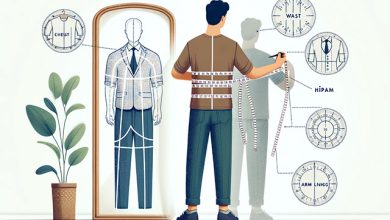
Measure your bust, high bust, waist, hips, back waist length, and inseam. Wear the undergarments you’d actually wear with the finished garment (this matters more than people realize, especially for bras). Keep the measuring tape level and snug but not tight — you want accurate numbers, not “what you wish the number was” numbers.
A few specifics:
- Bust: around the fullest part of your chest
- High bust: just under your armpits, above the bust — this is the measurement used to select pattern sizes for tops
- Waist: your natural waist, which is usually a couple inches above your belly button
- Fullest hip: typically 7–9 inches below your natural waist
- Back waist length: from the nape of your neck (that bony bump) straight down to your natural waistline
Keep a measurement chart somewhere you won’t lose it. Update it every season or so, especially if your body changes.
2. Compare Your Measurements With the Sewing Pattern
Once you have your numbers, look at the pattern’s size chart — but don’t stop there. The size chart shows body measurements, not finished garment measurements. Those are different things.
Finished garment measurements include ease, which is the extra room built into a pattern so you can actually move. There are two kinds:
| Type of Ease | What It Is | Typical Amount |
|---|---|---|
| Wearing ease | Room for movement and comfort | 2–4 inches at bust for fitted styles |
| Design ease | Extra room added intentionally for style | Varies widely — could be 6+ inches for an oversized fit |
This is also where a lot of confusion happens: pattern sizing is not the same as ready-to-wear sizing. A size 14 in a sewing pattern is sized to a 36-inch bust. A size 14 at the store? Could be anywhere. Don’t get thrown off by the number on the envelope — just compare your measurements to the chart and go from there.
3. Choose the Right Starting Pattern Size
For tops and bodices, cut based on your high bust measurement, not your full bust. (The reason: the high bust is closer to how patterns are graded across the shoulder and neckline, and you’ll add room for the full bust separately if needed.) For bottoms, cut based on your hip measurement.
If your measurements fall between sizes — which they often do — you can blend. For example, if you’re a size 12 at the bust and a 14 at the hip, you draw a gradual line between the cutting lines of those two sizes along the side seam. This is called grading between sizes, and most multisize patterns are designed with this in mind.
Cut conservatively at first. It’s much easier to take a seam in than to add fabric back.
4. Make a Muslin Before Cutting Fashion Fabric
A muslin is just a test garment made from cheap fabric before you cut into the good stuff. It sounds like extra work. It absolutely saves you from ruining $25-a-yard fabric. (I know, I know — but trust me on this one.)
Use an inexpensive woven fabric in a similar weight to your fashion fabric. Mark the grainlines, center front, and center back with a marker or chalk so you can see what’s happening when you put it on. Baste (loosely stitch) the seams so you can easily adjust them, and leave the seam allowances wide enough to work with.
Try it on, move around, sit down, reach up. Look at:
- Where the grainlines land (they should hang straight, not pull)
- Whether the waist sits at your actual waist
- Any pulling, drag lines, or excess fabric pooling anywhere
- How the neckline lies against your body
Mark any problem areas with pins or a marker directly on the muslin. That muslin becomes your road map for altering the actual pattern.
5. Adjust Pattern Length
Length adjustments are usually the easiest fix, and they make a huge difference in how proportional a garment looks on your body.
Most patterns have lengthen/shorten lines printed right on the pattern pieces — they’re horizontal lines that show exactly where to make vertical changes without distorting anything above or below. To lengthen, cut along the line and spread the pieces apart, then tape paper in the gap. To shorten, fold the pattern along the line until you’ve removed the right amount.
Common length adjustments:
- Bodice length: from shoulder to waist — affects where the waistline seam lands
- Sleeve length: straightforward — shorten or lengthen at the hem or at the lengthen/shorten line near the elbow
- Skirt and pants: adjust at the hem or at specific lines on the pattern (crotch depth in pants is its own adjustment and a bit more involved)
Adjust each pattern piece separately so everything stays in proportion. The front and back bodice, for example, both need the same length adjustment or your side seams won’t match.
6. Adjust Pattern Width and Circumference
Width adjustments are where things get a little more involved — but not impossible, even for beginners.
For small changes (roughly 1 inch total or less), you can adjust the side seams. Add to or trim from each side seam equally, then blend the cutting line smoothly so you don’t create an awkward angle at the waist or hip.
For larger changes, the slash-and-spread method works better. You cut the pattern piece apart vertically and spread it open (to add width) or overlap it (to remove width), then tape it to a fresh piece of paper and true the seamlines so they’re smooth.
A few practical notes:
- Make changes in multiple places rather than one giant adjustment — it keeps the shape more natural
- Always adjust both front and back pattern pieces the same amount (unless you’re making a fitting adjustment for asymmetry)
- After any width change, walk your seams to make sure the pieces still match each other
7. Fix Common Bodice, Bust, Shoulder, and Back Fit Problems
This section alone could be its own book (and honestly there are books written about it!), but here are the most common issues and what actually causes them.
Pulling across the bust (horizontal drag lines): usually means you need more room — a full bust adjustment (FBA). This adds cup volume to the bodice without changing the shoulder or neckline. It’s the single most common alteration for anyone with a D cup or larger.
Too much fabric at the bust: a small bust adjustment (SBA) removes volume. You’ll fold out a small amount of the pattern to bring the bust apex closer to where yours actually sits.
Shoulder seams sliding forward or backward: the shoulder seam should sit right at the top of your shoulder. If it’s creeping forward, the front shoulder is too wide; if it’s falling back, the back is. Adjust by shifting the seamline.
Gaping at the neckline: often means the neckline curve is too wide for your frame. You can take it in at the shoulder seam or reshape the neckline curve itself.
Drag lines from the shoulder to the bust: usually a sign the bust apex on the pattern doesn’t match yours. Moving the dart point (bust apex) fixes this.
8. Check the Altered Pattern Before Cutting Your Final Fabric
Before you ever touch your fashion fabric, do a final check on the altered pattern.
Walk the seams: lay corresponding seam lines together (like the front and back side seams) and walk one piece along the other to confirm they’re the same length and the notches still align. Any discrepancy needs to be fixed now.
True the seamlines: after slashing, spreading, or overlapping, redraw any seam lines that got wonky. Use a curved ruler for necklines and armholes, a straight ruler for side seams.
Verify the basics:
- Grainlines are still straight
- Notches are still marked
- Dart legs are equal length
- Seam allowances are consistent (especially if you added paper)
If you made significant alterations, making a second muslin is worth it. It sounds like a lot, but the second muslin goes much faster than the first — and you’ll know immediately whether the changes worked.
Transfer all your alterations to a clean copy of the pattern (tracing paper works great) so you have a master version to use again. Future-you will be so glad you did.
Final Thoughts
Pattern fitting really does get easier with practice — and it’s genuinely one of the most satisfying parts of sewing once it clicks. The goal isn’t a perfect fit on the first try. It’s building a library of alterations that work for your body, so every garment you make fits better than the last.
Start with one adjustment, get comfortable with it, and layer from there. Most sewists find they need the same 2-3 alterations on almost every pattern once they figure out their fitting quirks. (For a lot of people, it’s length + one bust or hip adjustment — and that’s it.)
You’ve got this.
FAQ
Do I need to adjust a sewing pattern to fit?
Most people do, yes. Commercial patterns are drafted for a standardized body with a B cup and specific proportions. If your measurements differ from the size chart — even slightly — some alteration usually gets you a better result.
How do I know what size sewing pattern to buy?
For tops, use your high bust measurement. For bottoms, use your fullest hip measurement. Compare those numbers to the pattern’s size chart, not to your ready-to-wear clothing size — they’re not the same.
What’s the difference between wearing ease and design ease?
Wearing ease is the minimum extra room needed to move comfortably (typically 2–4 inches at the bust for fitted garments). Design ease is extra room added intentionally for style — like the extra volume in an oversized blouse.
Do I really need to make a muslin?
For simple patterns or inexpensive fabric, you can skip it. For fitted garments, expensive fabric, or any pattern you plan to make again, a muslin saves you time and material in the long run.
What is a full bust adjustment (FBA)?
An FBA adds volume to the bust area of a bodice pattern without changing the shoulder or neckline. It’s the standard fix when a top fits in the shoulders but pulls across the chest — most commonly needed for cup sizes D and above.
Can I blend between sewing pattern sizes?
Yes, and it’s very common. If you’re a size 12 at the bust and a 16 at the hips, you simply draw a gradual line between those cutting lines along the side seam. Most multisize patterns are designed with this in mind.
How do I fix a gaping neckline?
A gaping neckline usually means the neckline curve is too wide for your frame. The fix is to take in a small amount at the shoulder seam, which narrows the neckline opening and brings it closer to your body.
When should I make a second muslin?
After significant alterations — particularly a full bust adjustment, major length changes, or if your first muslin revealed multiple fit issues. The second one usually goes quickly and confirms your changes before you cut into your fashion fabric.